
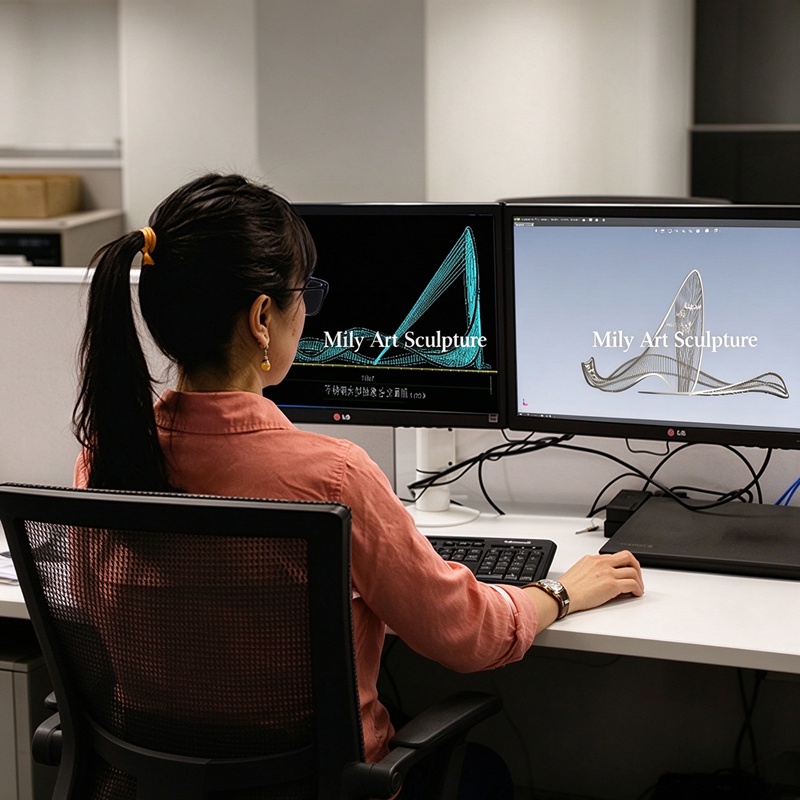
How to Commission a Custom Stainless Steel Sculpture?
To commission a custom stainless steel sculpture, start by sharing your idea, reference images, and basic project requirements with a manufacturer. You’ll then review the design and quotation, confirm the order, follow production, and arrange delivery and installation. Most standard custom sculptures take around 30–60 days from deposit to shipment, depending on their size and complexity.
Hi, I’m Linda from Mily Metal Sculptures. If you’re considering a sculpture for your garden, hotel, or public space, you probably have a few questions. Do you need a professional design before contacting a manufacturer? How much should you budget? And how can you make sure the finished sculpture matches your expectations? I’d like to share some practical advice to help you make informed decisions throughout your project.
Start with Your Idea: What Kind of Sculpture Do You Want?
Every custom sculpture begins with an idea. Sometimes it’s a detailed architectural drawing. Other times, it’s simply a photo of something a client finds inspiring.
Do you need a finished design before contacting a sculpture manufacturer? Not at all. I often tell clients that a reference image, a rough sketch, or even a simple description can be enough to begin discussing a project. What matters is communicating what you want the sculpture to achieve and where it will be displayed.
Before requesting a quotation, it’s helpful to prepare a few basic details:
- Design inspiration: Reference photographs, sketches, 3D models, or examples of styles you like.
- Installation location: Whether the sculpture will be placed in a private garden, hotel lobby, commercial plaza, or public park.
- Approximate dimensions: Your preferred height and width, along with the available installation space.
- Budget and deadline: An estimated budget range and any important project deadlines.
Don’t worry if some details are still undecided. Part of the manufacturer’s role is to help you evaluate your options and develop a practical solution.
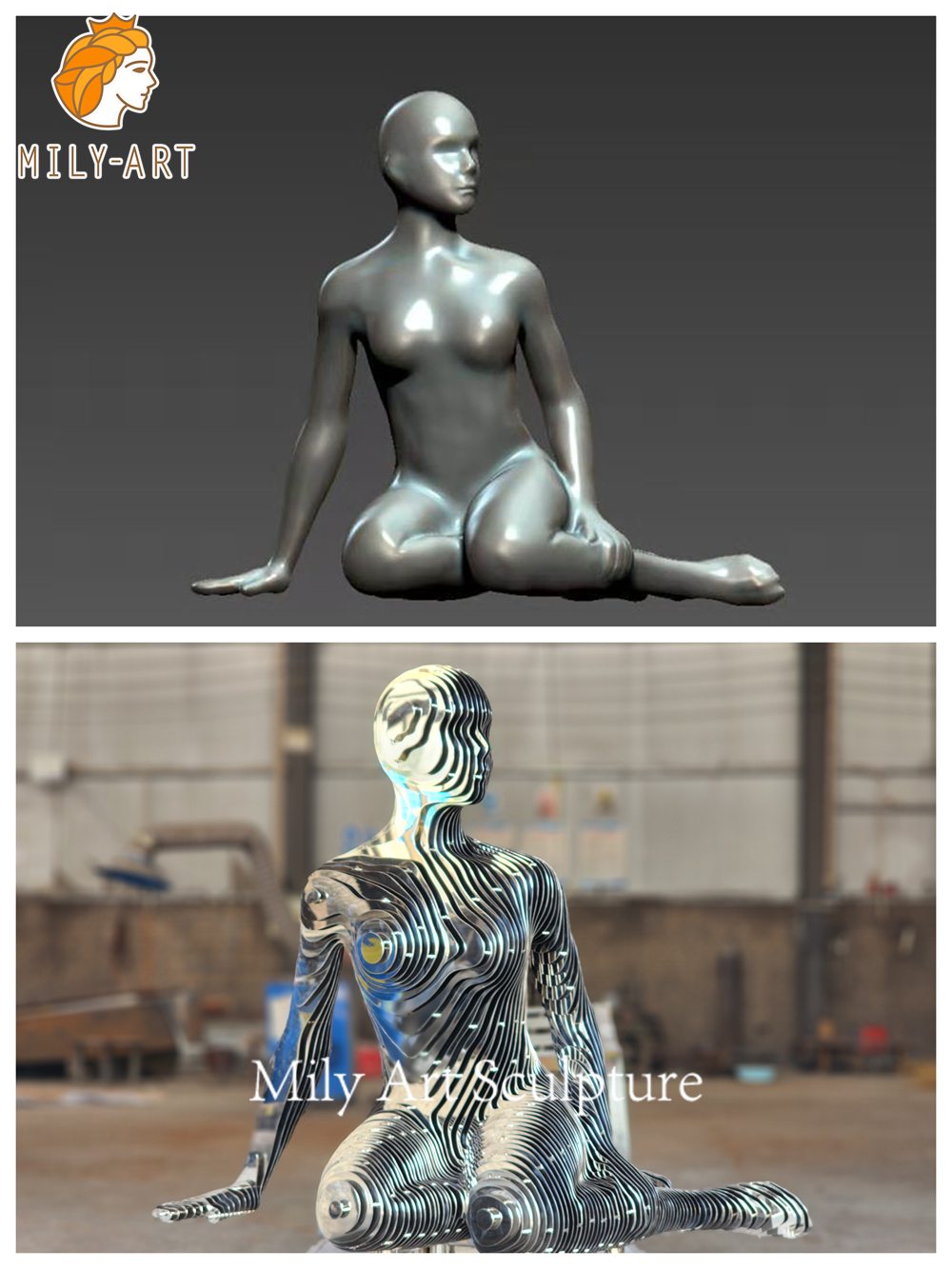

If your project involves an original artwork, an unreleased architectural design, or commercially sensitive information, confidentiality is also worth discussing early. At Mily, we can sign a Non-Disclosure Agreement (NDA) before reviewing confidential project files. This helps protect sensitive information throughout the design discussion. If you’re reproducing an existing artist’s work, make sure you also have the necessary permission, as an NDA does not replace copyright authorization.
Choose the Right Size, Material, and Finish
One thing I always encourage clients to consider is how the sculpture will interact with its surroundings. A two-meter sculpture might look impressive in a private courtyard but appear relatively small in a spacious hotel entrance.
Rather than choosing dimensions based only on a reference photograph, consider the available space, surrounding architecture, and typical viewing distance. You can even mark the proposed height against a nearby wall to get a better sense of the sculpture’s scale.
The installation environment also influences your material choice. 304 stainless steel is suitable for many indoor and typical outdoor applications, while 316 stainless steel generally offers better corrosion resistance in coastal areas, near swimming pools, and in environments exposed to chlorides. If you’re unsure which grade is more suitable for your project, you can read our detailed comparison of 304 vs 316 stainless steel for outdoor sculptures.
The surface finish is equally important because it affects both appearance and maintenance.
| Finish | Visual Effect | What to Consider |
|---|---|---|
| Mirror Polished | Bright, reflective, and eye-catching | Shows fingerprints and surface marks more easily |
| Brushed / Satin | Subtle, contemporary, and understated | Less reflective and generally easier to maintain |
| Painted | Colorful and expressive | Requires suitable coatings and occasional inspection |
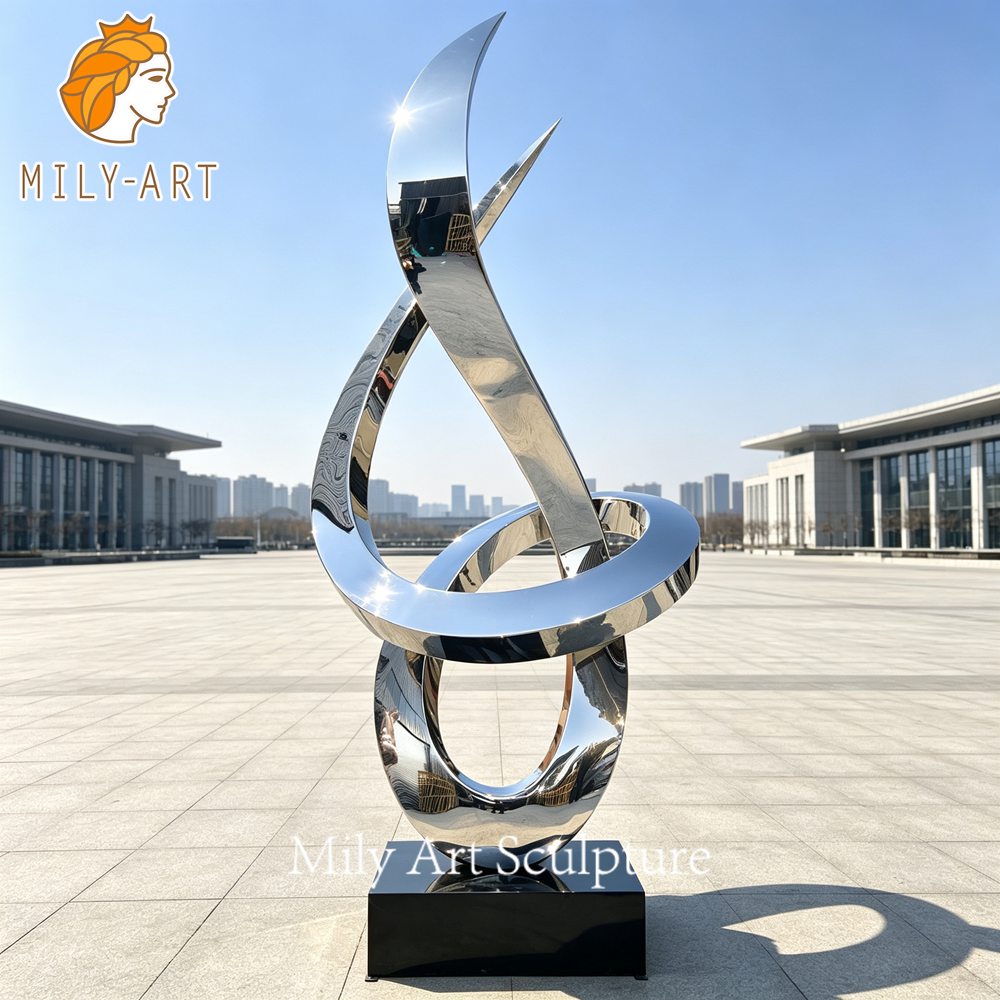
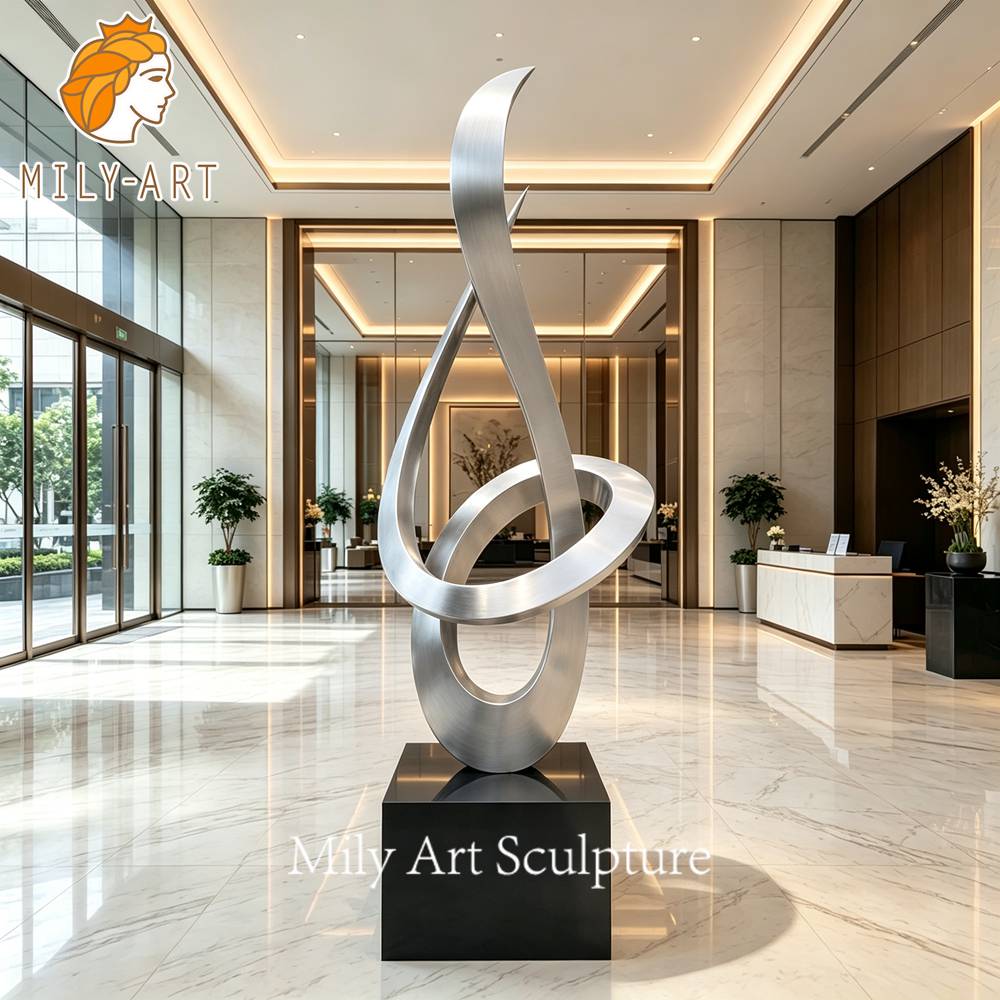
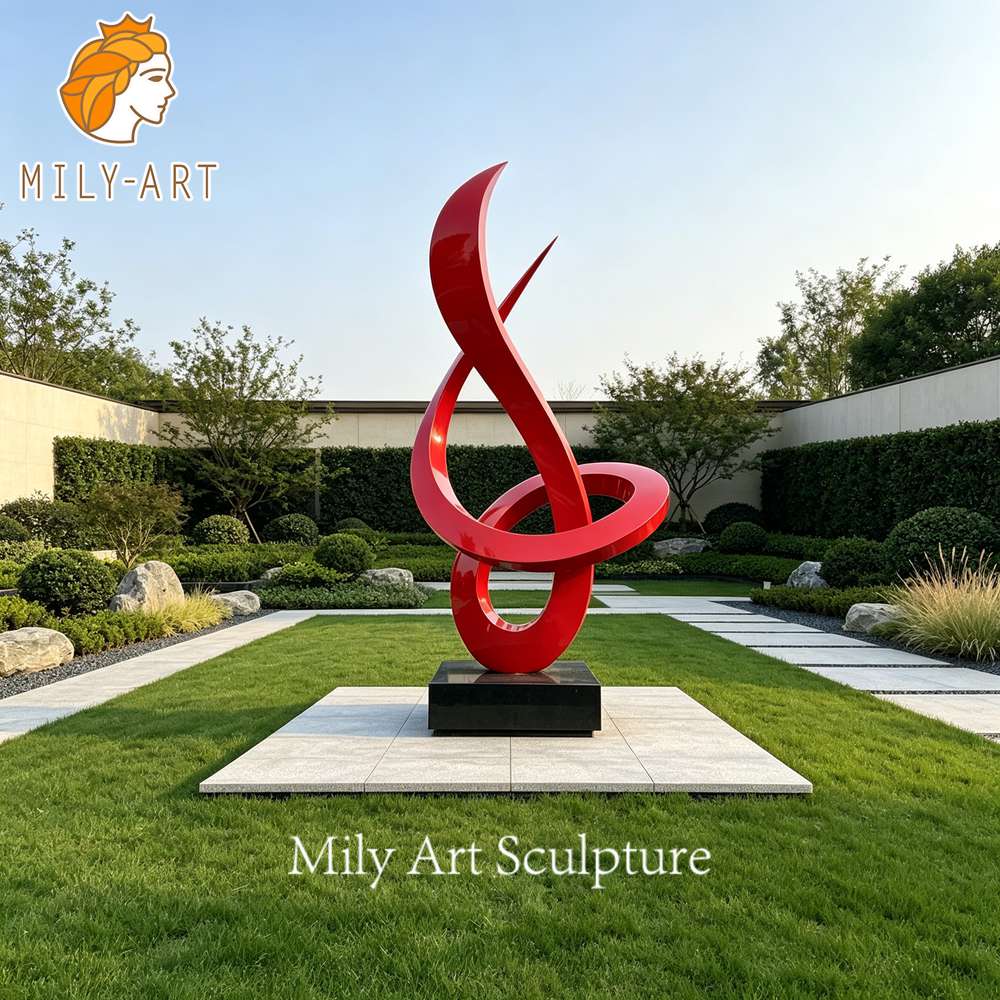
For example, a mirror-polished sculpture can reflect greenery and surrounding buildings, making it an attractive choice for contemporary landscapes. A brushed finish creates a softer appearance, while a painted sculpture can introduce a strong color contrast or complement a specific architectural style.
My suggestion is to look at photographs of completed sculptures in environments similar to yours. A surface finish can appear quite different under natural sunlight, indoor lighting, or against surrounding landscaping.
How Much Does It Cost to Commission a Sculpture?
This is one of the most common questions when planning a sculpture commission, and understandably so. However, custom sculptures don’t have a fixed price because every project involves different design and manufacturing requirements.
Even two sculptures with similar dimensions can have considerably different production costs. A simple geometric form may require less fabrication work than a complicated abstract design with multiple curves, internal reinforcement, and extensive mirror polishing.
Here are the main factors that affect the quotation:
| Cost Factor | Why It Matters |
|---|---|
| Size and Complexity | Larger or intricate designs require more materials and labor |
| Stainless Steel Grade | Material costs vary between 304 and 316 |
| Surface Finish | Mirror polishing, painting, and complex finishes affect labor costs |
| Structural Requirements | Large outdoor sculptures may need additional engineering and reinforcement |
| Shipping and Installation | Freight, handling equipment, and site conditions add to the total project cost |
If you’re planning a larger installation, our article on large stainless steel sculpture costs provides additional price estimates based on different sculpture sizes and types.
My advice is to compare specifications, not just the final price. When reviewing quotations, check the proposed material grade, steel thickness, surface finish, structural requirements, and included services. For example, does the quotation include 3D design, technical drawings, quality inspection, and protective export packaging? Are international shipping and installation included or quoted separately?
At Mily, our standard quotations generally cover design documentation, materials, fabrication, surface finishing, quality inspection, and export packaging. Shipping is quoted separately based on the destination and agreed delivery terms. A lower quotation may look attractive initially, but if important specifications or services are missing, the total cost could be higher than expected.
Review the Design Carefully Before Production Begins
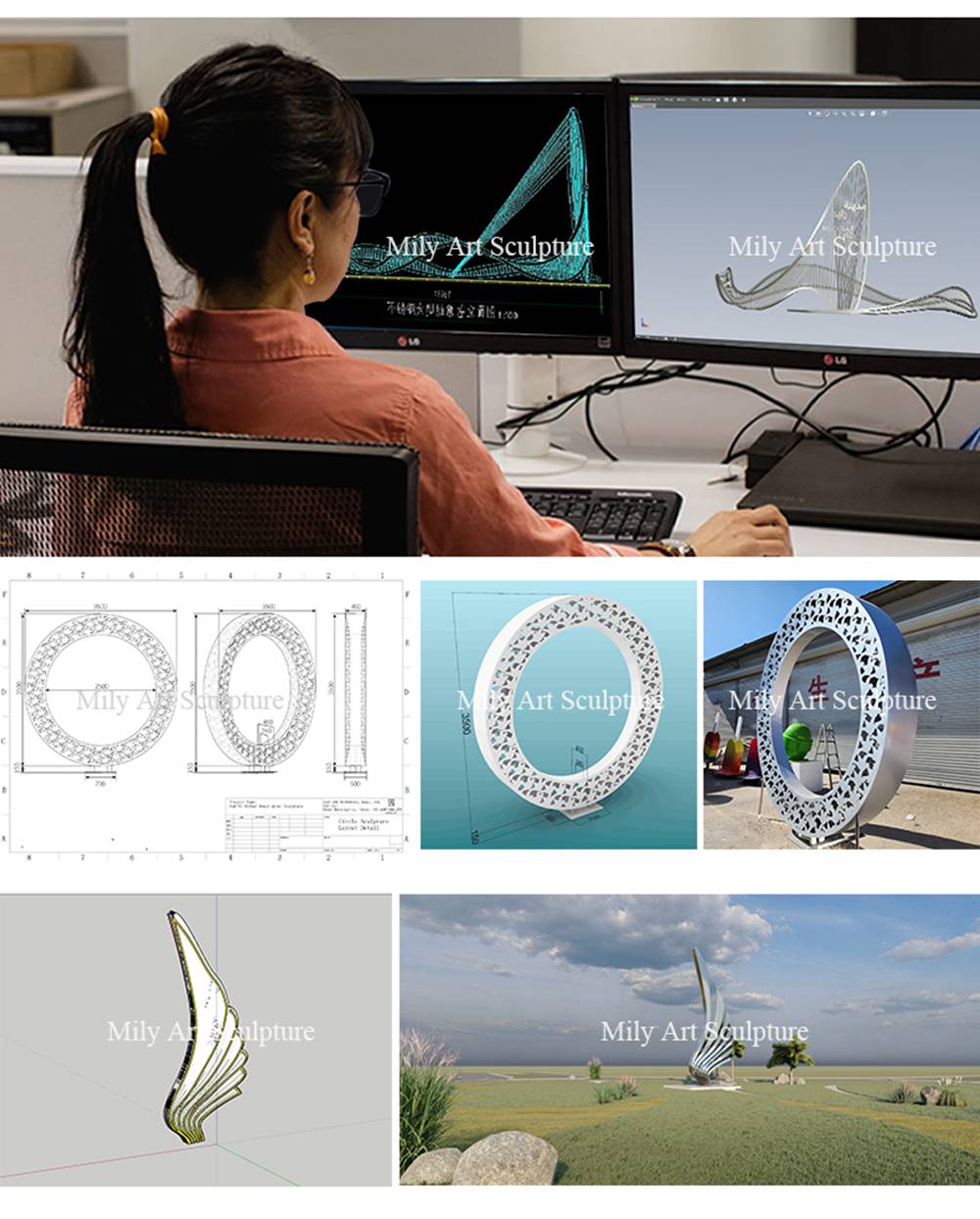
Once your requirements are clear, the next important step is reviewing the proposed design. At Mily, the initial design and approval stage generally takes around 5–10 days, although complex sculptures may require additional revisions or technical discussions.
A 3D rendering helps you understand the sculpture’s shape, proportions, and overall appearance before manufacturing begins. However, I always encourage clients to look beyond the first impression.
Before approving the design, check these important details:
- Does the sculpture look balanced from the front, sides, and back?
- Are the dimensions appropriate for the installation space?
- Does the proposed surface finish match your expectations?
- How will the sculpture be supported and secured?
- Are there any special design details that must be preserved?
For large outdoor sculptures, structural considerations are particularly important. Wind loads, foundation connections, and mounting arrangements should be evaluated according to the installation conditions.
Remember that a beautiful 3D rendering doesn’t replace technical specifications. Both the visual design and the practical construction details need to be confirmed. This is also the best time to request changes. Adjusting a digital model is usually much easier than modifying a sculpture after fabrication has begun. Taking extra care during design approval can prevent unnecessary expenses and delays later.
Understand the Deposit, Payment Terms, and Production Timeline
Before production starts, make sure you understand the payment schedule, estimated manufacturing time, and conditions for any additional charges.
At Mily Metal Sculptures, our standard payment arrangement is a 50% deposit after confirming the design and order details, with the remaining 50% payable after final quality inspection approval and before shipment.
Payment is generally made by bank transfer (T/T). PayPal is available for smaller orders, while Letters of Credit or milestone payments may be discussed for larger institutional projects.
The manufacturing timeline depends on the sculpture’s size and complexity. Most standard custom sculptures require approximately 30–60 calendar days from deposit to shipment, while large-scale landmark projects may take 60–90 days. Keep in mind that these estimates refer to the production period, not the total time until installation. Design revisions, international shipping, customs clearance, and site preparation may require additional time.
If your sculpture is needed for a hotel opening, public event, or another fixed deadline, please mention this during the initial discussion. Early planning makes it easier to establish a realistic schedule and avoid last-minute complications.
Stay Involved During Production Without Being On-Site
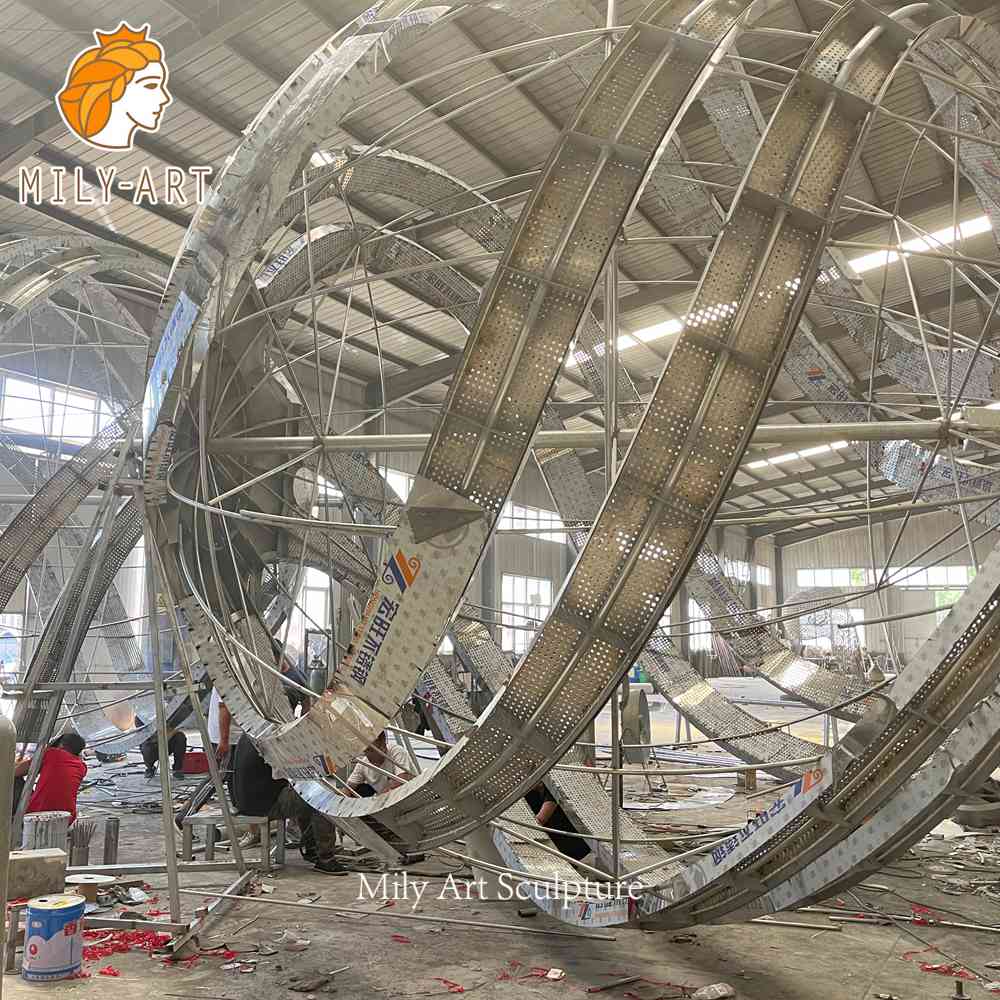
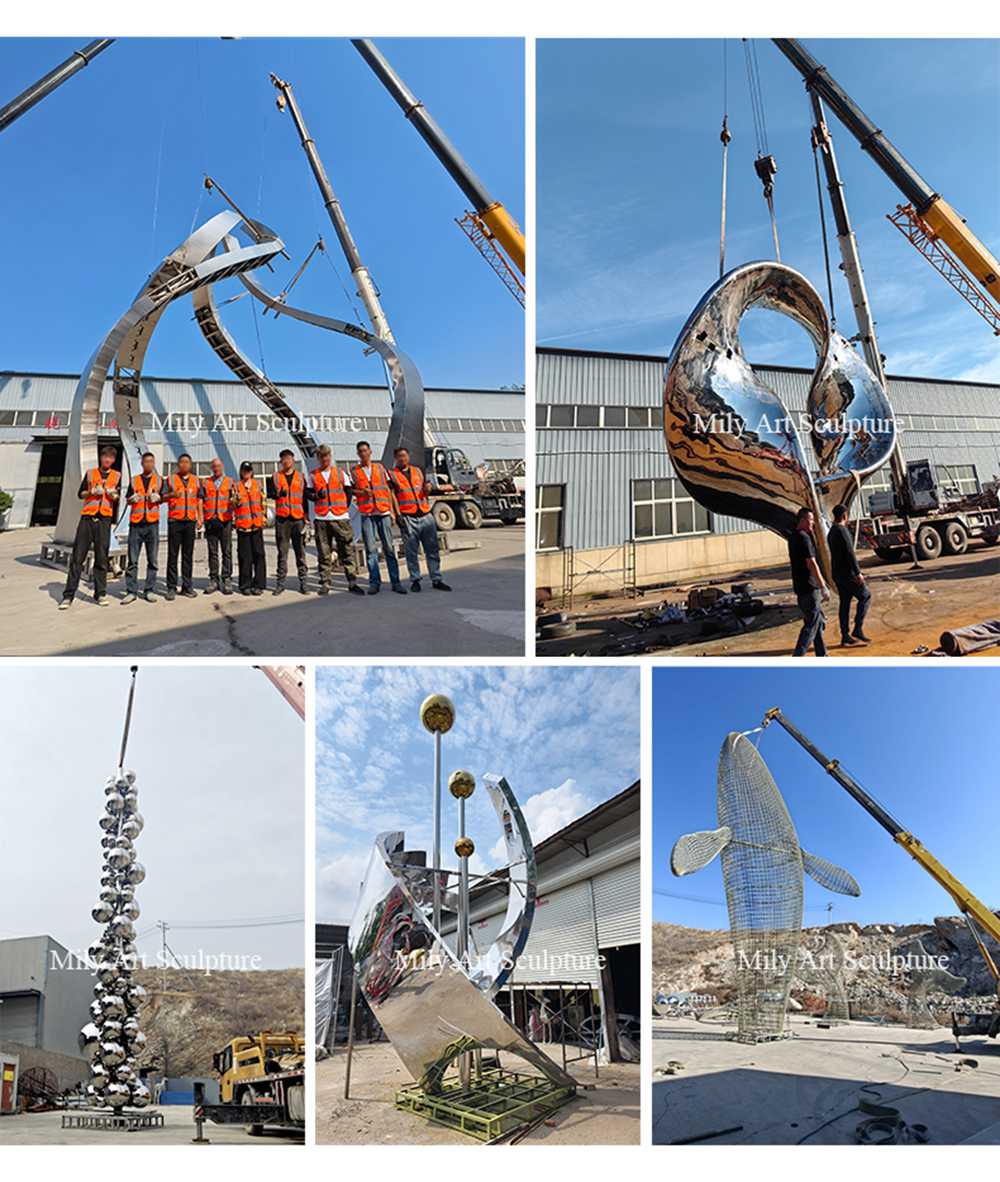
One concern international clients sometimes have is how to monitor a sculpture being manufactured thousands of miles away. Fortunately, you don’t necessarily need to visit the workshop to stay informed about your project. At Mily, we generally provide production photographs and videos every 5–7 days. These updates allow clients to follow the progress and identify potential concerns before the sculpture is completed.
I recommend paying particular attention to three stages: the overall shape and proportions, the surface finishing process, and the final quality inspection.
For mirror-polished sculptures, close-up photographs and videos taken from different angles are especially helpful. Reflections can reveal surface imperfections that may be difficult to notice in ordinary photographs.
Before shipment, clients can review final inspection photographs and videos, and a video call walkthrough can be arranged when needed. This provides an opportunity to examine the finished artwork and confirm that it meets the approved requirements.
If something doesn’t look right, raise the concern as soon as possible. Adjustments are generally easier before final packaging than after international delivery.
You can also read our guide to stainless steel sculpture fabrication if you’d like to understand the manufacturing work behind a finished sculpture.
Plan for Shipping and Installation Before Your Sculpture Is Finished
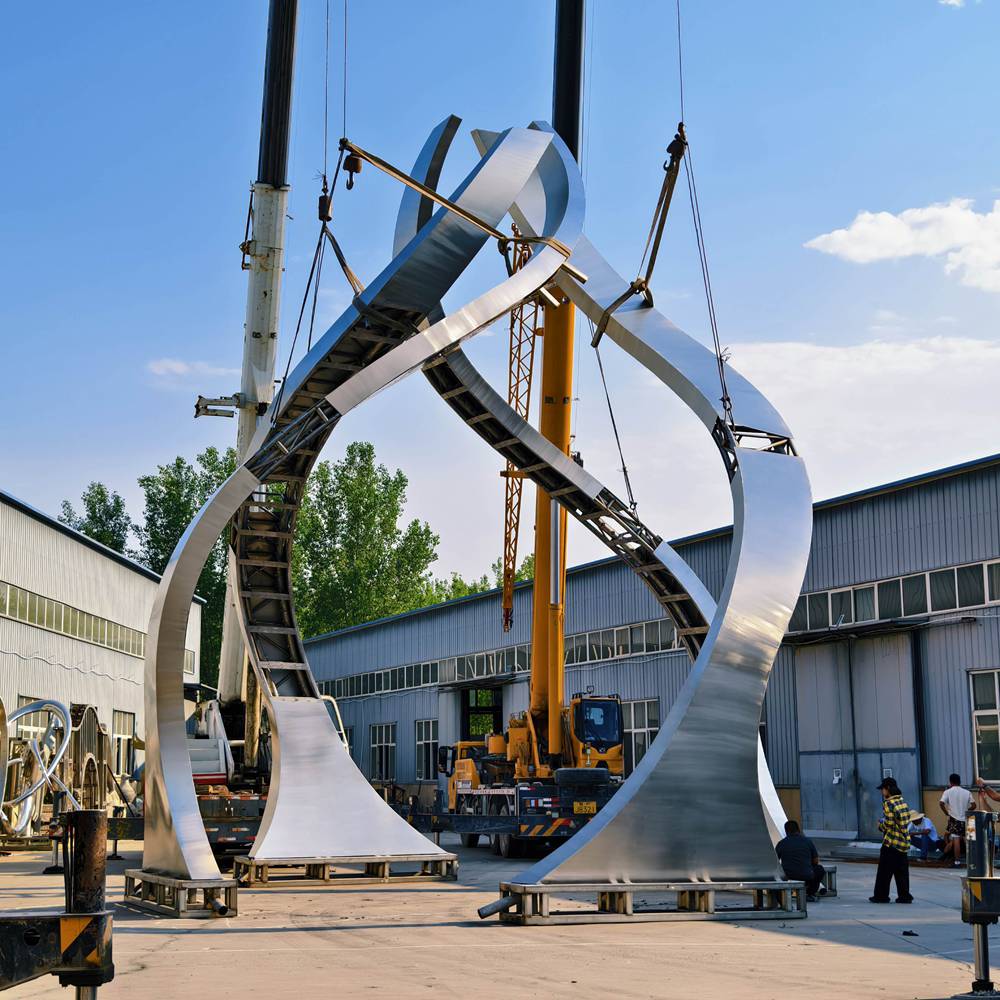
A sculpture commission doesn’t end when fabrication is complete. The finished artwork still needs to reach its destination safely and be installed correctly. For large outdoor sculptures, I recommend discussing transportation and installation requirements during the design stage rather than leaving them until the end.
Consider whether delivery vehicles can access the site, whether a crane or forklift will be required, and who will prepare the foundation. If the sculpture needs to be transported in sections, its connections and assembly requirements should be considered before manufacturing begins.
International shipping arrangements should also be clarified in advance. At Mily, we can arrange transportation under different trade terms, including EXW, FOB, CIF, and DDP, depending on the destination and project requirements. Each option involves different responsibilities for transportation, insurance, customs, and delivery, so it’s important to understand what your quotation includes.
For installation, we can provide technical drawings, anchor specifications, and remote guidance. On-site installation services are also available for selected projects and regions.
One question I always recommend asking early is: How will the sculpture actually get into its final position? Planning for that answer can prevent unexpected expenses and delays when the artwork arrives.
Common Mistakes to Avoid When Commissioning a Sculpture
From my experience, successful sculpture projects depend as much on careful planning as they do on craftsmanship. Many problems can be avoided by clarifying important details before production begins.
- Choosing the wrong size for the installation space. A sculpture that looks impressive in a rendering may appear too small in a large courtyard or public plaza. Consider the surrounding architecture, available space, and viewing distance before finalizing the dimensions.
- Comparing manufacturers based only on price. Two quotations may look similar, but differences in materials, structural design, surface finishing, and included services can significantly affect the finished sculpture. Always compare specifications alongside the total price.
- Approving the design too quickly. Before confirming the final drawings, review the proportions, dimensions, surface finish, and mounting arrangements carefully. If anything is unclear, ask questions while changes are still relatively easy to make.
- Leaving shipping and installation planning until the end. Large sculptures may require special foundations, lifting equipment, or transportation arrangements. Discussing these requirements early can help prevent unexpected costs and delays.
I also recommend keeping your approved drawings, quotation, specifications, and important project correspondence together. Having a clear record makes communication easier and helps everyone work toward the same expectations.
Ready to Commission Your Custom Stainless Steel Sculpture?
Commissioning a custom sculpture should be an exciting experience, not a confusing one. Whether you’re planning a statement piece for a private garden, a distinctive artwork for a hotel, or a large public installation, the key is to communicate your ideas clearly, understand the specifications, review the design carefully, and plan ahead.
You don’t need to have every detail figured out before starting. A reference photograph, a simple sketch, or an idea you’re still exploring can be enough to begin a useful conversation.
If you have a sculpture project in mind, feel free to share your ideas with me. I’d be happy to discuss the possibilities and help you understand what may be achievable within your space, budget, and schedule. You can also visit our Custom Order page for more information about our services and how to submit your project requirements.
— Linda, Mily Metal Sculptures

I’m Linda, and I’ve been living and breathing stainless steel sculptures for over a decade — which sounds more intense than it is, I promise.
As Sales Director at Mily Statue, I spend my days helping clients around the world turn their ideas into real, lasting works of art. From a small garden piece for a private home to a multi-story installation for a city plaza, I’ve seen projects of every scale and style — and I still get genuinely excited when a new brief lands in my inbox.
When I’m not talking sculptures, I’m probably exploring somewhere new, hunting for good coffee, or sharing something beautiful I stumbled across. Life’s too short not to notice the details.
Got a project in mind? Let’s talk.
Share this article

Written by
LindaI'm Linda, and I've been living and breathing stainless steel sculptures for over a decade — which sounds more intense than it is, I promise. As Sales Director at Mily Statue, I spend my days helping clients around the world turn their ideas into real, lasting works of art. From a small garden piece for a private home to a multi-story installation for a city plaza, I've seen projects of every scale and style — and I still get genuinely excited when a new brief lands in my inbox. When I'm not talking sculptures, I'm probably exploring somewhere new, hunting for good coffee, or sharing something beautiful I stumbled across. Life's too short not to notice the details. Got a project in mind? Let's talk.
Related Articles
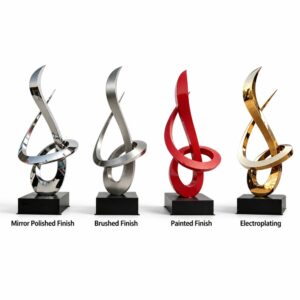
Types of Stainless Steel Sculpture Finishes: A Buyer's Guide to Mirror, Brushed, Painted, and Special Effects
From my experience working with international sculpture buyers, one question comes up again and again: **facing mirror, brushed,...
304 vs 316 Stainless Steel: Which Is Better for Outdoor Sculptures?
When choosing an outdoor stainless steel sculpture, many customers ask whether 304 or 316 stainless steel is the...

How Do Illuminated Stainless Steel Sculptures Come Alive at Night?
Illuminated stainless steel sculptures transform outdoor spaces after dark with integrated LED lighting, creative metal designs, and captivating...