
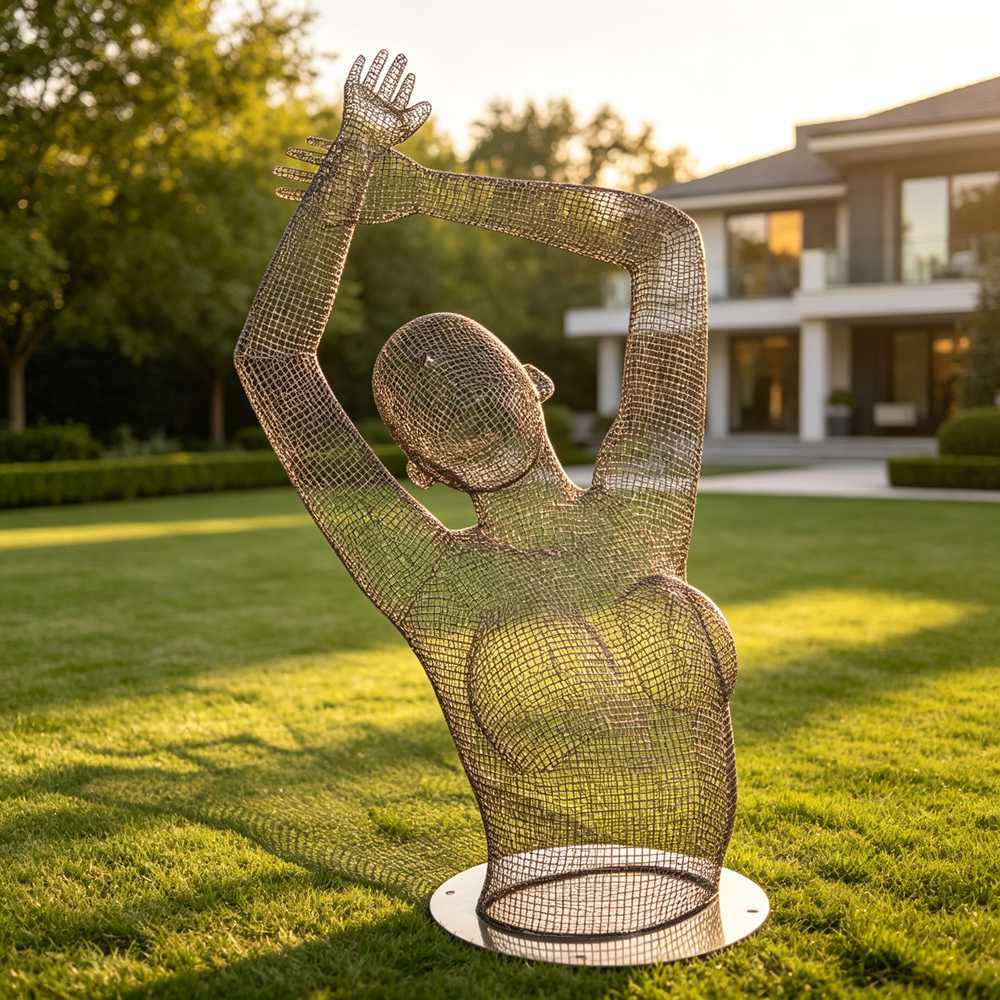
How to Choose Stainless Steel Abstract Figure Sculptures for Modern Spaces?
Choosing the right stainless steel abstract figure sculpture starts with finding a design that matches your space, expresses the feeling you want to create, and balances size, material, and finish. Whether you prefer a dynamic dancing figure, a peaceful seated sculpture, or a bold geometric design, each style brings a different artistic character to its surroundings.
But how do you know which design will actually work for your project? Will the proportions look right? Which finish should you choose? And what should you consider before ordering a custom sculpture?

Hi, I’m Linda from Mily. With over 30 years of experience in metal sculpture fabrication, our factory has worked on a wide variety of abstract human figure designs. In this guide, I’ll share practical advice, examples from our work, and the key details to consider when choosing Abstract Figure Sculptures for modern spaces.
What Are Abstract Figure Sculptures?
Abstract figure sculptures represent the human body without copying it in detail. Instead of a realistic face, clothing, and anatomy, the artist reduces the figure to lines, planes, or repeated patterns, so the viewer recognizes a person through posture and gesture. Some figures use woven wire, some use separate panels, and some use stretched, flowing silhouettes, but all of them invite the viewer to complete the picture.
Start With the Feeling, Not Just the Shape
When customers first contact us about an abstract human figure sculpture, they often send a reference photo and ask, “Can you make something like this?” Of course, we first look at the design. But I also like to ask another question: “What do you want people to feel when they see this sculpture?”
It might sound like a small detail, but the answer can completely change the direction of the project. Unlike traditional realistic statues, abstract figure sculptures don’t depend on detailed facial expressions or accurate human anatomy. They communicate through posture, movement, lines, and proportions.
A seated figure with a lowered head might suggest peace or reflection. A figure reaching upward can express hope, freedom, or ambition. Two figures leaning toward each other might represent connection.

Think about your own project for a moment. Would you prefer something peaceful that people can enjoy quietly? Or would you like a bold artwork that immediately catches attention? Once you know the feeling you’re looking for, choosing the right style becomes much easier. If you’d like to explore more designs before making a decision, you can browse our stainless steel figure sculptures for inspiration.
Which Type of Abstract Figure Sculpture Is Right for You?
There isn’t one perfect style for every project. At Mily, we’ve worked with different interpretations of the human form, from recognizable seated figures to geometric and openwork designs. Here are several popular directions worth exploring.
Geometric Figures: Bold, Modern, and Full of Character
If you enjoy strong lines and contemporary architecture, geometric abstract figures are a wonderful place to start. These sculptures simplify the human body into angular surfaces, folded planes, or intersecting shapes. They don’t attempt to reproduce every anatomical detail. Instead, they capture the energy of a human pose through an artistic composition.
One example is a bright red geometric figure sculpture we created for a client in the United States. Its angular body and bold color make it stand out beautifully against the surrounding landscape. What I particularly like about this piece is how it expresses so much personality and energy without relying on realistic human features.
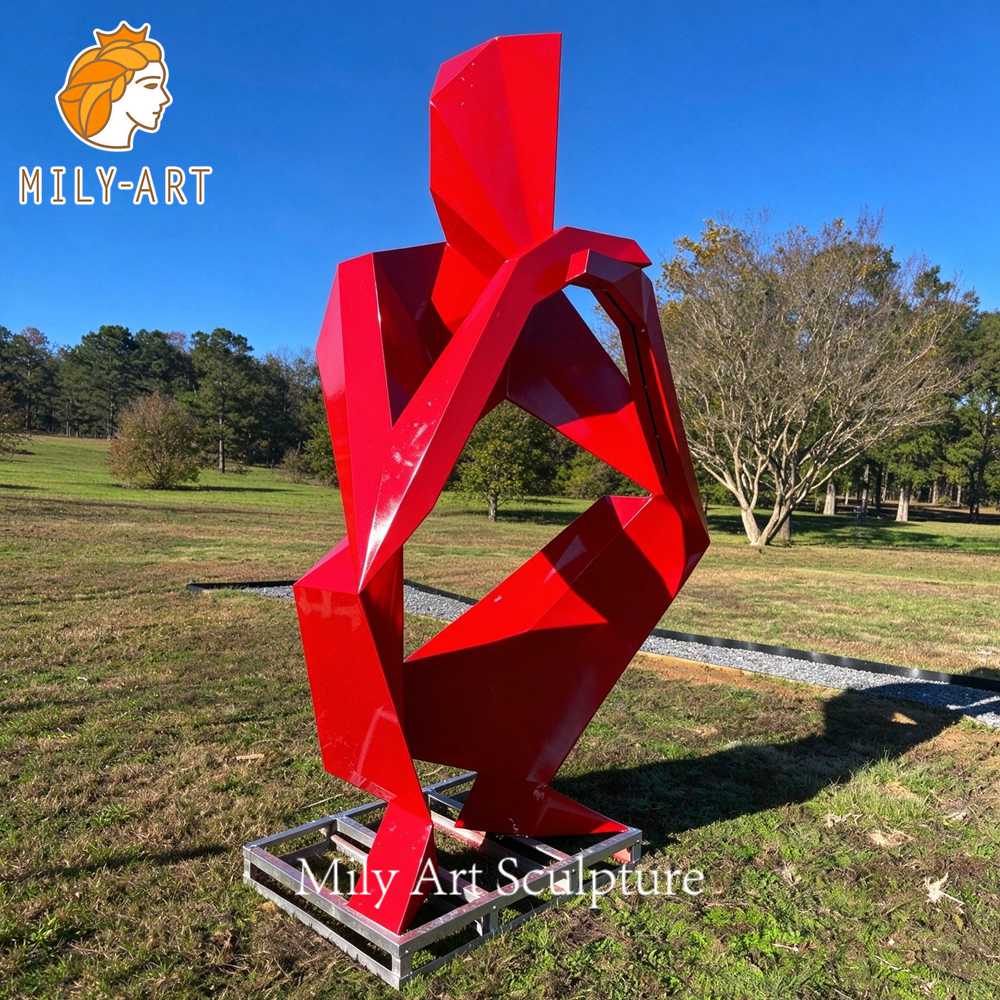
But here’s something worth considering: a geometric sculpture can look very different from each viewing angle. Before choosing one, ask your manufacturer for views from the front, side, and back. This helps you understand the overall composition rather than judging the artwork from one attractive photograph.
Seated Abstract Figures: Quiet Art With a Human Connection
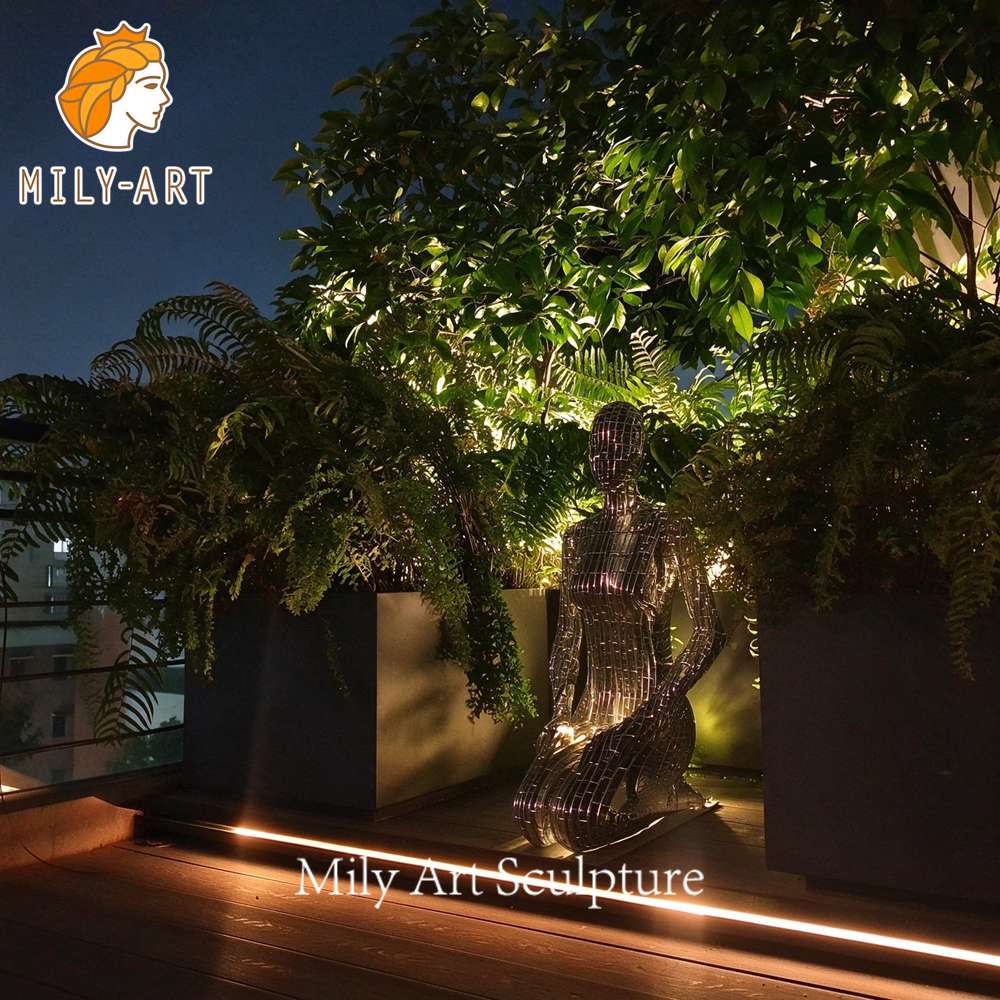
Some of our seated abstract figure designs have a much quieter character. Their relaxed postures encourage people to slow down and take a closer look.
In one of our American project examples, a seated human figure appears among natural stones and greenery. The surrounding landscape becomes part of how people experience the artwork.
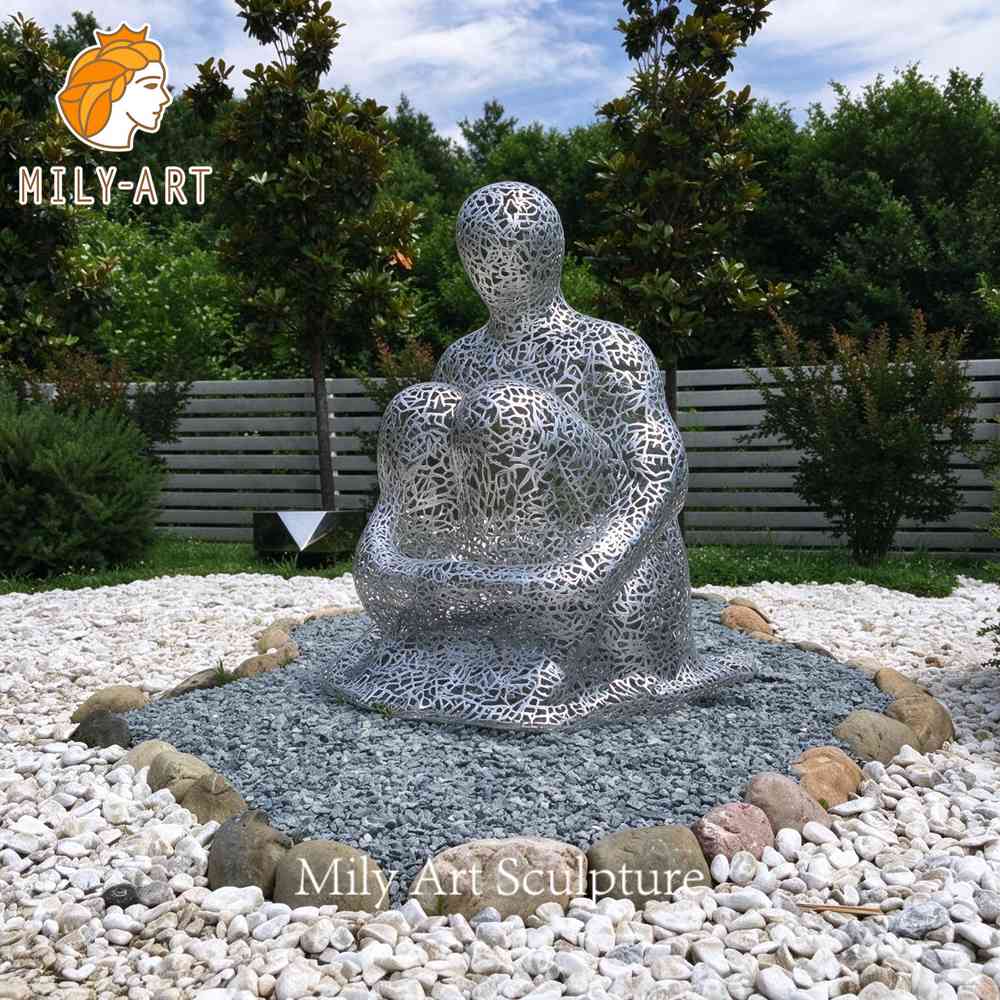
This is something I often remind customers: the background matters almost as much as the sculpture itself. A seated figure placed in a peaceful garden may feel reflective and intimate. Put the same design in a busy commercial entrance, and it may create a very different impression.
If you’re considering a seated sculpture, pay special attention to the body’s proportions and posture. Does the figure look comfortable and balanced? Is the head slightly lowered? Are the arms relaxed? These details may seem subtle, but they influence the emotion of the entire piece.
Openwork Figures: Artistic Without Feeling Heavy
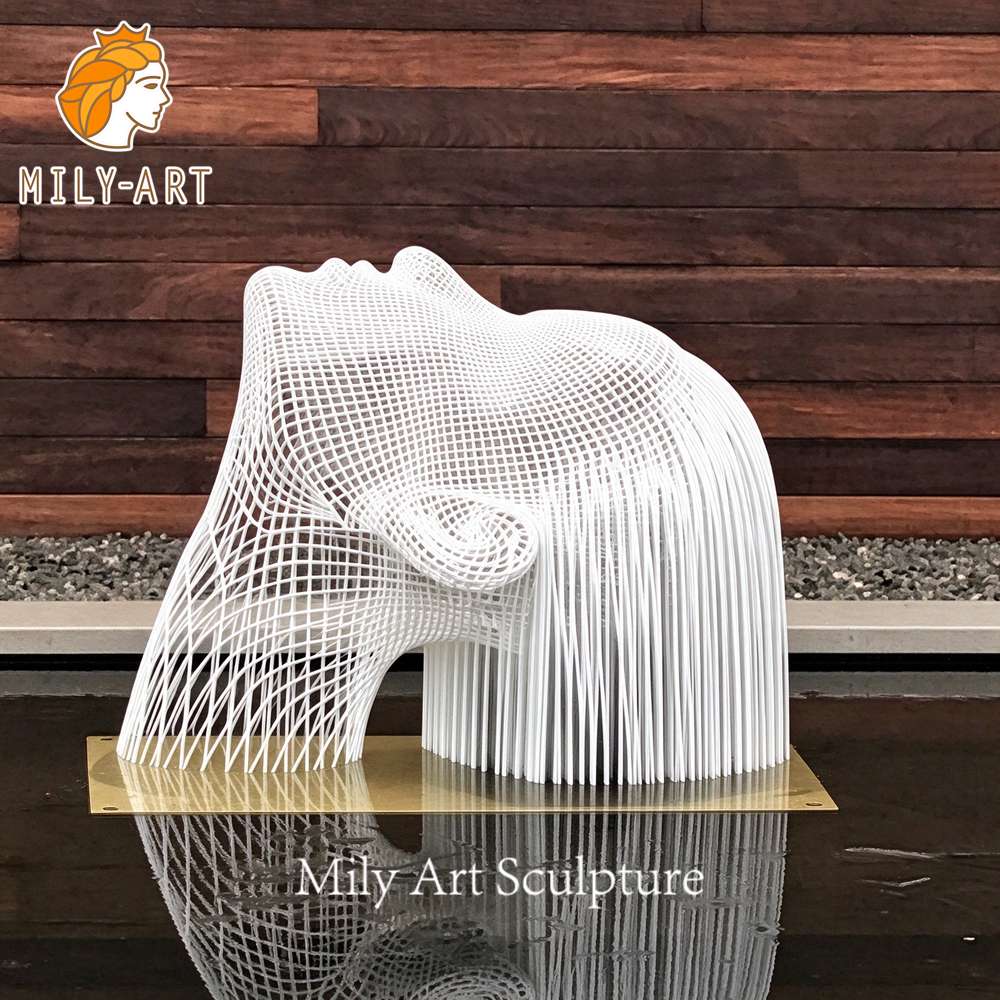
Here’s a concern I sometimes hear: “I love the idea of a human sculpture, but I don’t want something that feels too big or blocks the view.” In this situation, I often suggest exploring openwork or wireframe abstract figures. Instead of using continuous solid metal surfaces, these sculptures form the human silhouette through metal rods, mesh, or interconnected lines.
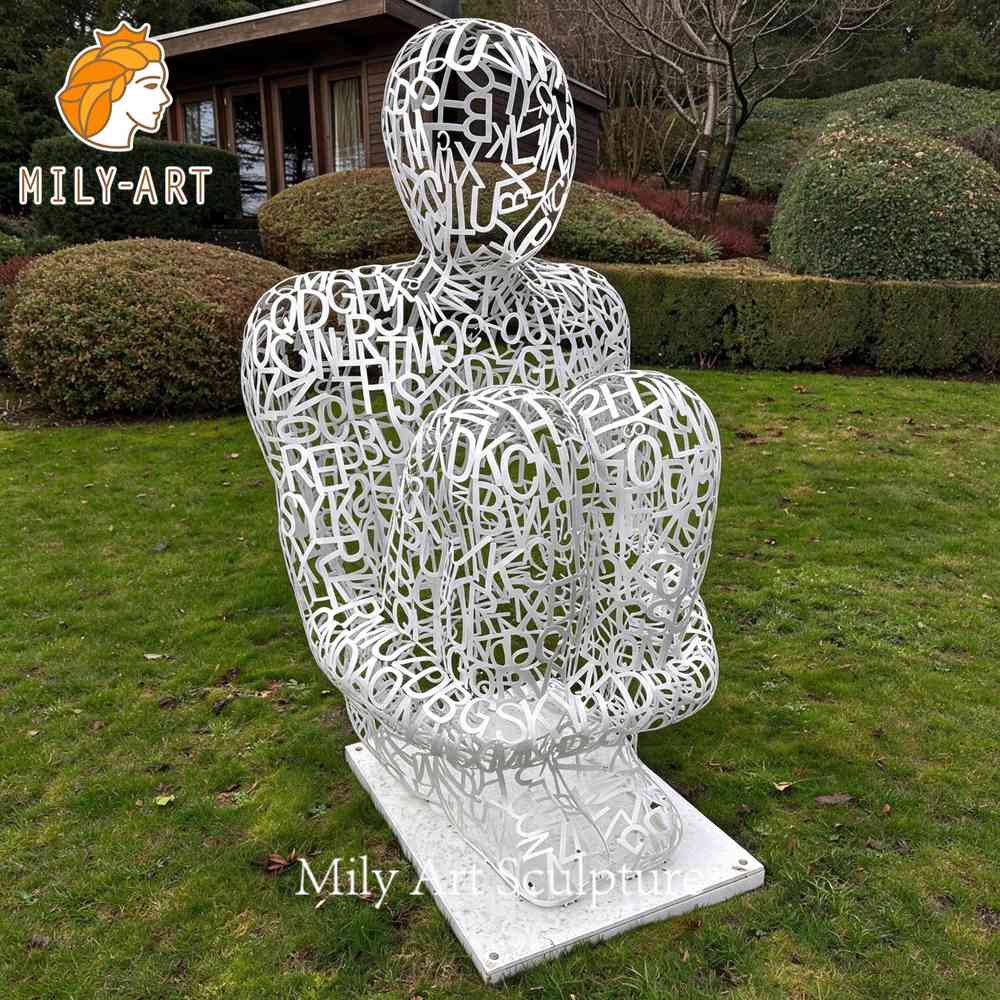
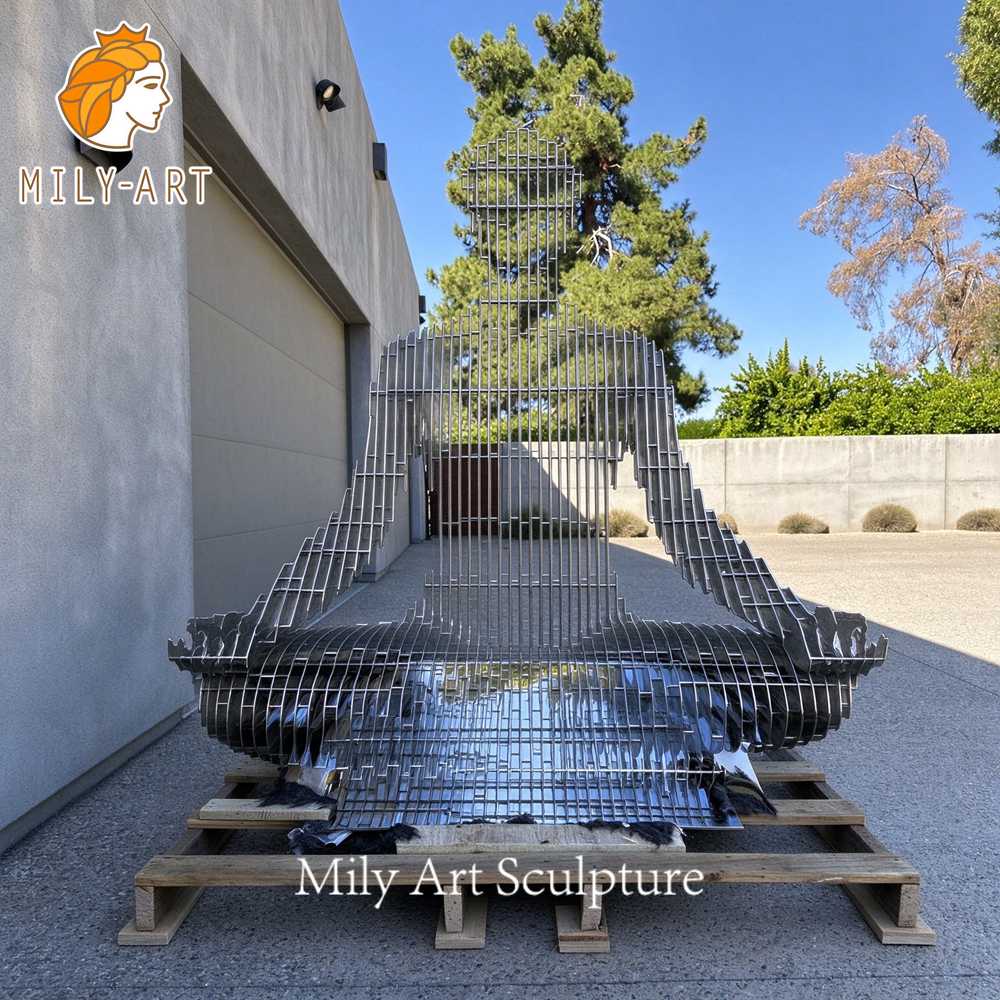
One example is a stainless steel openwork figure sculpture we created for a client in Australia, featuring a human form made from interconnected metal pieces. Instead of a solid surface, the gaps between the pieces allow light and the surrounding environment to show through. What I particularly like about this design is that it maintains a recognizable human silhouette while creating a much lighter, more transparent appearance. It’s a great example of how an abstract figure sculpture can make a strong artistic statement without looking heavy or overwhelming the space.
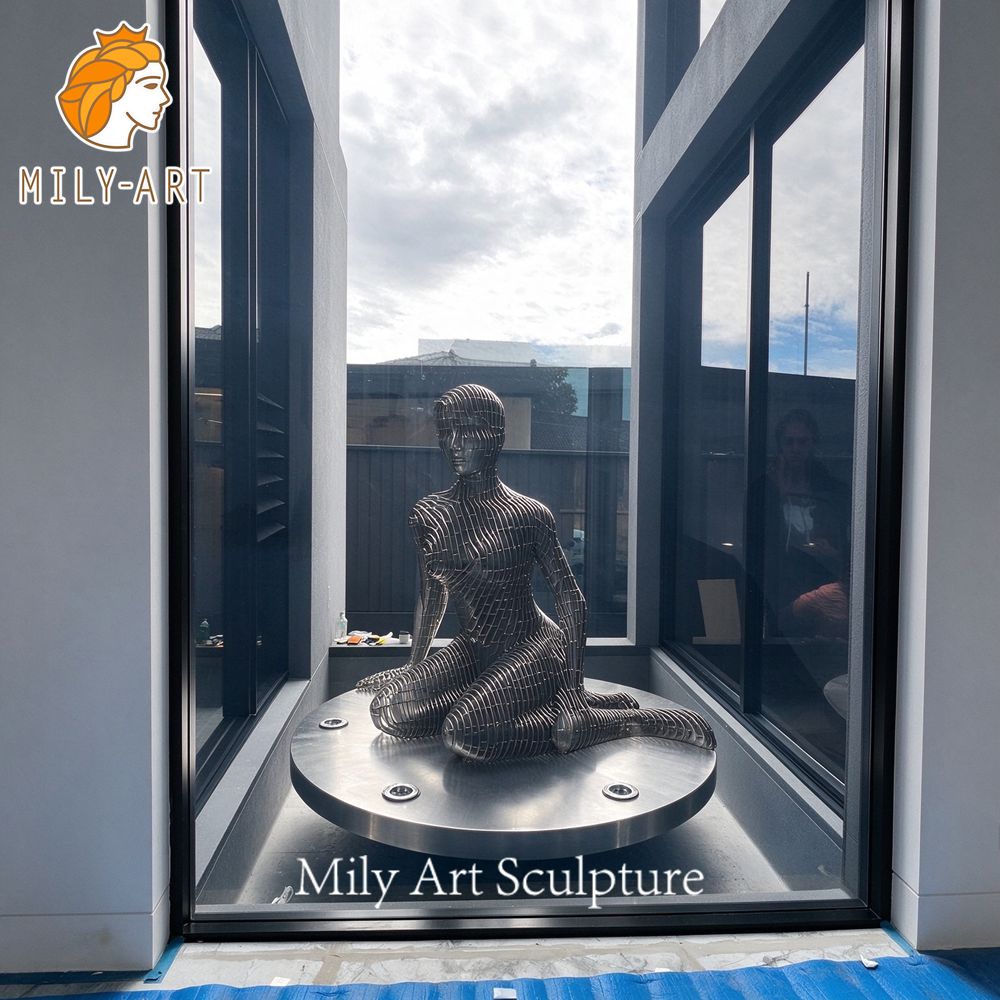
One practical point: openwork sculptures require careful attention to their connections and construction. For outdoor installations, we need to consider structural strength, drainage, and how the individual elements will withstand environmental exposure. If you’re interested in this style, don’t choose it based on appearance alone. Ask about the construction method as well.
Dynamic and Flowing Figures: Bring Movement Into the Design
Do you want a sculpture that feels energetic, even when nobody is moving around it? Dynamic abstract figures may be exactly what you’re looking for. These designs suggest dancing, running, stretching, or turning through sweeping curves and expressive postures.
A great example is a stainless steel cyclist sculpture we created for a client in Hong Kong. The cyclist’s riding posture captures a sense of movement and energy, making the sculpture feel dynamic even though it’s standing still. What I particularly like about this project is how the human figure and bicycle work together to express motion. It shows how a well-designed abstract figure sculpture can bring a sense of life and activity to a space.
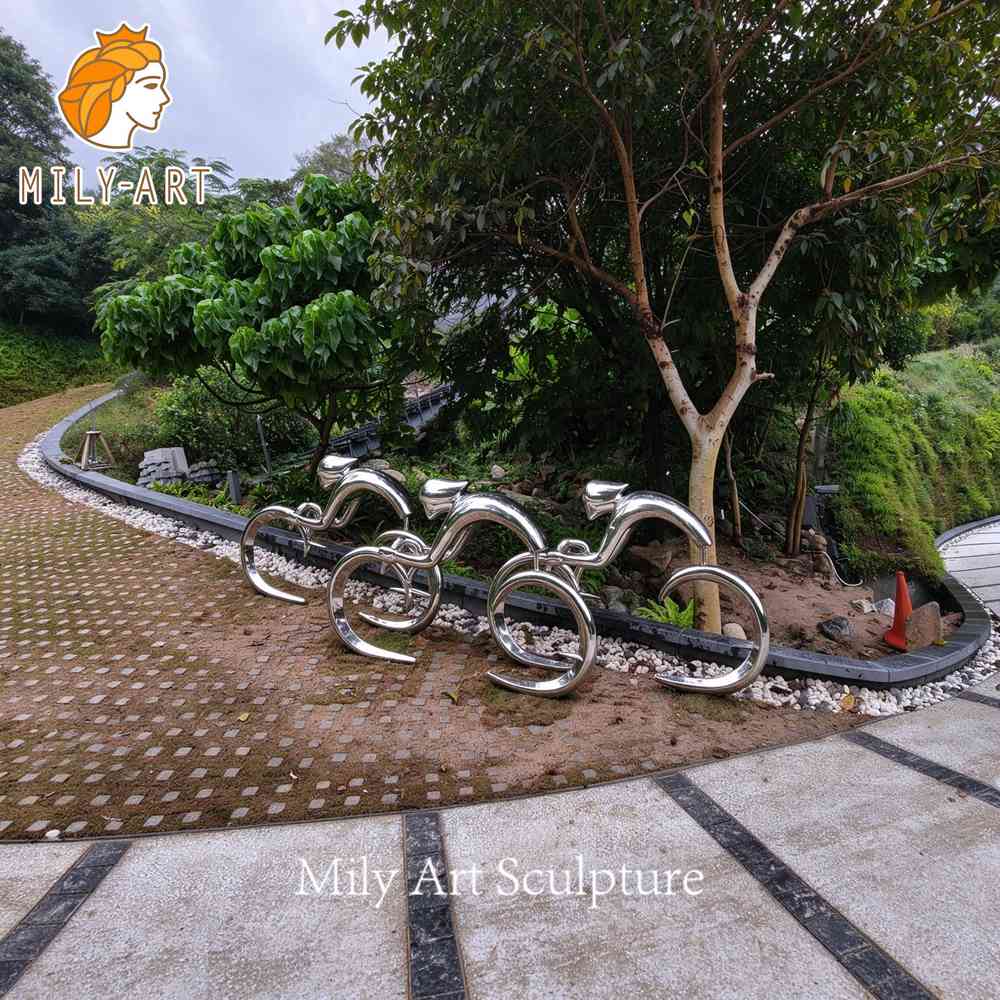
However, dynamic figures need particular attention to balance. A sculpture with an extended arm or a dramatic leaning pose may look beautiful in a rendering, but its internal structure and base must safely support the finished form. This is why we review both the artistic design and the practical construction requirements before production.
What If You Like a Design but Want to Change Something?
This is actually one of my favorite parts of custom sculpture projects. A customer might love the posture of a seated figure but prefer a smoother surface. Another may like a geometric human form but want to change its color or proportions.
You don’t always need to start from scratch. With Custom Abstract Figure Sculptures, we can explore adjustments such as:
- Changing the overall height or width
- Modifying the figure’s posture or proportions
- Creating a smoother or more geometric body
- Choosing a different surface finish or color
- Designing a suitable base or installation connection
However, I always explain that some design changes affect fabrication more than others. An extended arm, delicate openwork section, or unusual leaning posture may require additional support. A very smooth mirror-polished figure may also require more surface-forming and polishing work than a simpler angular design. We review these details before production so that the finished sculpture stays as close as reasonably possible to the approved design.
And if you only have a reference picture? That’s fine as a starting point. We can discuss the elements you like and develop a design direction that suits your project, while respecting the rights associated with existing artworks.
How Can You Avoid Disappointment When Ordering a Custom Sculpture?
I understand why customers sometimes feel nervous about ordering a sculpture from overseas. A sculpture is a significant purchase, and photographs alone cannot tell you everything about its construction or finish. Over the years, I’ve found that clear communication before production helps prevent many avoidable problems.
Here are a few things I recommend checking.
First, look at real completed work.
Beautiful renderings are helpful, but actual sculpture photographs show more about a manufacturer’s craftsmanship. For example, examine the smoothness of polished surfaces, the proportions of human figures, and the quality of visible joints.
Second, confirm the design details before fabrication.
Make sure you understand the final dimensions, material grade, surface finish, base design, and agreed design references.
Third, ask about the manufacturing process.
For complex abstract figures, careful forming, welding, grinding, and polishing all contribute to the finished appearance. Openwork and geometric pieces may require different production methods.
Fourth, discuss installation and shipping early.
Large or irregularly shaped figures need suitable packaging and transportation planning. The installation method should also be reviewed before the sculpture reaches the site.
Finally, don’t be afraid to ask questions.
If you have concerns about a finish, size, or design feature, it’s much easier to discuss them before fabrication than after the sculpture is complete.
At Mily, our metal fabrication roots go back to 1994. That experience has taught us the importance of balancing creative ideas with realistic production solutions. Our goal isn’t simply to make a sculpture that looks attractive in factory photographs. We want customers to understand what they’re ordering and feel confident about the decisions they make.
I’m Linda from Mily. If you’re considering a custom stainless steel abstract figure sculpture, feel free to share your ideas, reference images, or project requirements with us. We’d be happy to help you explore a practical solution that brings your artistic vision to life.
Questions Customers Often Ask Me
Can abstract figure sculptures be made in different sizes?
Yes. We can discuss different dimensions for many designs. However, larger sculptures may require adjustments to their structure, thickness, or installation method to maintain stability.
Is a mirror-polished sculpture better than a painted one?
Neither is automatically better. Mirror polishing emphasizes reflections and surface curves, while paint introduces color and stronger visual contrast. The best choice depends on your preferred design and location.
Can I order a sculpture based on a reference photo?
A reference photo is a useful starting point for discussing style, posture, and proportions. We can help explore a custom design direction and assess fabrication feasibility. If the design copies an existing protected artwork, appropriate authorization may be necessary.
How do I get an accurate quotation?
Share the design or reference images, approximate dimensions, preferred finish, installation location, and any special requirements. The more details we understand, the more accurately we can evaluate materials, fabrication, and project costs.

I’m Linda, and I’ve been living and breathing stainless steel sculptures for over a decade — which sounds more intense than it is, I promise.
As Sales Director at Mily Statue, I spend my days helping clients around the world turn their ideas into real, lasting works of art. From a small garden piece for a private home to a multi-story installation for a city plaza, I’ve seen projects of every scale and style — and I still get genuinely excited when a new brief lands in my inbox.
When I’m not talking sculptures, I’m probably exploring somewhere new, hunting for good coffee, or sharing something beautiful I stumbled across. Life’s too short not to notice the details.
Got a project in mind? Let’s talk.
Share this article

Written by
LindaI'm Linda, and I've been living and breathing stainless steel sculptures for over a decade — which sounds more intense than it is, I promise. As Sales Director at Mily Statue, I spend my days helping clients around the world turn their ideas into real, lasting works of art. From a small garden piece for a private home to a multi-story installation for a city plaza, I've seen projects of every scale and style — and I still get genuinely excited when a new brief lands in my inbox. When I'm not talking sculptures, I'm probably exploring somewhere new, hunting for good coffee, or sharing something beautiful I stumbled across. Life's too short not to notice the details. Got a project in mind? Let's talk.
Related Articles
Why Stainless Steel Sculptures Rust And How to Prevent It
Yes, stainless steel can rust. It is known for rust resistance, not rust immunity. From my experience working...
How to clean stainless steel sculpture?
Stainless steel sculptures have become a defining feature of modern urban landscapes. Under sunlight, their polished surfaces catch...
How to Choose a Stainless Steel Water Feature for Your Villa Courtyard?
To choose a stainless steel water feature, check five things: size, shape, water sound, material and installation. Get...