
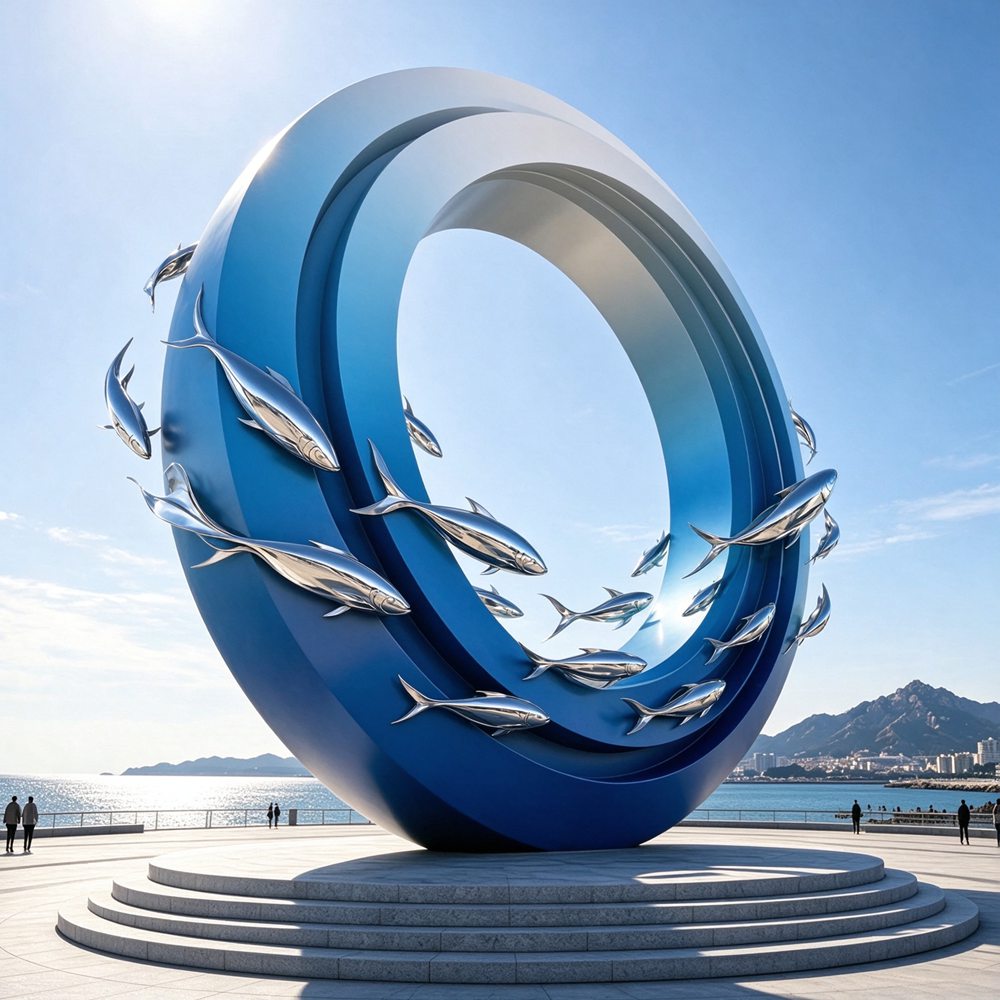
How to Choose Metal Sculptures for Coastal Public Spaces?
Choosing metal sculptures for coastal public spaces requires careful consideration of the environment, design, structural safety, and long-term maintenance. A sculpture installed near the ocean needs to withstand salt-laden air, strong winds, and changing weather conditions while remaining visually attractive and safe for visitors. The right material, suitable dimensions, and well-planned installation details can make a significant difference to its long-term performance.
I’m Linda from Mily Metal Sculptures. When clients approach us about coastal sculpture projects, they often start with a design they love. My first priority is to understand where the sculpture will be installed and how people will experience it. These details help us determine whether the proposed design is suitable or needs adjustments before production.
In this guide, I’ll share practical advice on selecting coastal metal sculptures, including design styles, material choices, structural considerations, and details that are worth confirming before placing an order.
What Types of Metal Sculptures Work Best in Coastal Public Spaces?
The coastal landscape itself provides plenty of artistic inspiration. Marine animals, flowing waves, and sailing forms are popular choices, but the most suitable design depends on the purpose of the public space and its surrounding environment.
For example, a sculpture in a family-oriented seaside park may need to feel welcoming and recognizable, while a landmark at a harbor entrance should have a stronger visual presence from a distance.
Marine Life and Ocean-Inspired Sculptures
Whales, dolphins, fish, and seashells are particularly suitable for coastal parks, beach promenades, and tourist destinations because they create an immediate connection with the ocean.
For a family-friendly seaside park, I would usually recommend a recognizable marine animal with smooth, flowing forms. A dolphin sculpture can create a lively atmosphere, while a whale sculpture often works better as a larger visual centerpiece. Scallop shell designs are also attractive for waterfront gardens, beach entrances, and coastal viewing areas.
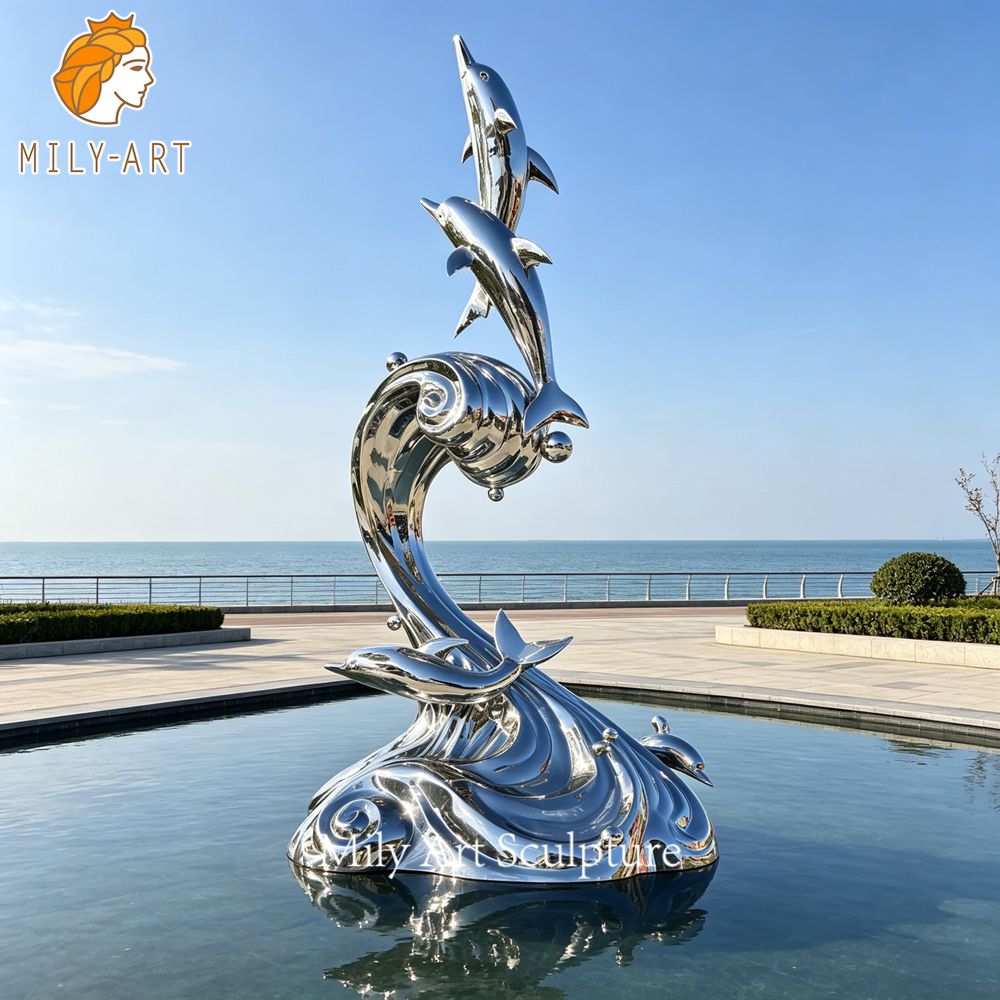
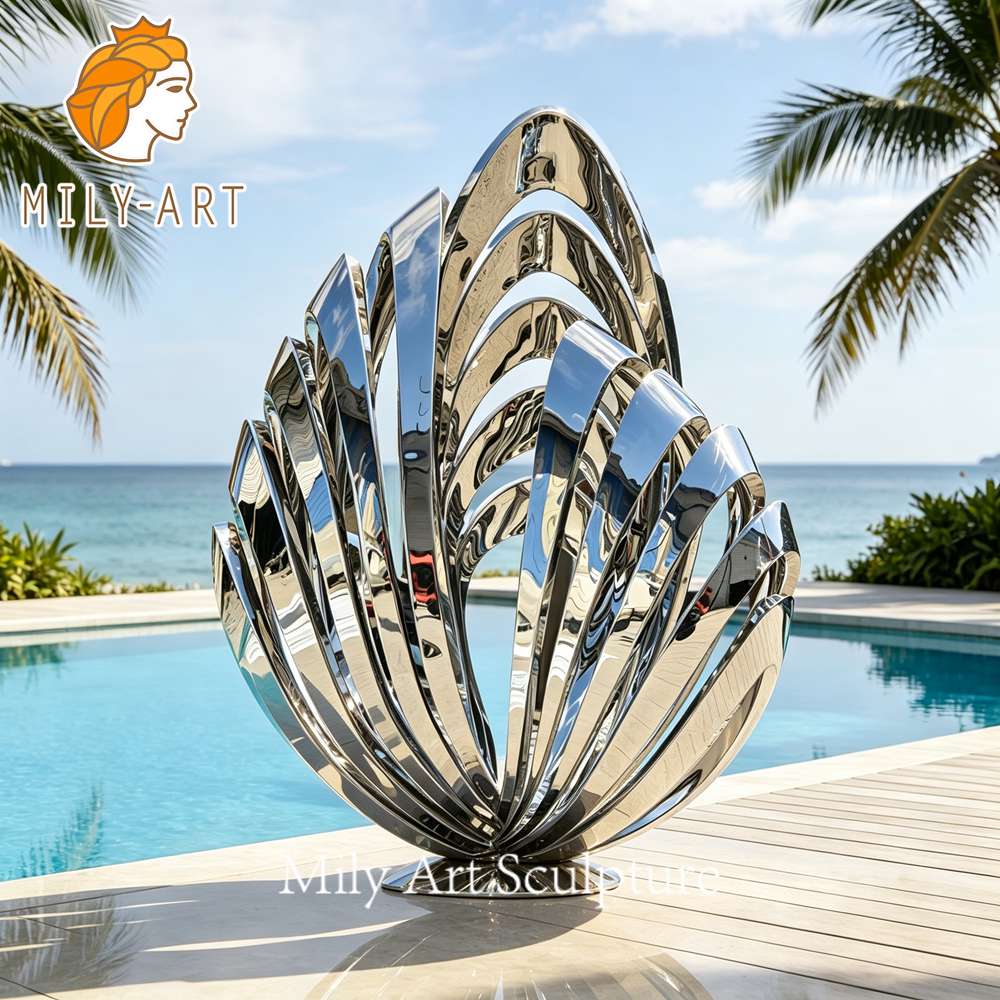
One practical consideration is the level of detail. Sculptures with numerous small projections, narrow gaps, or complicated surface features can be more difficult to clean in salty environments. When developing marine animal sculptures, we often discuss how to preserve the character of the design while keeping the overall surface relatively smooth and accessible for maintenance.
Local identity is another useful starting point. A coastal city known for whale watching, fishing, or sailing may benefit from a sculpture inspired by that heritage. This creates a more meaningful connection between the artwork and the destination than simply choosing a popular marine animal.
You can explore several examples in our Seaside & Beach Sculpture Collection.
Abstract Wave and Sail-Inspired Sculptures
Abstract sculptures are often a good match for contemporary waterfront developments, open plazas, and modern seaside promenades.
Wave-inspired designs create a sense of movement, while sail-shaped sculptures can communicate the character of a harbor or coastal city. Their flowing forms also work well with stainless steel, particularly when mirror-polished or brushed finishes are used.
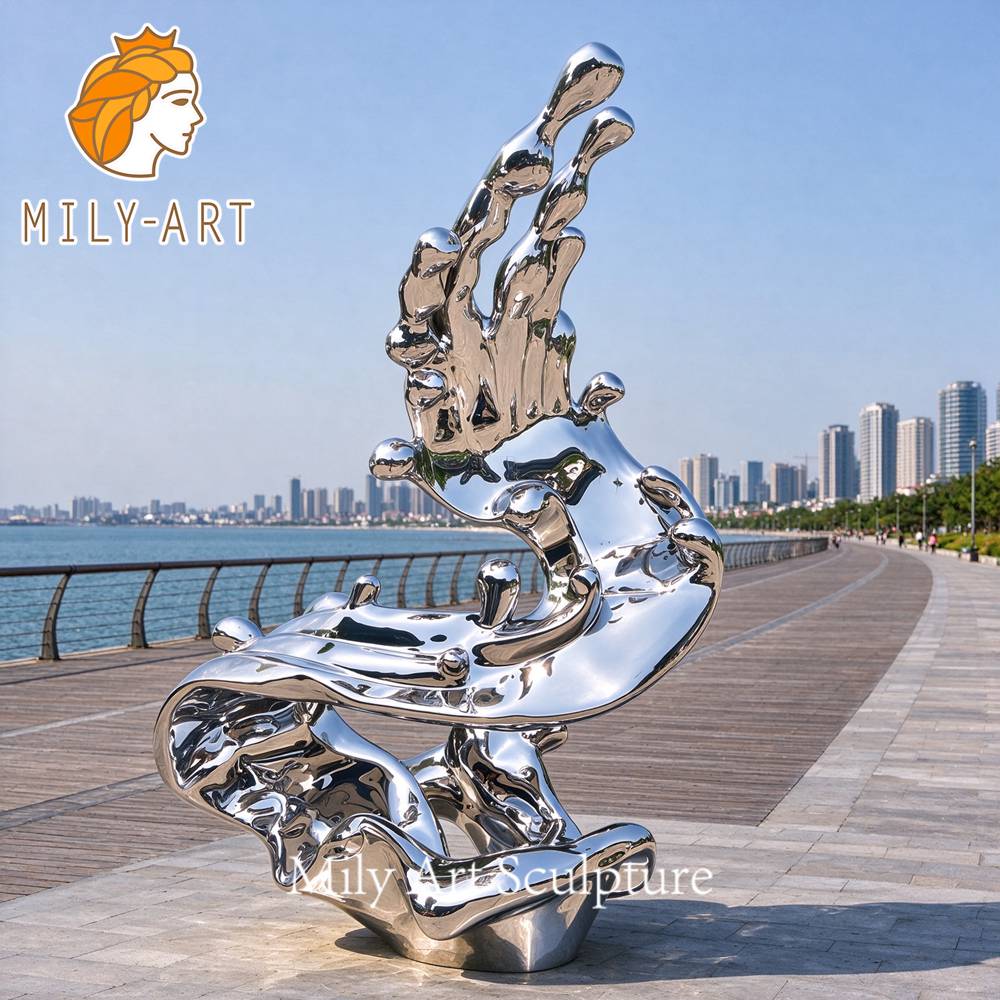
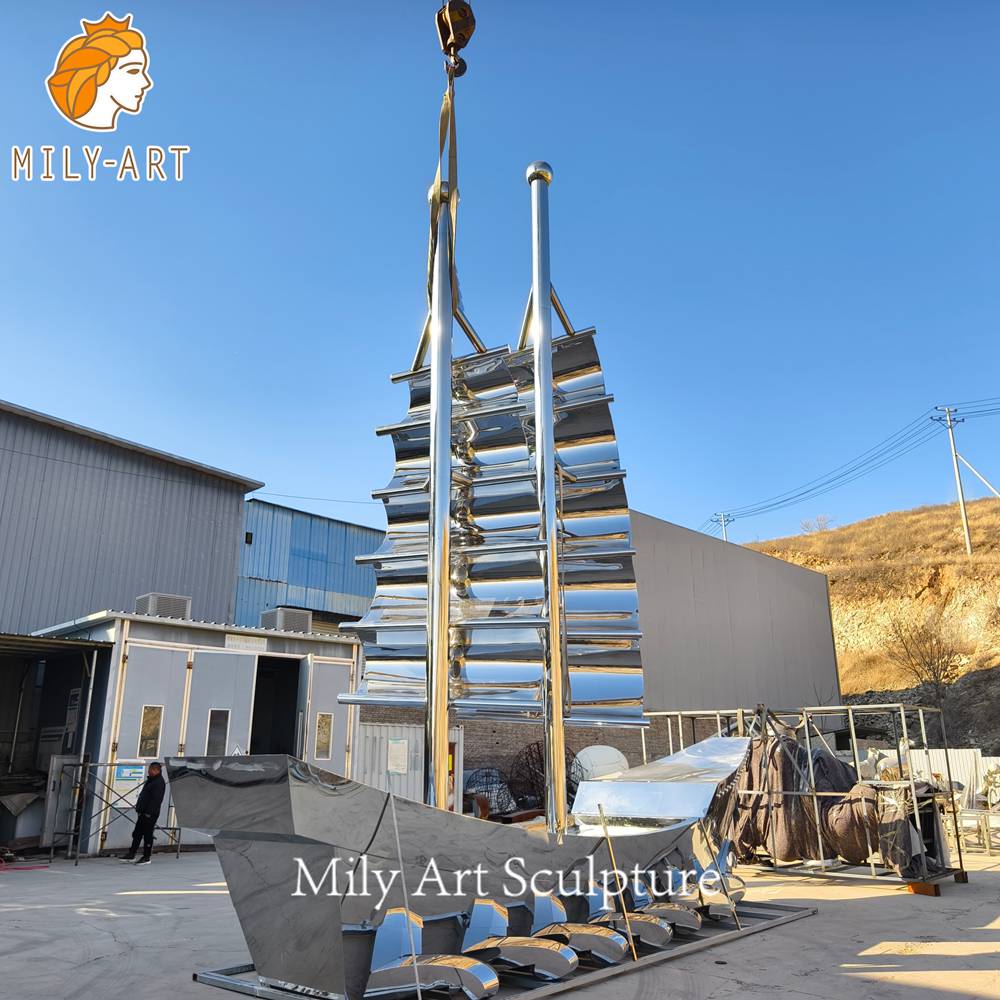
When clients select an abstract sculpture, I pay particular attention to its overall silhouette and the way it connects with the surrounding architecture. A design with a clear, continuous curve usually remains recognizable from different viewing distances. This can be especially valuable in large public spaces where visitors approach the artwork from several directions.
For tall sail-shaped sculptures, the design also needs to be reviewed for wind exposure. A broad, solid surface may generate substantial wind forces, so the internal structure and foundation requirements should be considered during design development. Openings or changes in geometry may be helpful in some designs, but their structural effects need to be calculated rather than assumed.
Large Landmark Sculptures
Large-scale metal sculptures are often commissioned for coastal landmarks, harbor entrances, commercial waterfronts, and public squares. Their purpose is to establish a recognizable identity for the location.
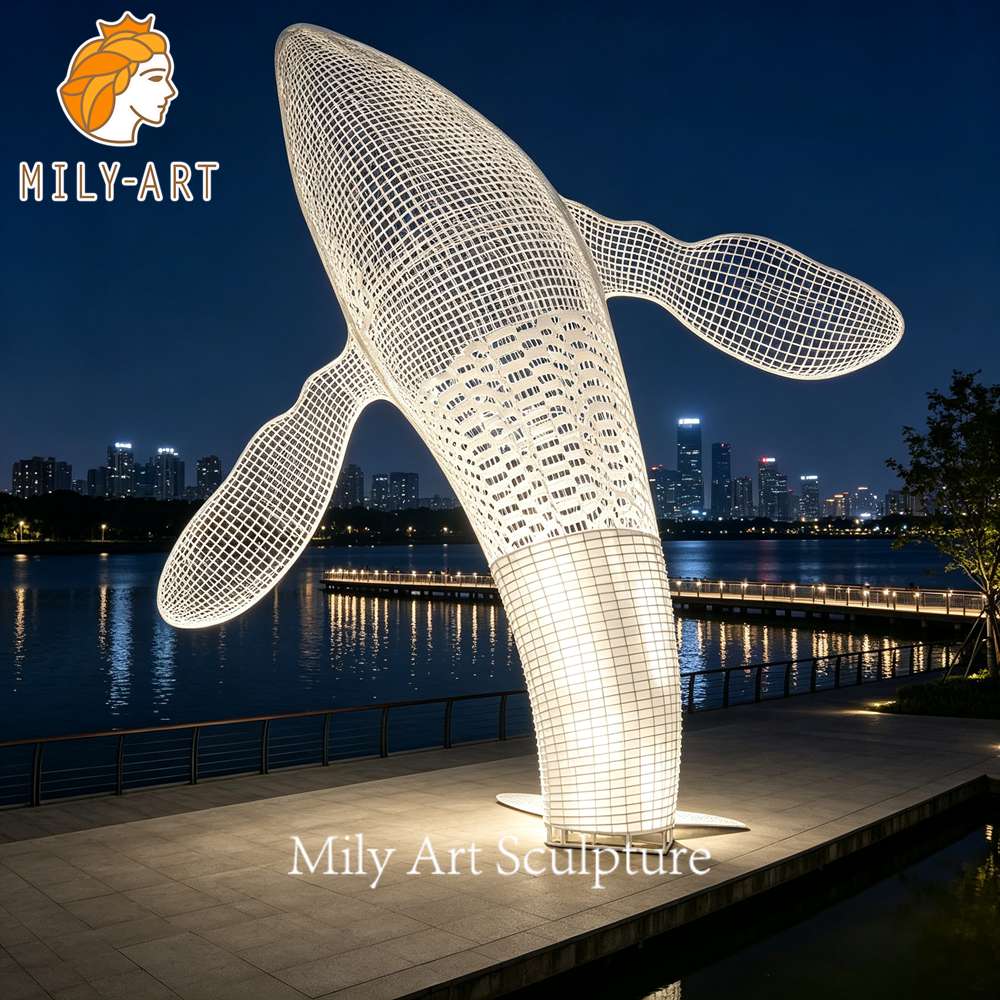
For these projects, I recommend reviewing the sculpture from both close and distant viewpoints. A highly detailed design may look impressive in a rendering but lose its visual impact when viewed from the opposite side of a large plaza.
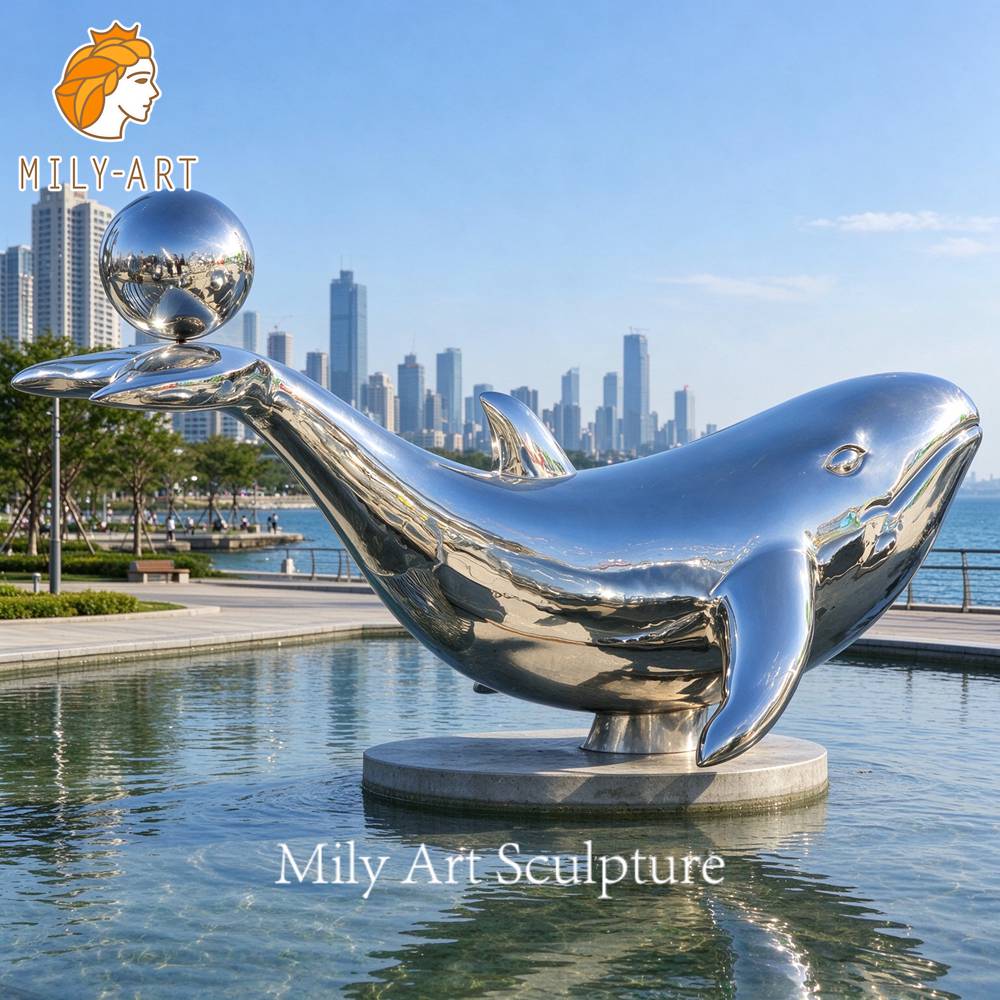
A practical approach is to test two or three proposed sizes using a 3D model placed within photographs of the actual site. This helps reveal whether the sculpture is visually strong enough and whether its proportions are appropriate for the surrounding buildings and landscape.
For landmark projects, I also suggest confirming transportation access and installation space before finalizing the dimensions. A large sculpture may need to be fabricated in sections and assembled on-site, which can influence the design of its connections and overall structure.
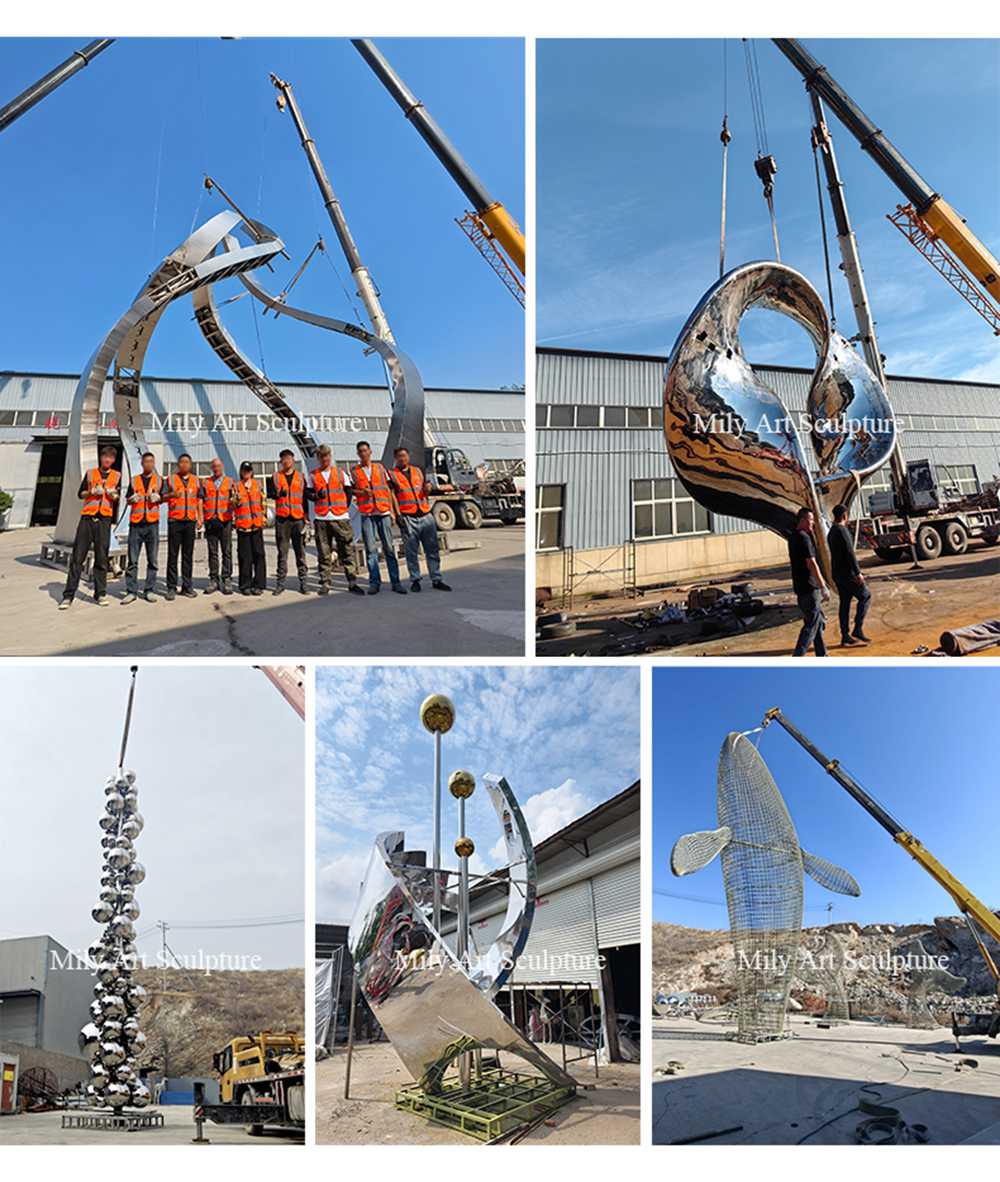
Our Large Scale Public Art Sculptures offer additional inspiration for projects requiring a prominent visual centerpiece.
Which Metal Materials Are Best for Coastal Sculptures?
Material selection for coastal metal sculptures should begin with the actual exposure conditions at the installation site.
A sculpture positioned beside a seawall, where waves regularly produce saltwater spray, faces a more aggressive environment than one located in a sheltered coastal garden. Prevailing winds, salt accumulation, rainfall, and opportunities for regular cleaning all influence how the material performs.
Here is how I would compare several commonly used materials.
| Material | Suitable Conditions | Important Considerations |
|---|---|---|
| 316/316L Stainless Steel | Many coastal environments exposed to salt-laden air | Better chloride corrosion resistance than 304, but still requires proper finishing and maintenance |
| 304 Stainless Steel | Sheltered locations with relatively low chloride exposure | Greater risk of corrosion where salt deposits accumulate |
| Corten Steel | Outdoor locations with suitable wet-dry cycles and limited salt exposure | Persistent moisture and marine chlorides can interfere with protective patina formation |
Why I Usually Recommend 316/316L Stainless Steel
For stainless steel sculptures installed in exposed coastal environments, 316 or 316L is generally my preferred starting point.
Compared with 304 stainless steel, 316 grades contain molybdenum, which improves resistance to chloride-related pitting corrosion. This is particularly relevant in coastal areas where salt particles can settle on the sculpture’s surface. 316L has a lower carbon content, which can help reduce the risk of sensitization during welding. For fabricated sculptures involving numerous welded sections, it is often a practical choice.
However, specifying 316L alone does not guarantee long-term corrosion resistance. The surface condition, weld treatment, fabrication quality, drainage details, and maintenance schedule are equally important. In very aggressive marine environments, especially where saltwater remains trapped or surfaces are frequently splashed, a more detailed corrosion assessment may be necessary. The Nickel Institute’s guidelines for corrosion prevention discuss coastal exposure, material selection and maintenance.
One suggestion I give clients is to confirm the stainless steel grade in the quotation and project specifications, rather than relying on a general description such as “marine-grade stainless steel.” If material verification is required, it should also be agreed upon before production. For a more detailed comparison, see our article 304 vs. 316 Stainless Steel: Which Is Better for Outdoor Sculptures?
How Should Coastal Sculptures Be Designed to Withstand Wind and Weather?
When discussing custom stainless steel sculptures for coastal areas, I consider the overall construction just as important as the visible finish. Two sculptures made from the same stainless steel grade can perform differently if their structural design, connections, and finishing quality are not comparable.
Wind Loads and Structural Stability
Coastal public spaces are frequently exposed to strong winds, and the shape of a sculpture can significantly influence the forces acting on it.
For example, a tall, solid sail-shaped sculpture generally presents a different wind-loading challenge from a compact, rounded form. Its height, projected area, orientation, and structural configuration all affect the design requirements.
For large coastal sculptures, wind loads should be calculated according to the applicable codes and site-specific conditions by a qualified structural engineer.
During fabrication planning, we consider how the internal steel framework, support members, and structural connections can be integrated into the artistic design. A good solution should provide the required structural support without compromising the sculpture’s intended appearance.
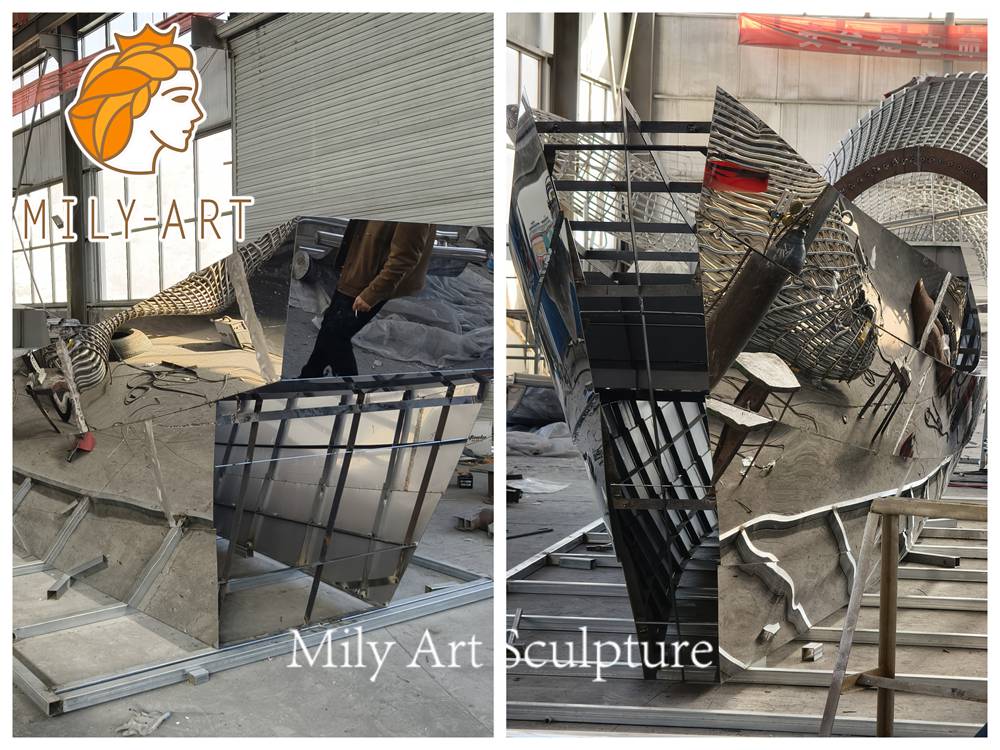
If you’re planning a large installation, I recommend confirming the engineering requirements before approving the final sculpture dimensions. This can help avoid costly structural revisions later.
Secure Foundations and Anchoring
The sculpture and its foundation need to work together as a complete structural system.
For public installations, anchoring details depend on the sculpture’s weight, wind loads, geometry, and ground conditions. The foundation may also need to accommodate existing paving, underground utilities, drainage, or nearby pedestrian routes.
From a manufacturing perspective, we can coordinate the sculpture’s base plates, structural connection points, and installation requirements with the project engineer’s approved design.
One issue worth addressing early is whether the sculpture will be installed on an existing foundation or whether a new foundation is planned. This affects the information that needs to be exchanged between the sculpture manufacturer and the local installation team.
Surface Finishes and Corrosion Protection
Mirror-polished and brushed finishes are both suitable options for stainless steel coastal sculptures, but they create different visual effects and maintenance considerations. Mirror-polished stainless steel reflects the sky and surrounding landscape, making it particularly attractive for waterfront landmarks. Brushed stainless steel creates a softer appearance and may be preferred where strong reflections are undesirable.
For mirror-polished sculptures, I recommend reviewing the surrounding environment before finalizing the finish. Reflected sunlight can be particularly noticeable near roads, viewing platforms, and busy pedestrian areas. The quality of the finishing process also matters. Proper weld finishing, removal of fabrication contamination, and suitable surface treatment help support corrosion resistance.
I also pay attention to details where water and salt may accumulate. Narrow crevices, poorly drained cavities, and inaccessible connections can create maintenance problems over time. Where possible, these details should be minimized or designed to allow drainage and inspection.
How to Choose the Right Size and Location for a Coastal Sculpture?
One of the most common difficulties in custom public sculpture projects is choosing the right size. A sculpture may look impressive in an isolated product photograph but appear too small when installed in an open coastal plaza. The opposite can also happen: an oversized piece may dominate a compact waterfront park and interrupt the intended landscape views. Rather than selecting dimensions based only on a reference image, I recommend evaluating the sculpture’s proportions within the actual site.
For a small waterfront garden or pedestrian viewing area, the artwork may be intended for close-range appreciation. In this situation, surface quality, detailed craftsmanship, and the relationship between the sculpture and surrounding seating or landscaping become more important.
For a large seaside square, the sculpture usually needs a stronger overall silhouette so visitors can recognize it from farther away. The appropriate height depends on the available space, surrounding architecture, and main viewing distances.
My preferred method is to compare several sizes in the same site photograph. For example, we can place 3D models of different dimensions into a photograph with a reliable scale reference. This makes it easier to evaluate how the sculpture will appear before production begins.
Location also influences the final design. The installation should preserve important sea views, allow comfortable pedestrian movement, and provide sufficient access for maintenance equipment when necessary. If you’re exploring sculptures for waterfront developments beyond open beaches, our Waterfront Sculpture Collection provides additional design references.
What Safety and Maintenance Issues Should Be Considered?
For coastal public art, I encourage clients to think about how visitors will interact with the sculpture after installation.
A sculpture installed in a public plaza may become a popular photography location, particularly if it has a reflective surface or recognizable shape. Visitors may lean against it, touch it, or allow children to play nearby.
This makes details such as smooth edges, accessible openings, protruding elements, and potential climbing points important during design review. Public artworks may also need to meet local accessibility, safety, and approval requirements.
Maintenance deserves similar attention because coastal conditions can gradually affect the appearance of even well-finished stainless steel.
Salt deposits can accumulate on exposed surfaces, particularly in sheltered areas that receive limited rain washing. If these deposits remain for extended periods, they can increase the risk of staining and localized corrosion.
For most projects, I recommend discussing a maintenance plan before installation. The plan should consider cleaning access, appropriate cleaning methods, inspection of visible surfaces, and periodic checks of structural connections. A sculpture installed directly beside the sea may require more frequent attention than one in a sheltered coastal park. The actual schedule should reflect local exposure conditions and the manufacturer’s maintenance recommendations.
If your maintenance team needs more specific cleaning guidance, our article How to Clean a Stainless Steel Sculpture explains suitable methods in greater detail.
How to Plan and Customize a Coastal Sculpture Project?
When clients contact us about custom coastal sculptures, they sometimes worry that they need complete technical drawings before requesting a quotation. In fact, we can begin discussing a project using reference images, site photographs, approximate dimensions, and an initial design concept. The important thing is to identify the information that affects the design and manufacturing requirements.
Here are the details I find most useful during an initial discussion.
| Project Information | Why It Matters |
|---|---|
| Installation location and site photographs | Helps us understand the landscape, coastal exposure, and visual surroundings |
| Approximate size or available space | Provides a starting point for dimensions and structural planning |
| Reference images or design concept | Clarifies the desired artistic style and level of detail |
| Ground conditions and installation arrangements | Helps coordinate support connections and on-site installation requirements |
| Preferred material and finish | Establishes appearance and durability expectations |
| Budget and project schedule | Helps us evaluate practical manufacturing options and delivery planning |
Once the basic requirements are clear, we can discuss the sculpture’s shape, material specifications, dimensions, fabrication details, and finishing options.
For projects that require design development, 3D modeling is particularly useful. It allows clients to review proportions, confirm the overall appearance, and identify possible changes before fabrication. We can also compare the approved 3D model with photographs of the completed sculpture to demonstrate how the design is translated into the finished artwork.
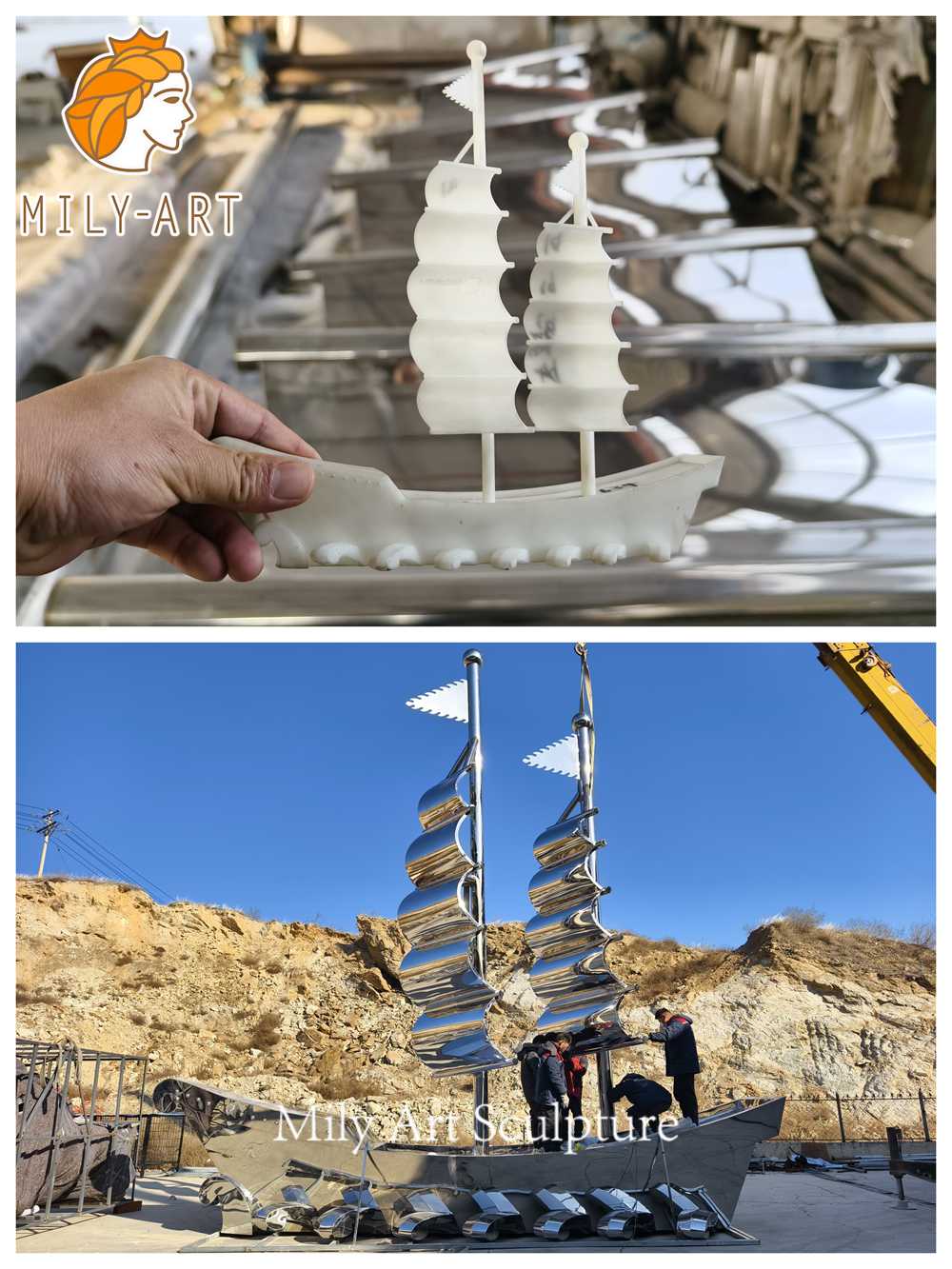
For larger sculptures, I recommend discussing transportation and installation arrangements early. The need for sectional fabrication, shipping access, lifting equipment, or on-site assembly can affect the final manufacturing plan.
A useful tip when comparing quotations: check whether different manufacturers are offering the same stainless steel grade, surface finish, structural scope, packaging requirements, and installation-related documentation. Two quotations may look similar at first but cover significantly different specifications. Clear project requirements make it easier to compare proposals fairly and reduce unexpected changes during production.
Final Thoughts
Choosing metal sculptures for coastal public spaces involves balancing artistic design with the practical demands of the marine environment. From my experience, the most successful projects begin with a clear understanding of the site. The sculpture’s shape should complement the landscape, its material should suit the exposure conditions, and its structure should be developed around the project’s engineering requirements.
For coastal stainless steel sculptures, I generally recommend evaluating 316/316L stainless steel, checking the finishing and drainage details carefully, and planning future maintenance before installation. These decisions can have a greater impact on long-term performance than small differences in the sculpture’s initial appearance.
At Mily Metal Sculptures, we help clients turn their ideas into custom stainless steel artworks, from initial design discussions and 3D modeling to fabrication and finishing.
If you’re planning a sculpture for a seaside park, coastal plaza, waterfront promenade, or public landmark, feel free to share your site photographs, reference designs, and approximate dimensions with us. I’d be happy to discuss a practical solution that brings your artistic vision together with the requirements of your location.

I’m Linda, and I’ve been living and breathing stainless steel sculptures for over a decade — which sounds more intense than it is, I promise.
As Sales Director at Mily Statue, I spend my days helping clients around the world turn their ideas into real, lasting works of art. From a small garden piece for a private home to a multi-story installation for a city plaza, I’ve seen projects of every scale and style — and I still get genuinely excited when a new brief lands in my inbox.
When I’m not talking sculptures, I’m probably exploring somewhere new, hunting for good coffee, or sharing something beautiful I stumbled across. Life’s too short not to notice the details.
Got a project in mind? Let’s talk.
Share this article

Written by
LindaI'm Linda, and I've been living and breathing stainless steel sculptures for over a decade — which sounds more intense than it is, I promise. As Sales Director at Mily Statue, I spend my days helping clients around the world turn their ideas into real, lasting works of art. From a small garden piece for a private home to a multi-story installation for a city plaza, I've seen projects of every scale and style — and I still get genuinely excited when a new brief lands in my inbox. When I'm not talking sculptures, I'm probably exploring somewhere new, hunting for good coffee, or sharing something beautiful I stumbled across. Life's too short not to notice the details. Got a project in mind? Let's talk.
Related Articles
Which Poolside Sculptures Hold Up to Chlorine, Water and Sun?
Stainless steel sculptures hold up best by the pool because they resist corrosion, offer a clean modern appearance,...
Large Stainless Steel Sculpture Cost: Price by Size and Type
A large stainless steel sculpture typically costs between $4,500 and $20,000 or more, depending mainly on its size, design,...
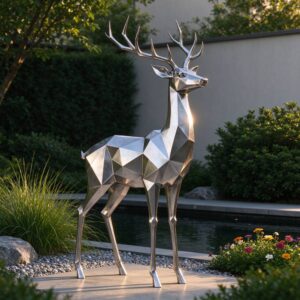
Low Poly Metal Sculpture: A Guide to Faceted & Geometric Animal Art
Low poly design has moved from the digital world into physical art. You’ve probably seen it in video...