
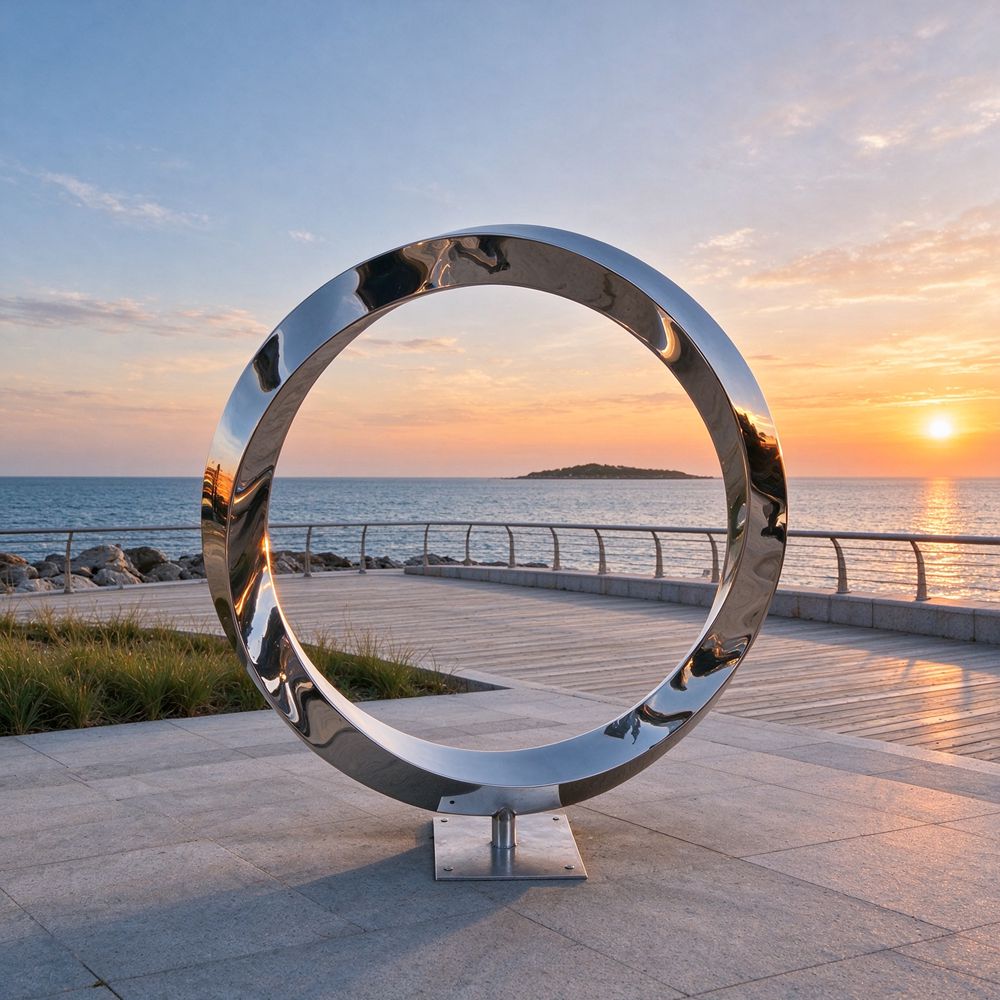
What Makes Möbius Strip Sculpture So Fascinating?
A Möbius strip sculpture fascinates people through its endless flowing form, unusual mathematical structure, symbolic meaning, and changing reflections. Unlike an ordinary loop, a true Möbius strip has just one continuous surface and one boundary edge. This simple geometric idea creates a sculpture that seems to have no beginning or end.
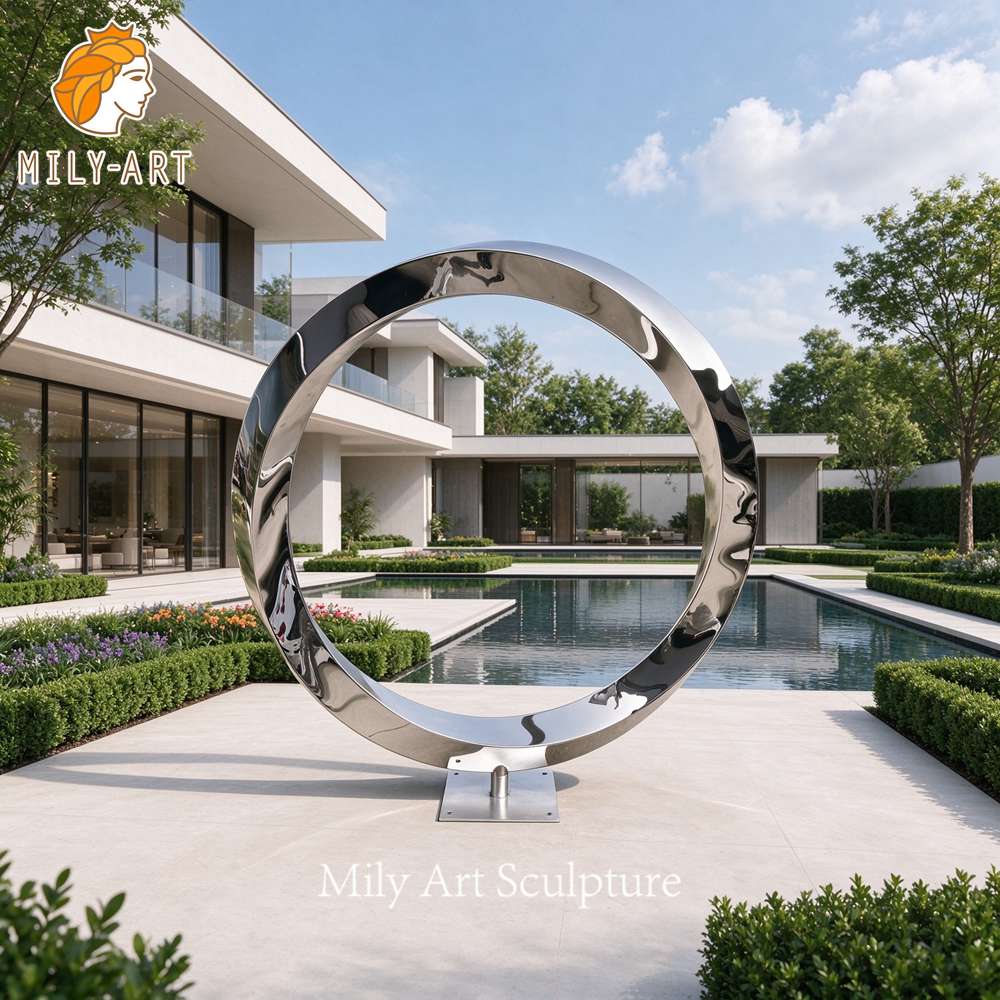
Hi, I’m Linda from Mily Metal Sculptures. Working with stainless steel sculptures has taught me that some of the most impressive designs come from surprisingly simple shapes. The Möbius strip is one of my favorites. Its twisting curves are beautiful, but turning those curves into a smooth metal sculpture also requires careful design and skilled craftsmanship.
So, what makes this unusual form so appealing, and how do we bring it to life in stainless steel? Let me share my perspective.
What Is a Möbius Strip in Art and Sculpture?
The Möbius strip takes its name from mathematician August Ferdinand Möbius, who independently discovered its unusual properties in 1858, alongside Johann Benedict Listing. Artists turn this mathematical concept into three-dimensional artworks using flowing ribbons, twisting metal surfaces, and open circular forms. Some follow the mathematical structure closely, while others adapt it to create more expressive shapes.
Want to understand its shape? Take a strip of paper, give one end a half-twist, and connect the ends. You’ll create a loop with only one continuous side. If you trace a line along the surface, you’ll eventually return to your starting point without crossing an edge.
I find this transformation especially interesting. A simple paper strip can inspire a monumental sculpture several meters tall.
However, making the shape larger isn’t as simple as enlarging a drawing. The artist must consider how the curves connect, how the sculpture balances visually, and how different materials influence its appearance.
This is where artistic design and professional metal fabrication begin to work together. For a hands-on explanation of the one-sided surface, see the Möbius strip exhibit from the University of Wisconsin–Madison physics museum.
Why Are Möbius Strip Sculptures So Fascinating?
A Continuous Form with No Beginning or End
The most recognizable feature of a Möbius sculpture is its seemingly endless movement. Your eyes naturally follow the twisting ribbon, but the curve never appears to reach a final destination. This continuous form often symbolizes infinity, unity, and the connection between different ideas. Some viewers associate it with eternal love, while others see it as a representation of time, transformation, or life’s ongoing journey.
What does the shape remind you of? I think that’s part of its charm. People can appreciate the same sculpture for completely different reasons without needing to understand its mathematical background.
From a manufacturing perspective, the continuous appearance also presents an interesting challenge. If a sculpture contains visible, poorly aligned joints or uneven curves, those details can interrupt the visual flow. Our craftsmen therefore pay close attention to how the individual metal sections meet, ensuring the finished surface follows the intended shape as smoothly as possible.
A Different Appearance from Every Angle
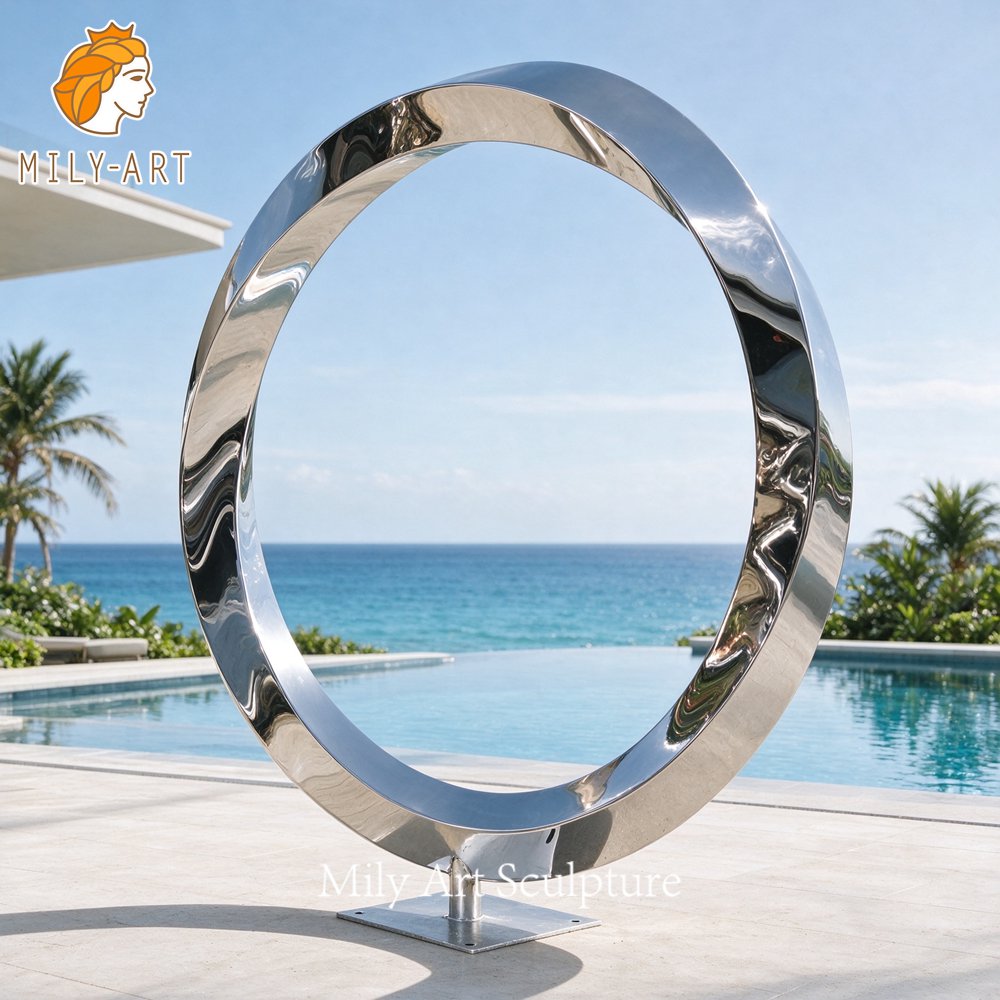
Have you ever walked around an abstract sculpture and noticed that its appearance changes with every step? Möbius strip sculpture creates this experience naturally.
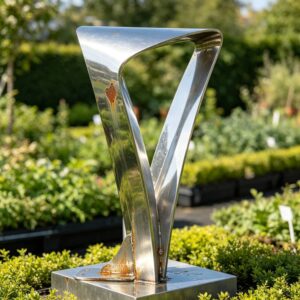
From the front, a sculpture may resemble an elegant circular ribbon. Move to the side, and its twisting structure becomes more obvious. From another position, the overlapping curves and central opening create an entirely different composition. The empty space inside the sculpture is just as important as the metal itself. Together, they create a balance between solid surfaces and open space.
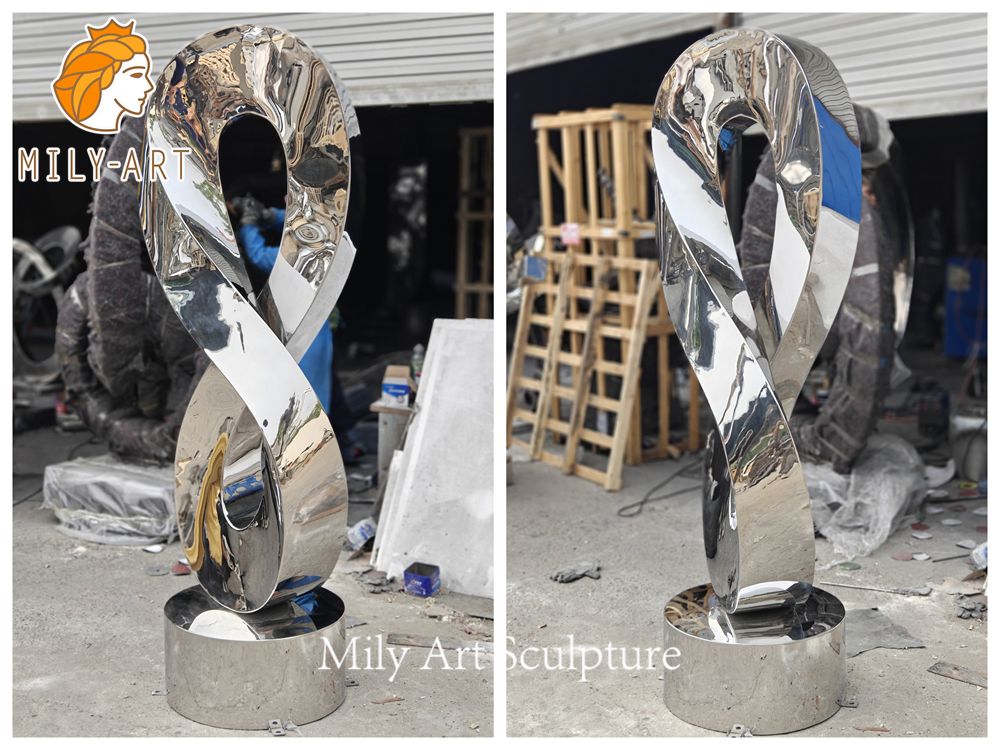
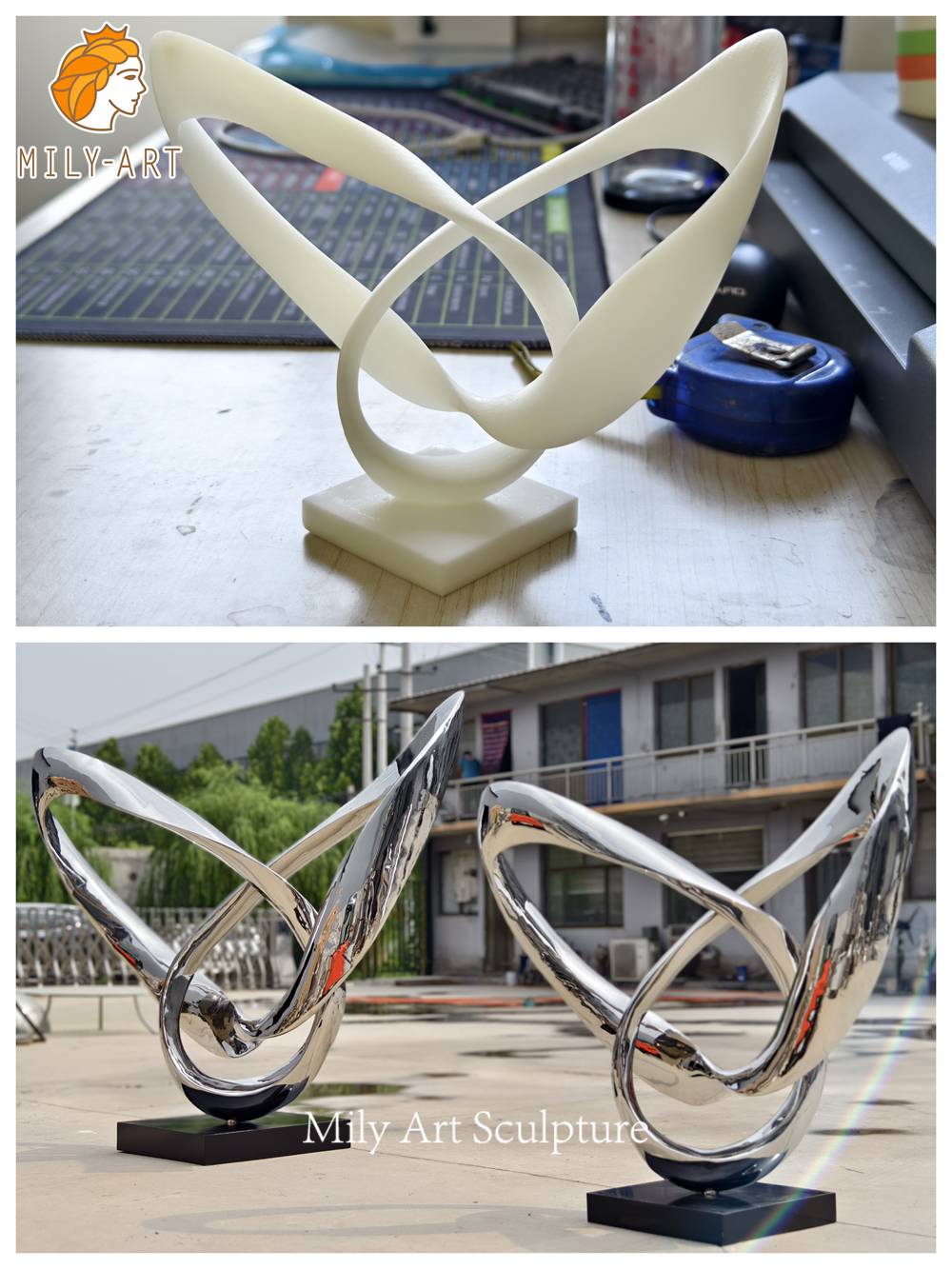
When I discuss a custom Möbius design with clients, I always encourage them to consider multiple viewing angles rather than focusing on a single rendering. For example, a sculpture at a building entrance should look attractive to visitors approaching from the main walkway. A sculpture in an open plaza may need equally interesting views from several directions. That is why we review the overall form and proportions in a 3D model before starting fabrication.
The Play of Light and Reflection
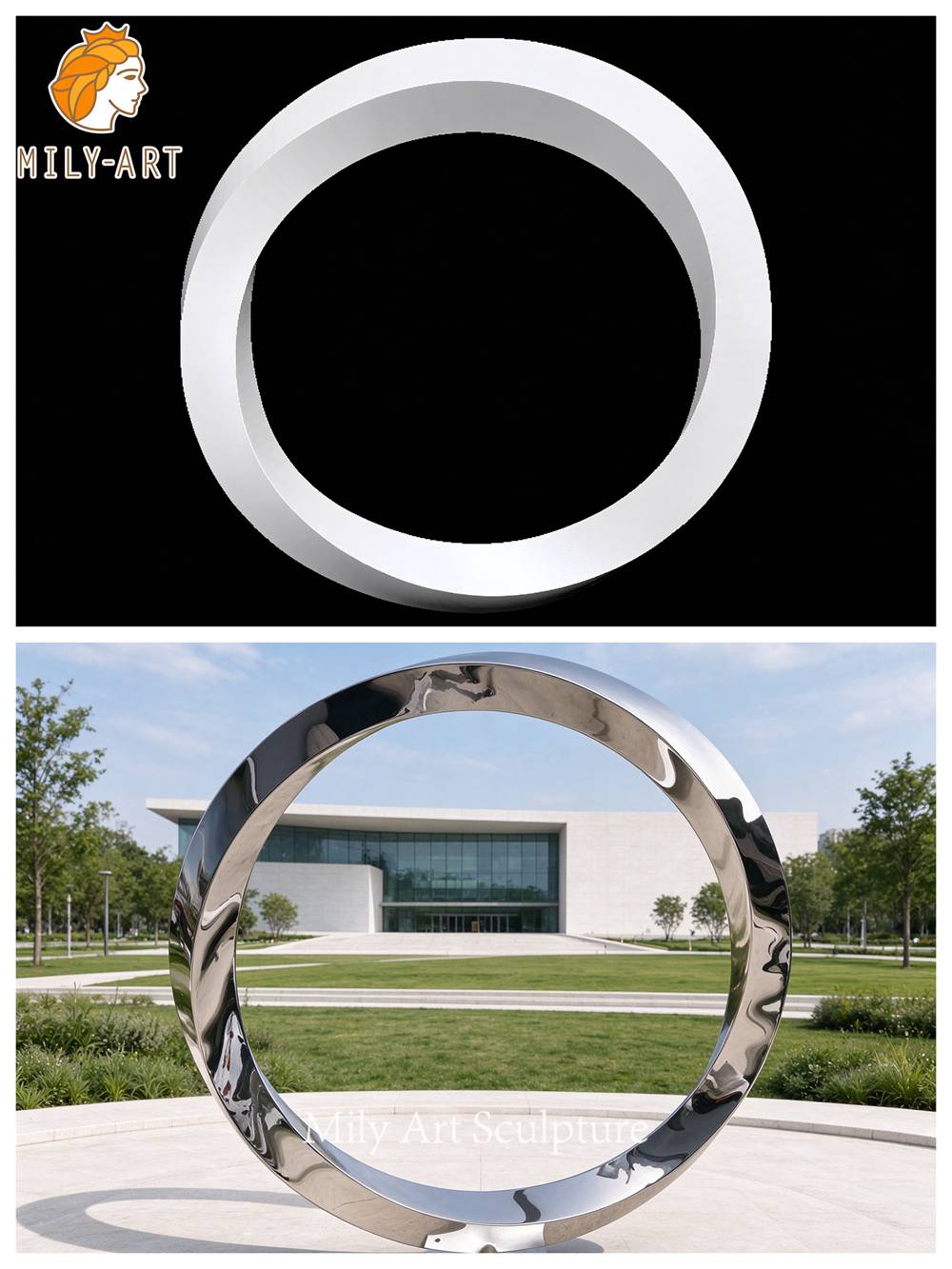
For me, light and reflection are among the most captivating features of a stainless steel Möbius sculpture. A mirror-polished surface reflects the surrounding environment, including trees, buildings, clouds, and people passing by. Because the metal twists continuously, these reflections bend and stretch across its curved surfaces.
Imagine a mirror-polished Möbius sculpture standing in a modern courtyard. In the morning, it reflects the soft light of the sky. At midday, bright highlights follow its curves. As evening approaches, the surrounding architecture and changing colors create a completely different appearance.
The artwork remains in the same place, but its visual character changes throughout the day. Achieving this effect requires more than simply polishing a piece of metal.
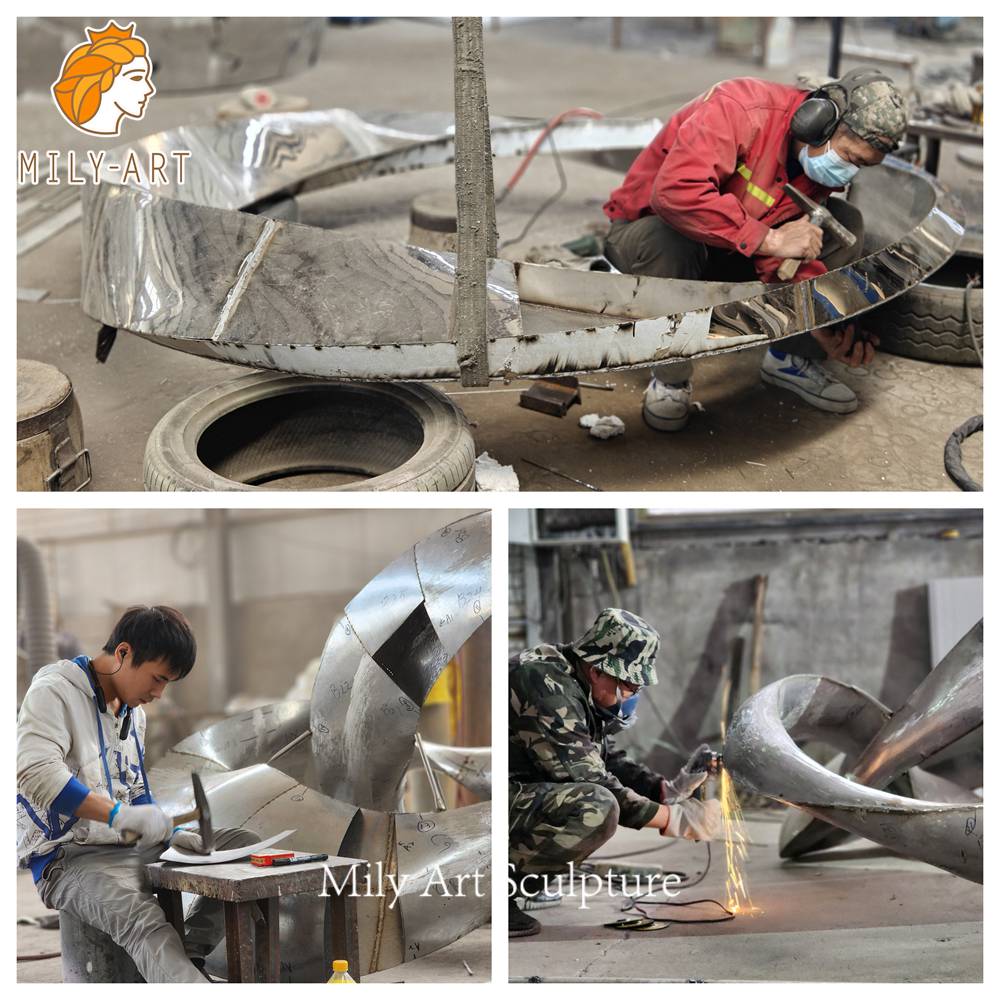
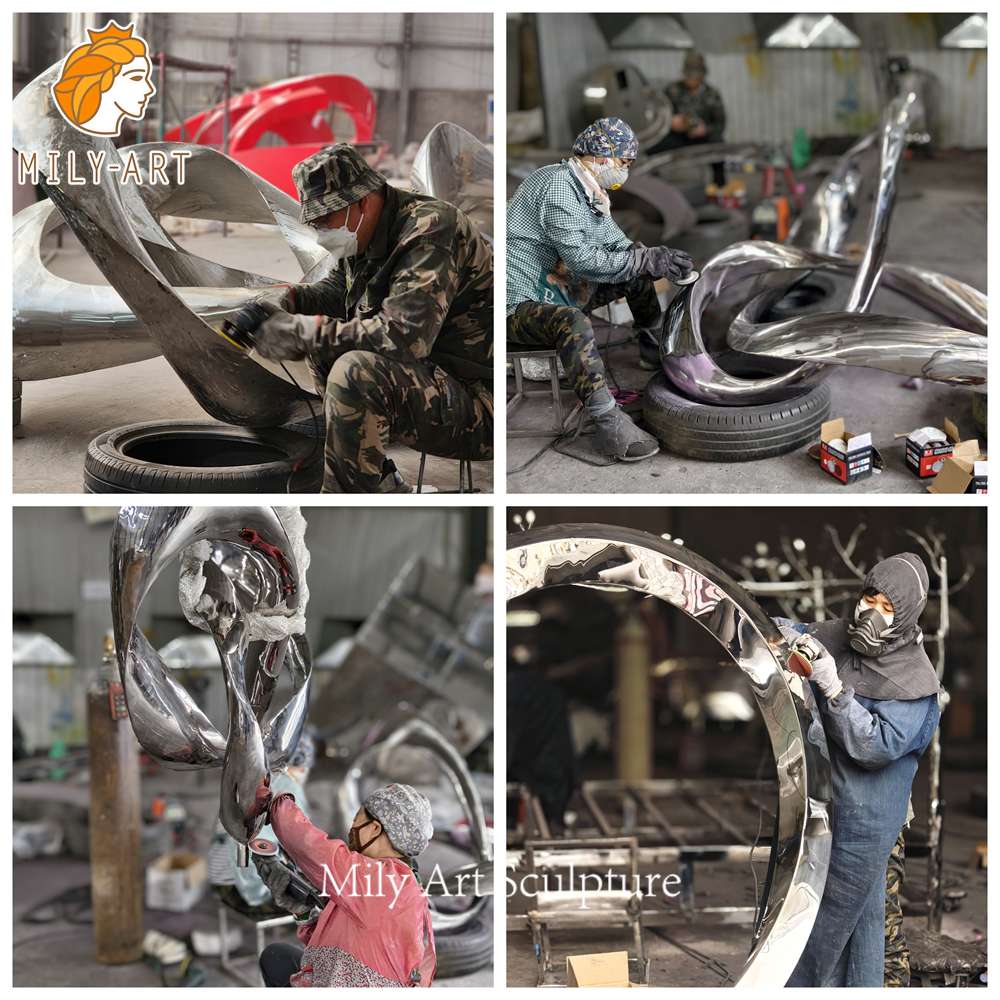
In Mily workshop, we carefully shape stainless steel panels to match the approved design. Our craftsmen then weld, grind, and polish the surfaces to create smooth transitions. Mirror finishes reveal even small distortions, so accurate forming and consistent polishing make a significant difference.
This is one reason I particularly appreciate well-crafted stainless steel abstract sculptures. The quality of the craftsmanship becomes part of the artistic experience.
The Balance Between Mathematics and Art
The Möbius strip demonstrates how mathematics can inspire beautiful artwork. Its geometry provides the underlying structure, while artists explore different ribbon widths, proportions, twists, and overall compositions.
A narrow ribbon can create a delicate and elegant appearance. A broad, flowing band can make the same concept feel powerful and monumental.
In my experience, the most successful designs achieve a balance between visual beauty and practical construction. We may need to adjust certain details during the design stage so the sculpture maintains its intended appearance while allowing for a stable internal structure. The goal isn’t simply to reproduce a mathematical diagram. It’s to transform the idea into an artwork that people can enjoy in a real environment.
What Materials Are Used to Make Möbius Strip Sculptures?
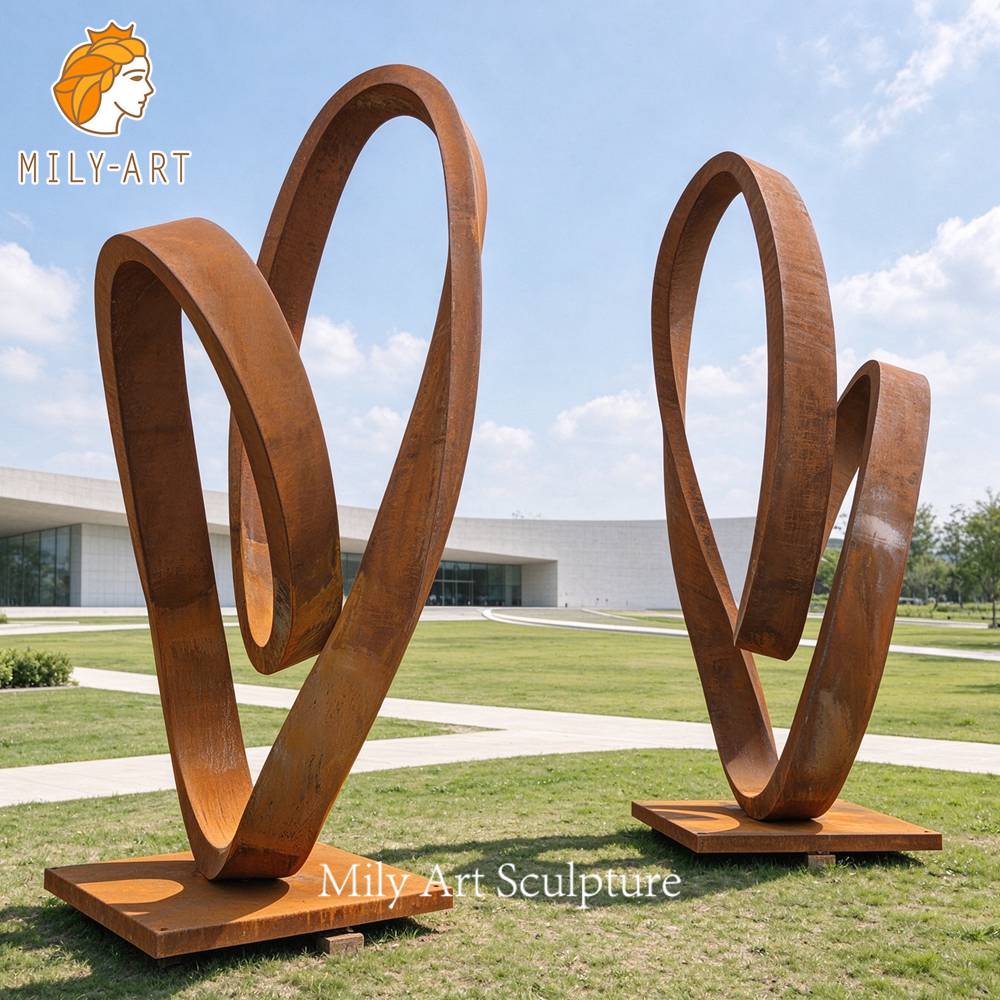
Artists use different materials for Möbius strip art, including stainless steel, Corten steel, bronze, and other metals. Each material creates its own visual character.
For contemporary outdoor installations, I often recommend stainless steel because it combines design flexibility, strength, and a wide range of surface finishes. Stainless steel sheets allow our craftsmen to build large, flowing forms through cutting, forming, and welding. After grinding and finishing, the individual sections can create the appearance of a continuous metal ribbon.
Surface treatment also changes the character of the sculpture:
- Mirror-polished stainless steel: Creates bright reflections that emphasize the twisting curves and surrounding environment.
- Brushed stainless steel: Produces a softer, more understated appearance with subtle highlights.
- Painted stainless steel: Introduces color and allows the sculpture to complement specific architectural designs.
- Corten steel: Develops a warm, rust-colored patina that gives the sculpture a more natural, earthy character.
For large stainless steel sculptures, our team also considers the internal framework, panel thickness, and surface transitions. These details help us achieve the intended appearance while supporting the structure.
If you’re curious about the manufacturing work behind a finished sculpture, our stainless steel sculpture fabrication guide explains the main production stages.
Where Are Möbius Strip Sculptures Commonly Displayed?
Möbius strip sculptures work particularly well in contemporary spaces where people can appreciate their changing forms from different directions.
In commercial plazas, a large reflective sculpture can become a striking visual landmark. Its polished curves capture surrounding buildings and add movement to an otherwise static setting.
At modern building entrances, the continuous ribbon creates an elegant contrast with straight architectural lines.
In public parks and landscaped gardens, the sculpture connects with trees, open skies, and natural surroundings through its reflections.
Corporate offices and indoor atriums also provide attractive settings. Here, a Möbius design can communicate creativity, innovation, and connection while introducing an artistic focal point.
I usually recommend considering the background as carefully as the sculpture itself. A reflective artwork placed against greenery creates a different impression from the same design surrounded by glass and steel architecture. You can explore more contemporary designs in our Abstract Metal Sculptures collection.
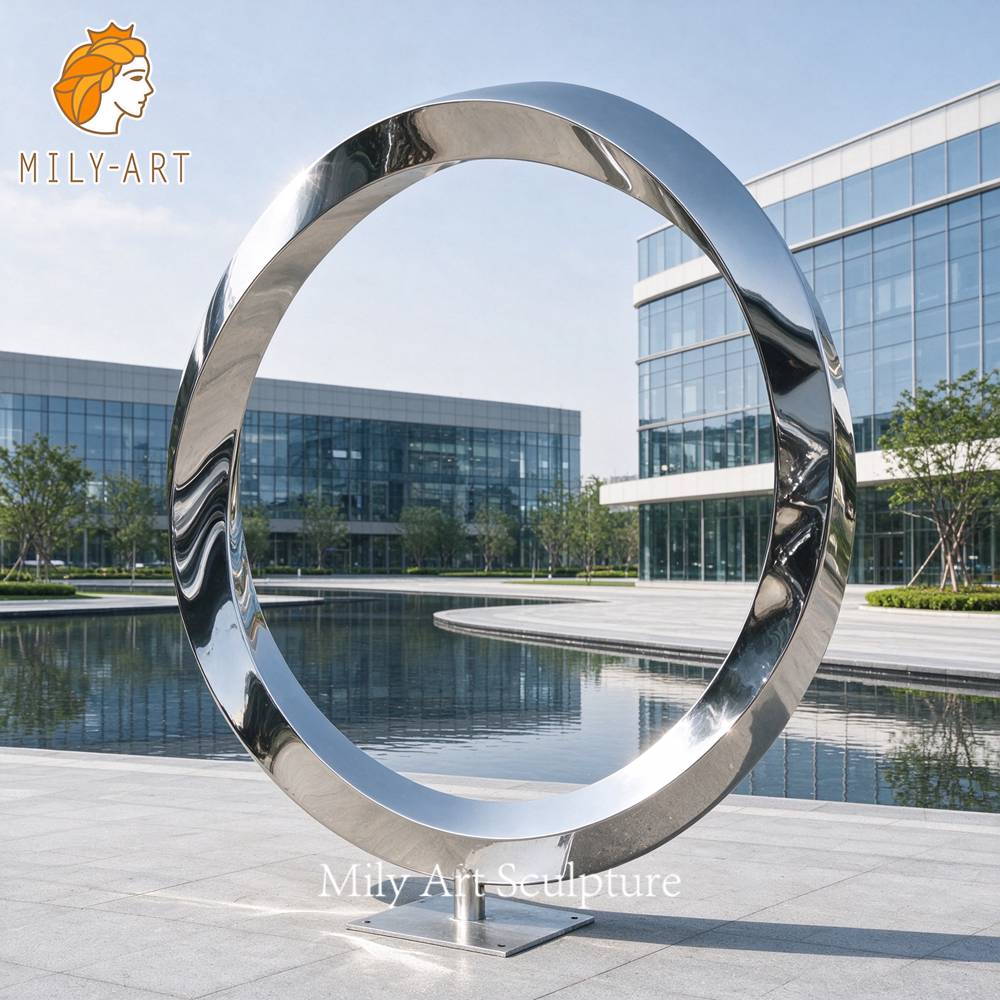
How Can a Möbius Strip Sculpture Be Customized?
One of the advantages of working with a sculpture manufacturer is the freedom to adapt an existing design to a specific space.
At Mily Metal Sculptures, we offer a Stainless Steel Mobius Sculpture for Public Space, ABS-011, featuring a flowing ribbon form and a mirror-polished finish. Our current product specifications list a height of 200 cm, with 304 or 316 stainless steel options.
This design provides a useful reference for clients interested in a similar artwork. However, different spaces often require different proportions and finishes.
When discussing customization, I usually focus on five details:
- Size and proportions: We can discuss the overall height, ribbon width, and central opening to suit the intended location.
- Twist and overall shape: We can adjust the geometry to create a more compact, elongated, or expressive appearance.
- Surface finish: Clients can choose mirror polishing, brushing, or suitable painted finishes.
- Color: Silver, metallic tones, or custom colors can help the artwork complement its surroundings.
- Base and installation design: The base may become part of the artistic composition or take a more discreet form, depending on structural requirements.
Our design team uses 3D models to help clients review the sculpture before production. We can examine the curves from different angles, confirm dimensions, and discuss necessary structural adjustments.
For me, customization should never mean changing dimensions without considering the overall design. Even a small adjustment to the ribbon width or twisting angle can change how the sculpture looks and how light moves across its surface.
What Should You Consider Before Commissioning a Möbius Strip Sculpture?
If you’re planning a custom Möbius sculpture, I recommend thinking beyond its appearance in a reference photograph.
Start with the installation space. How much room is available? Will visitors see the sculpture from one main direction or walk around it? Does the surrounding architecture complement its proportions?
Next, consider the scale. A two-meter sculpture may create a strong focal point in a private courtyard, while a spacious public plaza might require a larger design.
Structural stability is equally important, particularly for outdoor installations. Our team considers the sculpture’s weight, supporting structure, anchoring, and site conditions during design development. Large projects may also require site-specific structural engineering.
Finally, think about the environment. Outdoor sculptures need suitable materials and finishing, while mirror-polished surfaces require appropriate cleaning to maintain their appearance.
My advice is simple: review the artistic design and manufacturing requirements together before confirming production.
If you’re planning your first custom artwork, our guide to commissioning a custom stainless steel sculpture covers the broader process, from the initial idea to delivery.
Final Thoughts
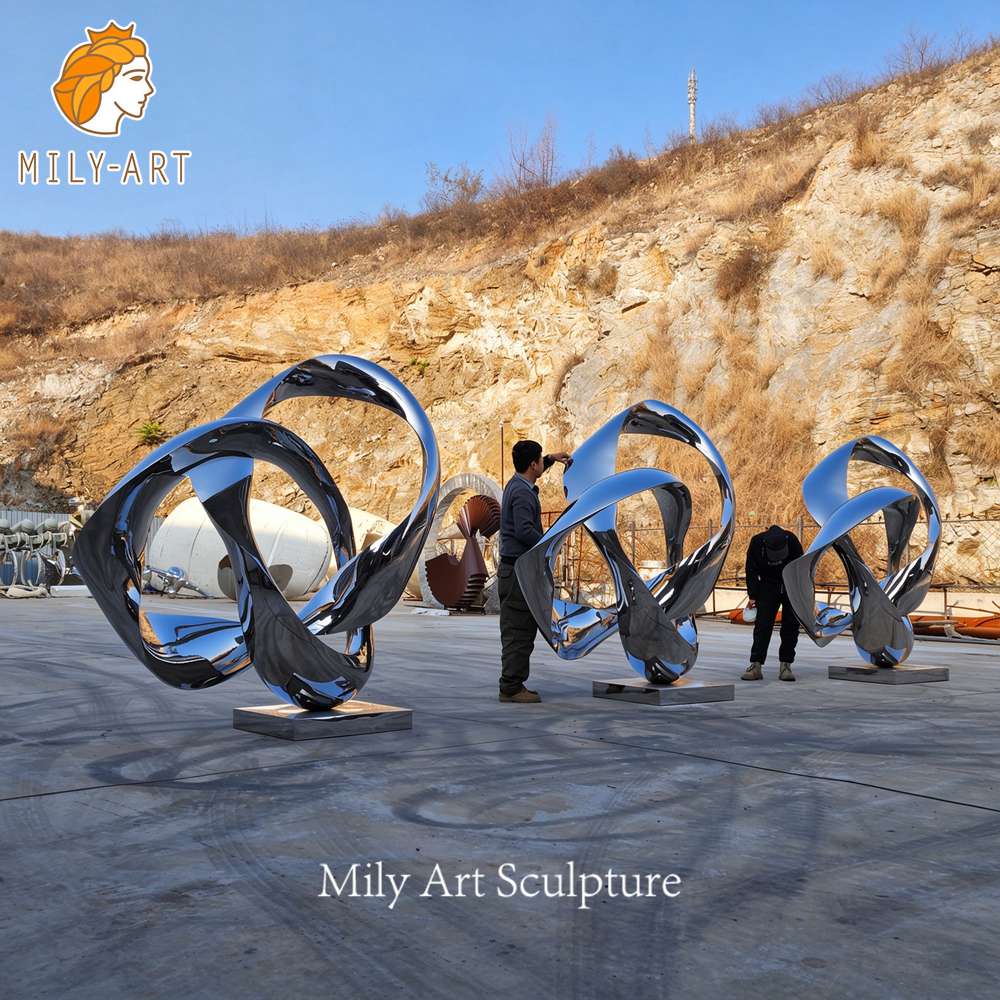
What makes a Möbius strip sculpture so fascinating is the way it brings mathematics, artistic imagination, and visual movement together. Its continuous form invites curiosity, while its twisting surfaces create changing views and reflections.
As someone who works closely with stainless steel sculpture manufacturing, I find another kind of beauty in the craftsmanship behind these designs. Precise curves, carefully finished joints, and polished surfaces all help transform a mathematical idea into a compelling piece of modern art.
Whether you’re exploring Möbius strip art for inspiration or planning a custom sculpture for a commercial or private space, I’d be happy to help. Share your reference images, preferred dimensions, or design ideas with our team. Let’s explore how we can turn your Möbius-inspired design into a finished stainless steel sculpture.

I’m Linda, and I’ve been living and breathing stainless steel sculptures for over a decade — which sounds more intense than it is, I promise.
As Sales Director at Mily Statue, I spend my days helping clients around the world turn their ideas into real, lasting works of art. From a small garden piece for a private home to a multi-story installation for a city plaza, I’ve seen projects of every scale and style — and I still get genuinely excited when a new brief lands in my inbox.
When I’m not talking sculptures, I’m probably exploring somewhere new, hunting for good coffee, or sharing something beautiful I stumbled across. Life’s too short not to notice the details.
Got a project in mind? Let’s talk.
Share this article

Written by
LindaI'm Linda, and I've been living and breathing stainless steel sculptures for over a decade — which sounds more intense than it is, I promise. As Sales Director at Mily Statue, I spend my days helping clients around the world turn their ideas into real, lasting works of art. From a small garden piece for a private home to a multi-story installation for a city plaza, I've seen projects of every scale and style — and I still get genuinely excited when a new brief lands in my inbox. When I'm not talking sculptures, I'm probably exploring somewhere new, hunting for good coffee, or sharing something beautiful I stumbled across. Life's too short not to notice the details. Got a project in mind? Let's talk.
Related Articles
Which Poolside Sculptures Hold Up to Chlorine, Water and Sun?
Stainless steel sculptures hold up best by the pool because they resist corrosion, offer a clean modern appearance,...
Why Stainless Steel Sculptures Rust And How to Prevent It
Yes, stainless steel can rust. It is known for rust resistance, not rust immunity. From my experience working...
How to Choose a Stainless Steel Water Feature for Your Villa Courtyard?
To choose a stainless steel water feature, check five things: size, shape, water sound, material and installation. Get...