
Low Poly Metal Sculpture: A Guide to Faceted & Geometric Animal Art
Low poly design has moved from the digital world into physical art. You’ve probably seen it in video games or 3D renders first. Now it’s showing up in gardens, lobbies, and public spaces as real, three-dimensional metal sculpture. You’ll hear this style called a few different names — low poly, faceted, or geometric — and honestly, they all point to the same idea: a form built from flat angular planes instead of smooth curves.
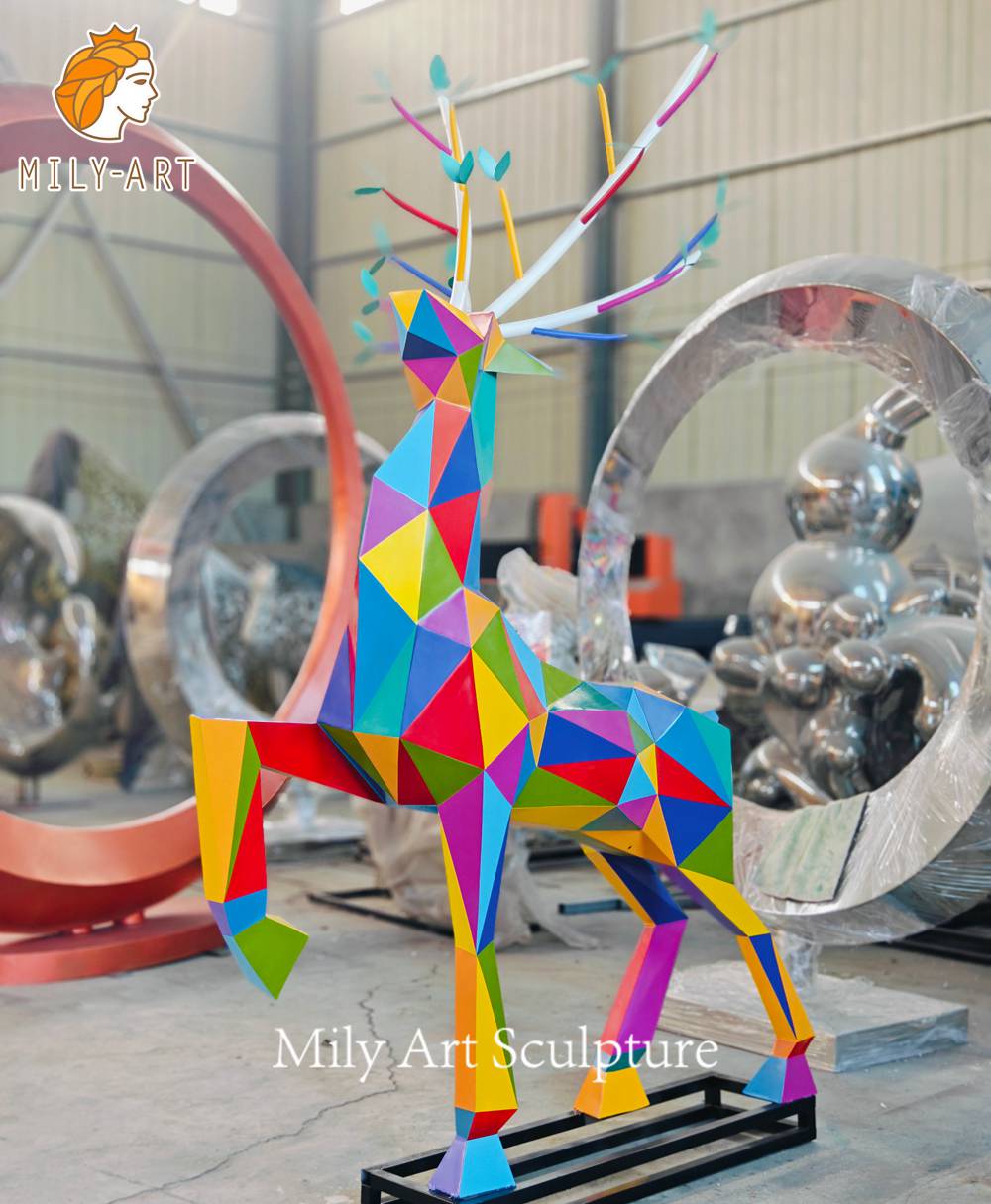
I’m Linda, and I work with clients every day who want something modern, clean, and different from the classic realistic animal statue. Low poly metal sculpture is often the answer. In this guide, I’ll walk you through what it is, why it works so well for animal forms, and how to choose the right piece for your space.
What Is a Low Poly Metal Sculpture?
Low poly sculpture builds a form out of flat geometric faces instead of smooth curves. Each face is a triangle or a polygon. Together, they create the shape of an animal, a bird, or any other subject. The style comes directly from low-polygon 3D modeling, where fewer faces mean a simpler, more angular mesh.
We translate that digital idea into physical metal. Every sculpture we make is crafted in stainless steel. Stainless steel holds a crisp, sharp edge at every angle, which is exactly what low-poly design needs. A softer or more malleable metal would round off the corners over time. However, stainless steel keeps each facet clean and distinct for the life of the piece, indoors or outdoors.
How We Make a Low Poly Metal Sculpture?
I won’t go through every step of our full stainless steel sculpture fabrication process here — that’s a longer topic on its own. But low poly work has a few details that are worth calling out, because they’re specific to this style.
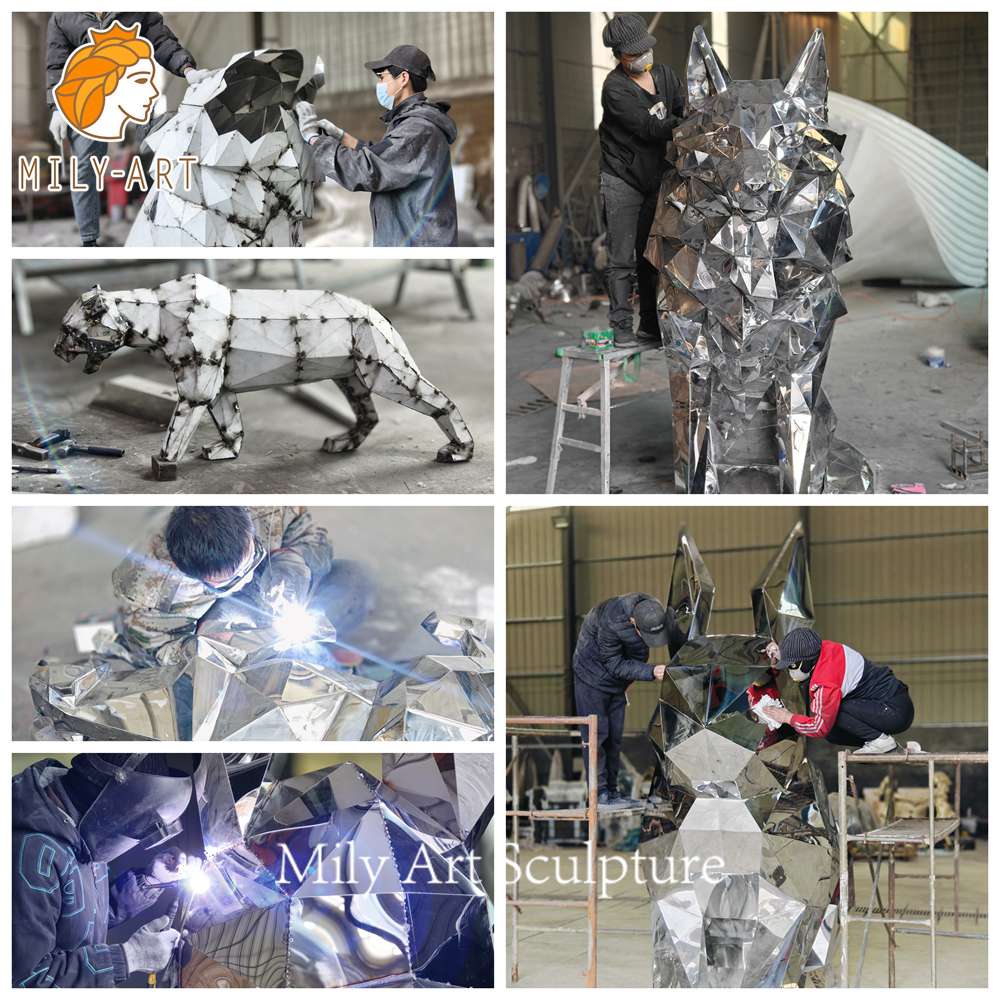
It starts with a 3D model. We build the animal digitally first, then reduce the mesh down to a lower polygon count. This step is where the design actually happens. Too few facets and the animal becomes unrecognizable. Too many and you lose the bold, geometric look that makes low poly distinctive.
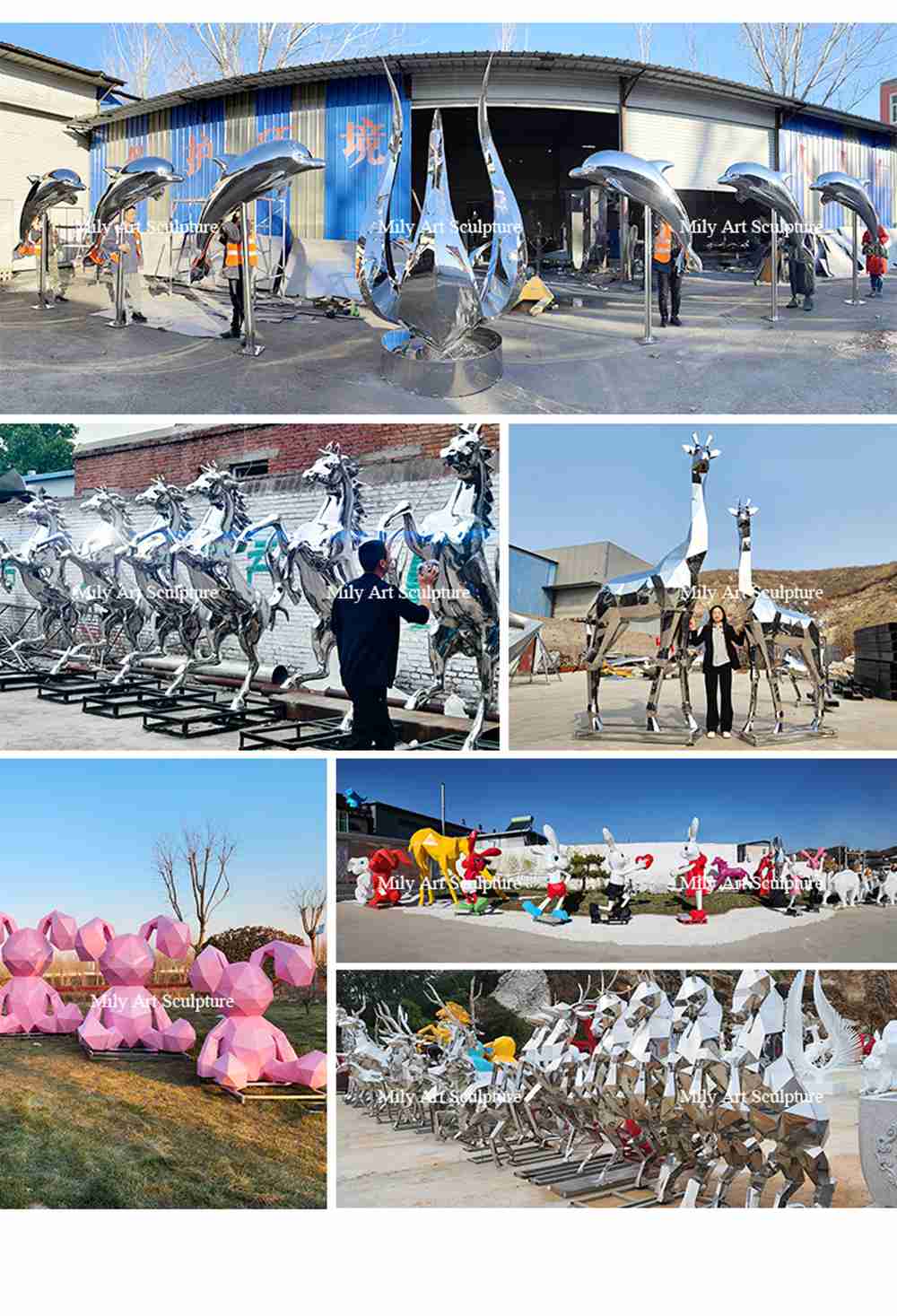
From that model, we generate a flat pattern for every single panel. Each panel gets cut from stainless steel sheet, usually with laser or plasma cutting for precision, since even a small error in one panel’s angle throws off the whole form.
Then comes assembly. Panels are welded together edge to edge, following the exact angles from the 3D model. This is the most demanding part. Because there are no curves to hide small mistakes, every seam has to be accurate.
Finally, welds are ground down and polished so the transitions between panels stay sharp. The goal is for each facet to read as one clean, flat plane, not a patchwork of welded metal.
Why Low Poly Design Works So Well for Animal Sculptures
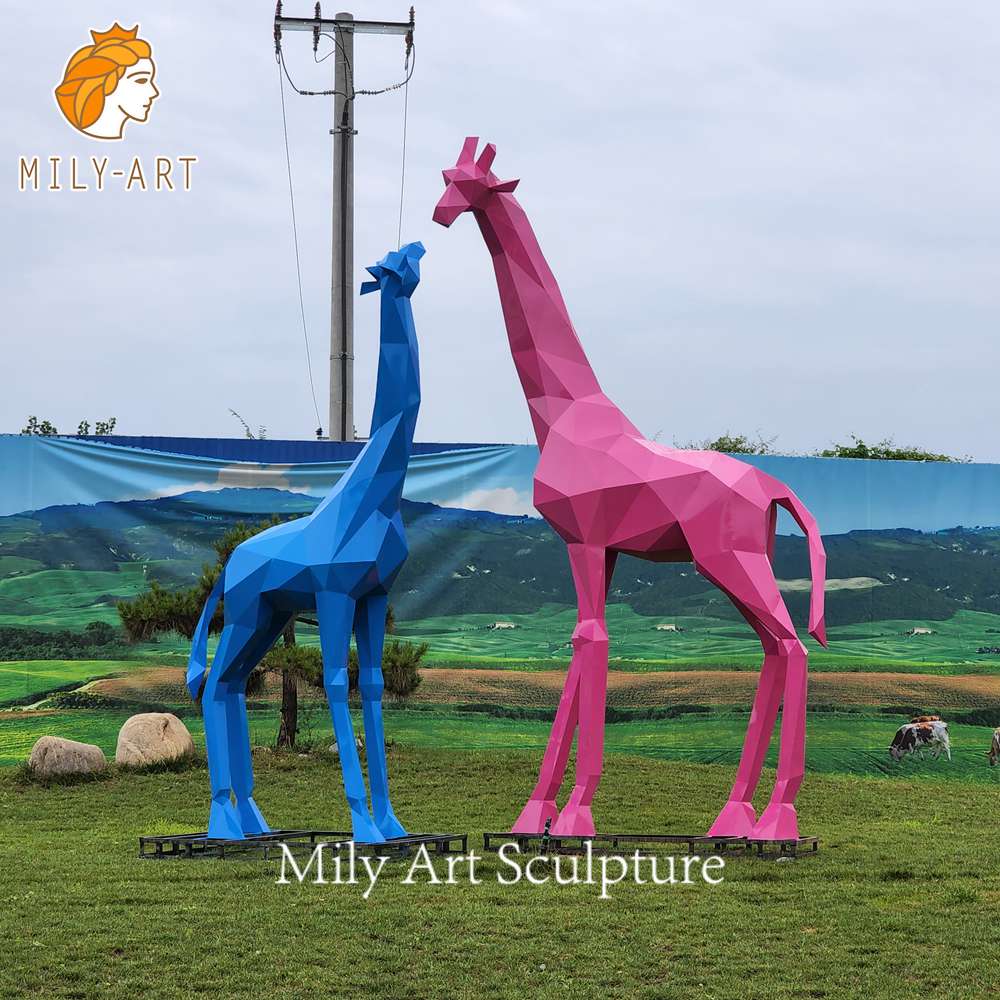
Animal forms are built on structure — bone, muscle, posture. A deer’s leg has a knee joint. A wolf’s shoulder meets its neck at an angle. Low poly design doesn’t hide that structure under smooth surfaces the way realistic sculpture does. It exposes it, turning each joint or change in direction into a facet. That’s why the technique works on animals: it simplifies real anatomy.
It’s also why low poly suits animals better than most other subjects. A building is already made of flat planes, so faceting adds little. An animal is naturally organic, so the geometric treatment creates tension between subject and form — you recognize the deer, but your eye keeps noticing it’s built from triangles. That contrast is what makes people look twice.
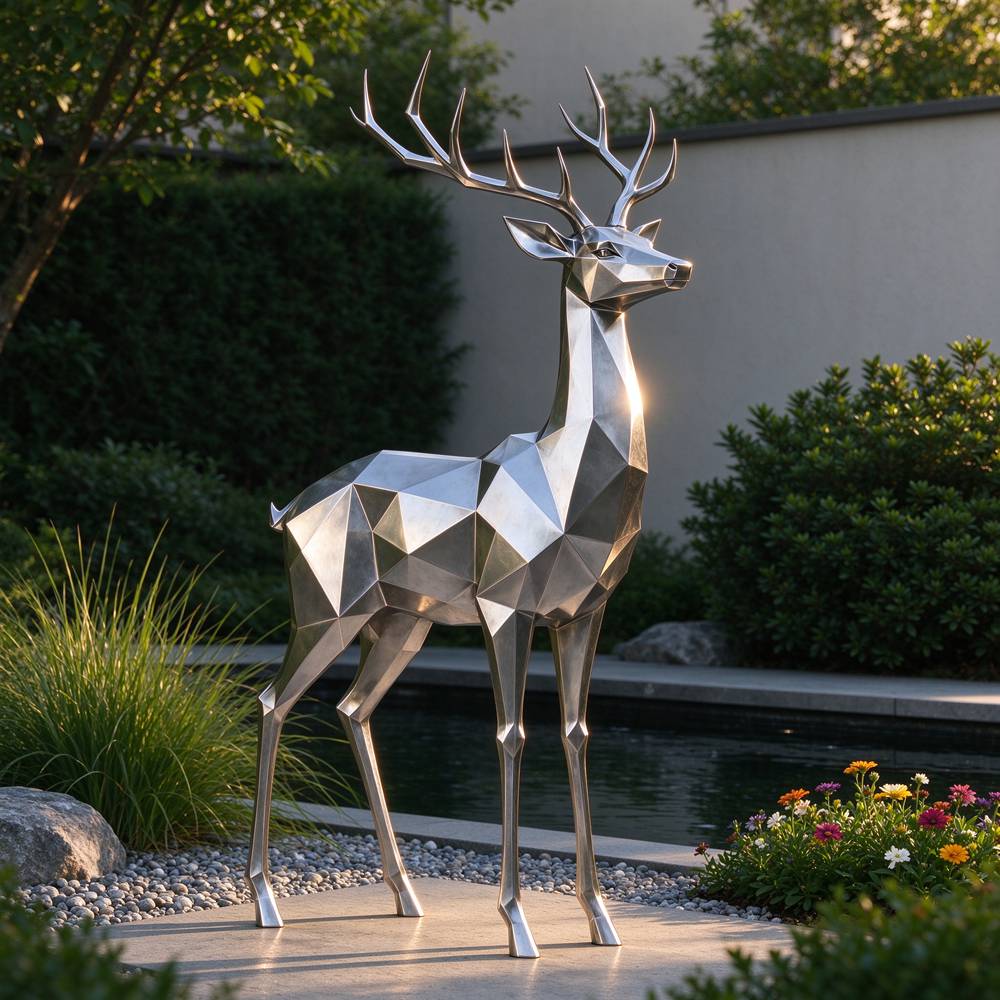
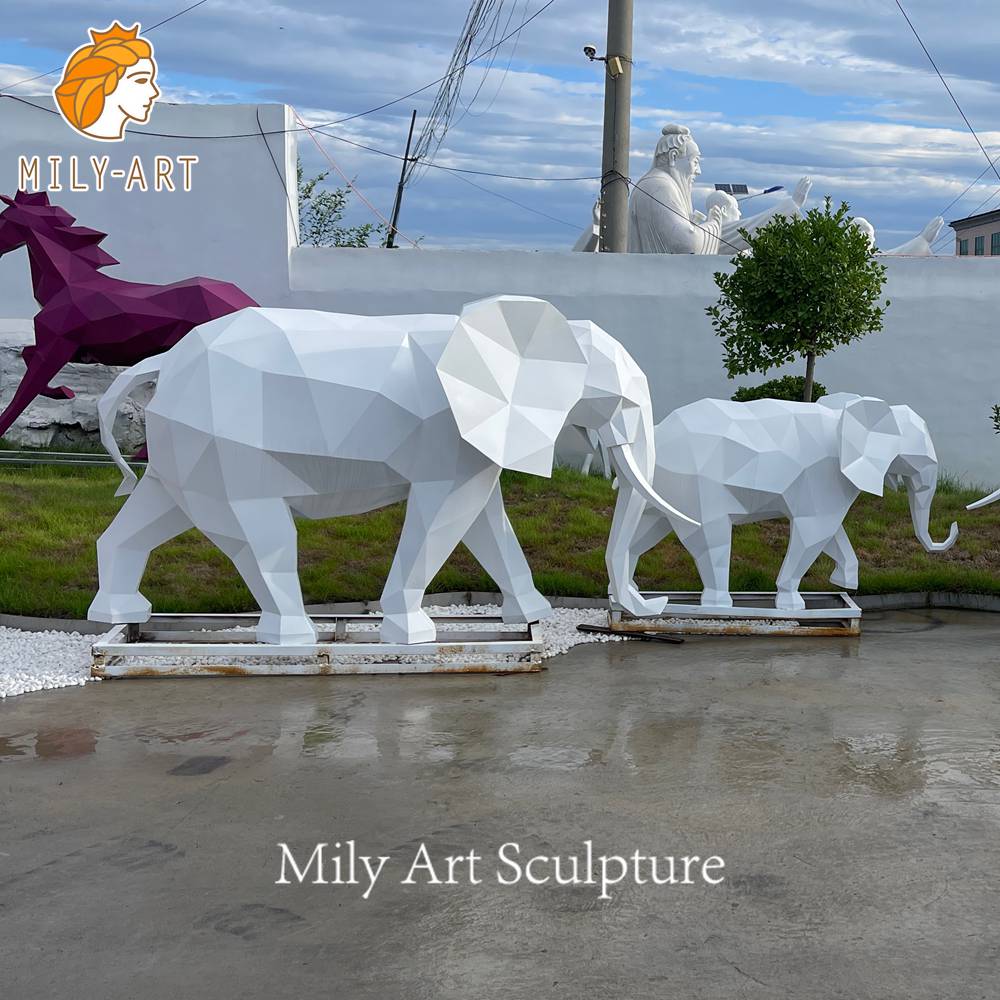
Not every animal carries this off equally well. Strong, defined silhouettes work best — a deer’s antlers, a wolf’s raised head, a horse’s long neck already have natural angles for low poly to sharpen. Round, soft animals are harder, since their charm comes from curves that faceting removes.
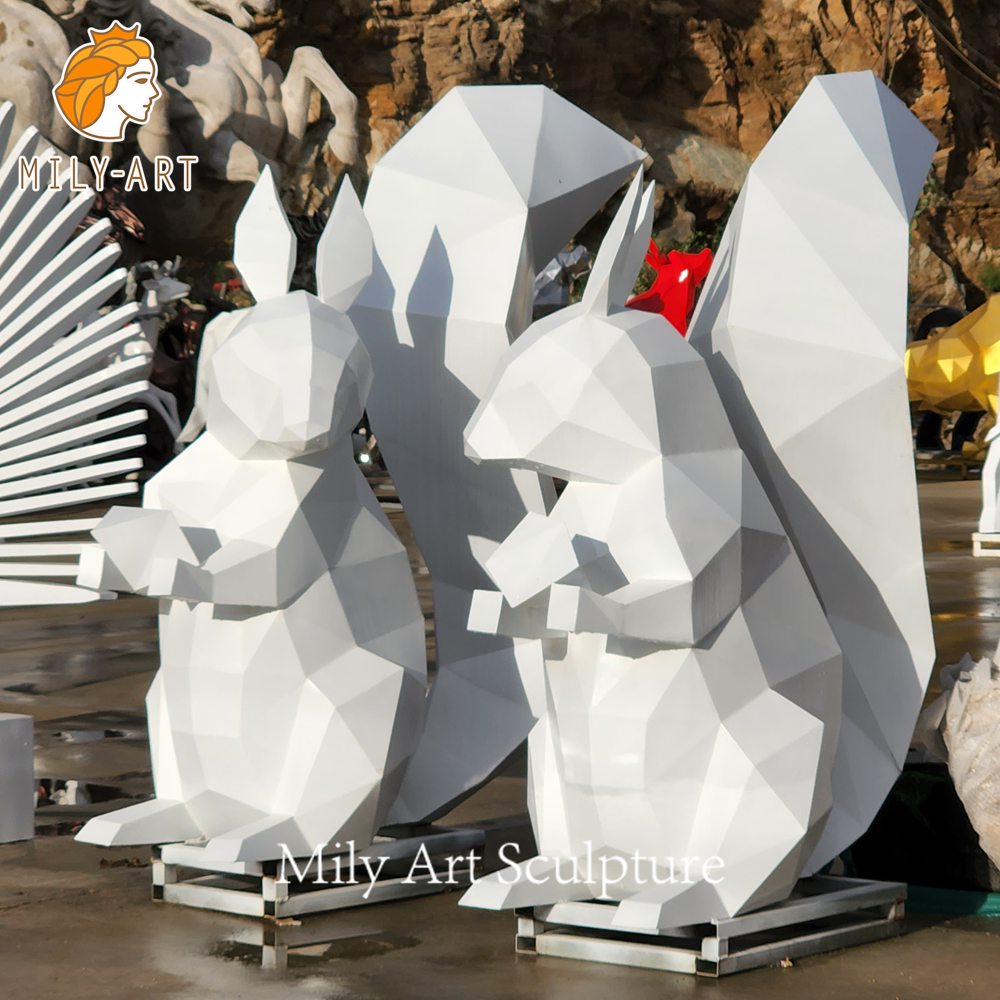
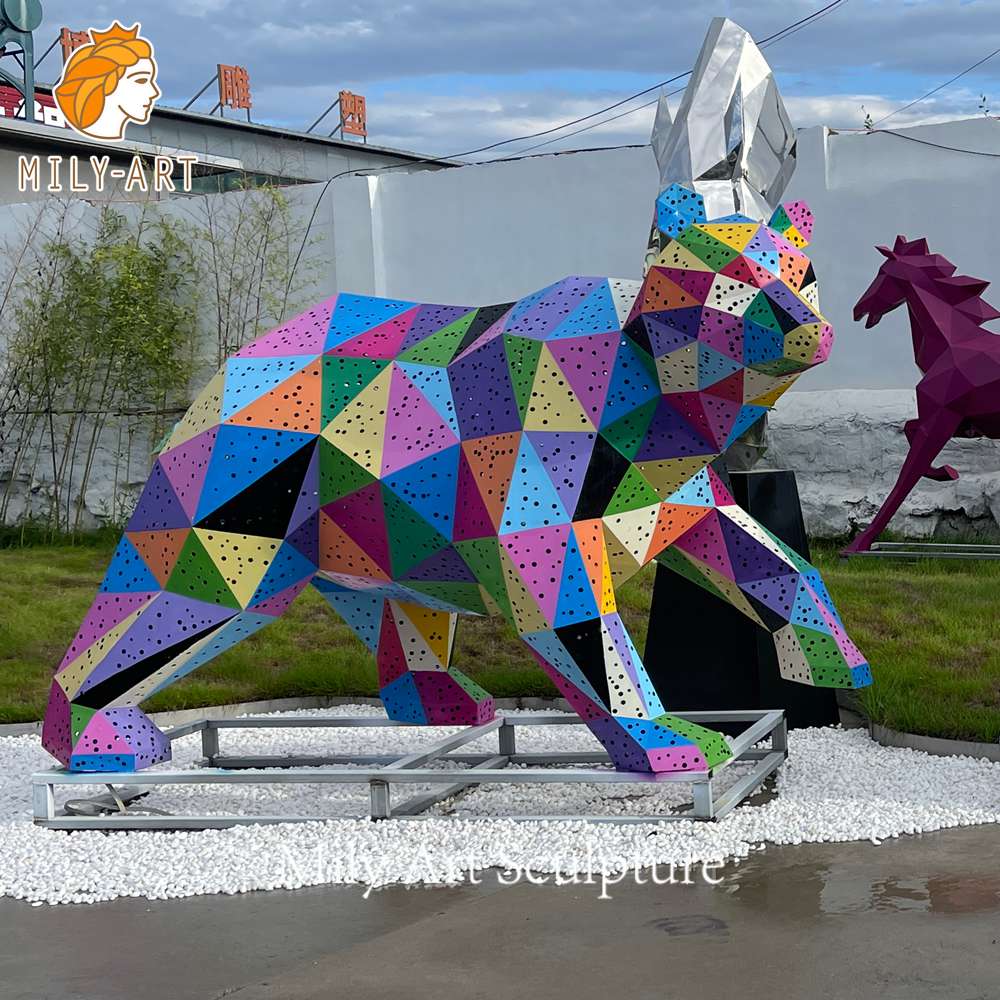
So when a client asks for a low poly bear or bunny, I suggest we look at the pose first. A bear standing alert on its hind legs works much better than one curled up asleep — the pose gives the facets something to follow.
Popular Low Poly Animal Sculpture Designs
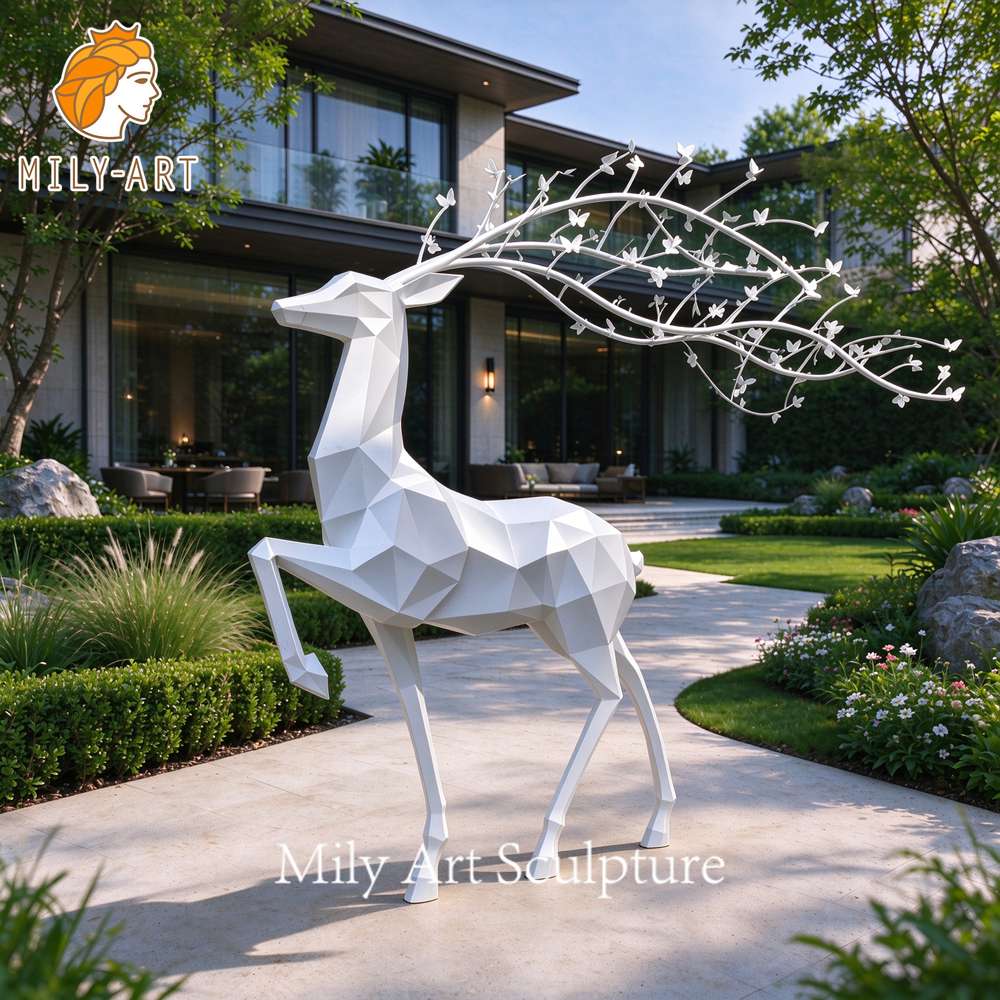
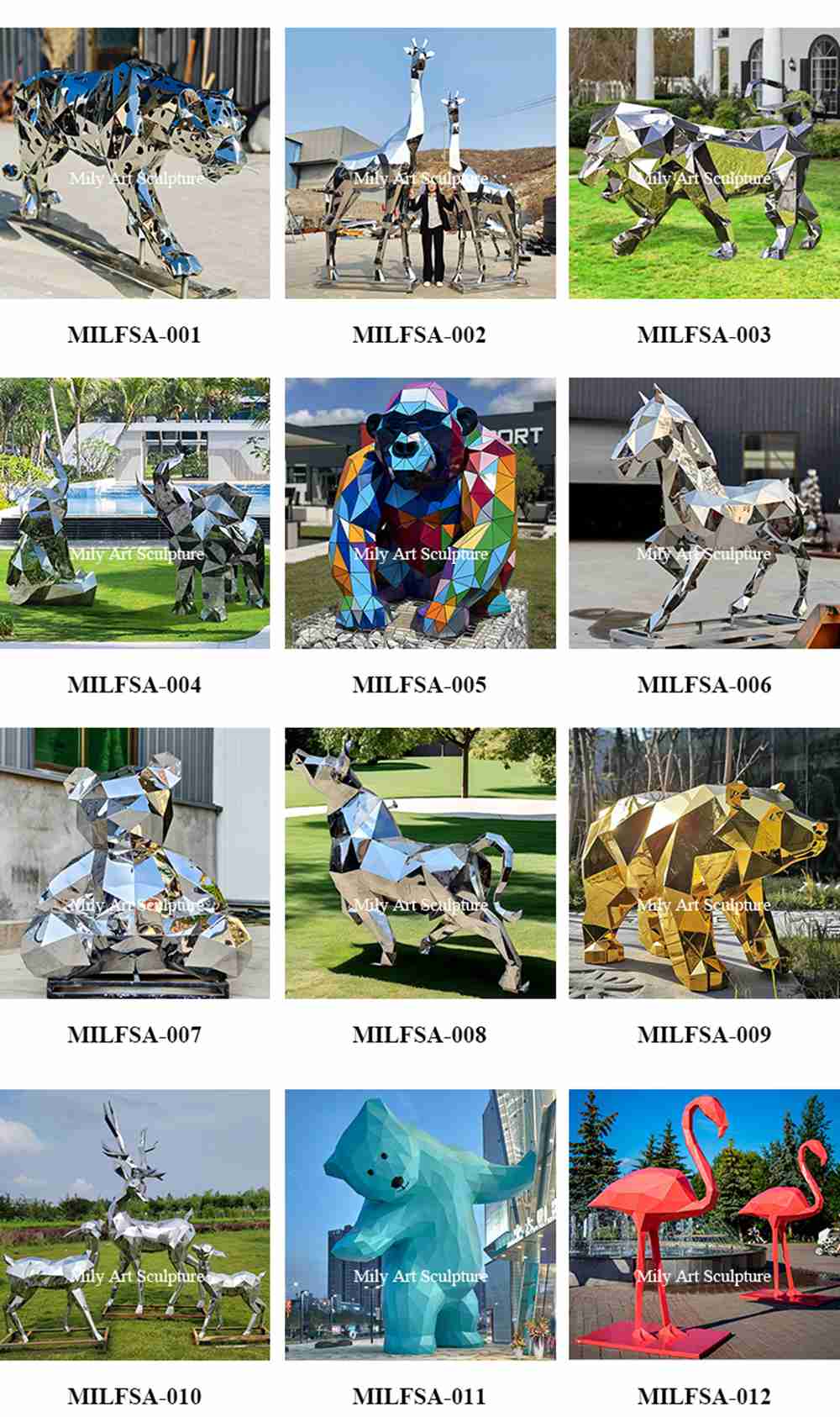
Low Poly Deer
The deer is probably our most requested metal geometric sculpture. Its long legs, angled head, and branching antlers already read as geometric before we even start faceting the surface. A life-size low poly deer makes a strong garden centerpiece.
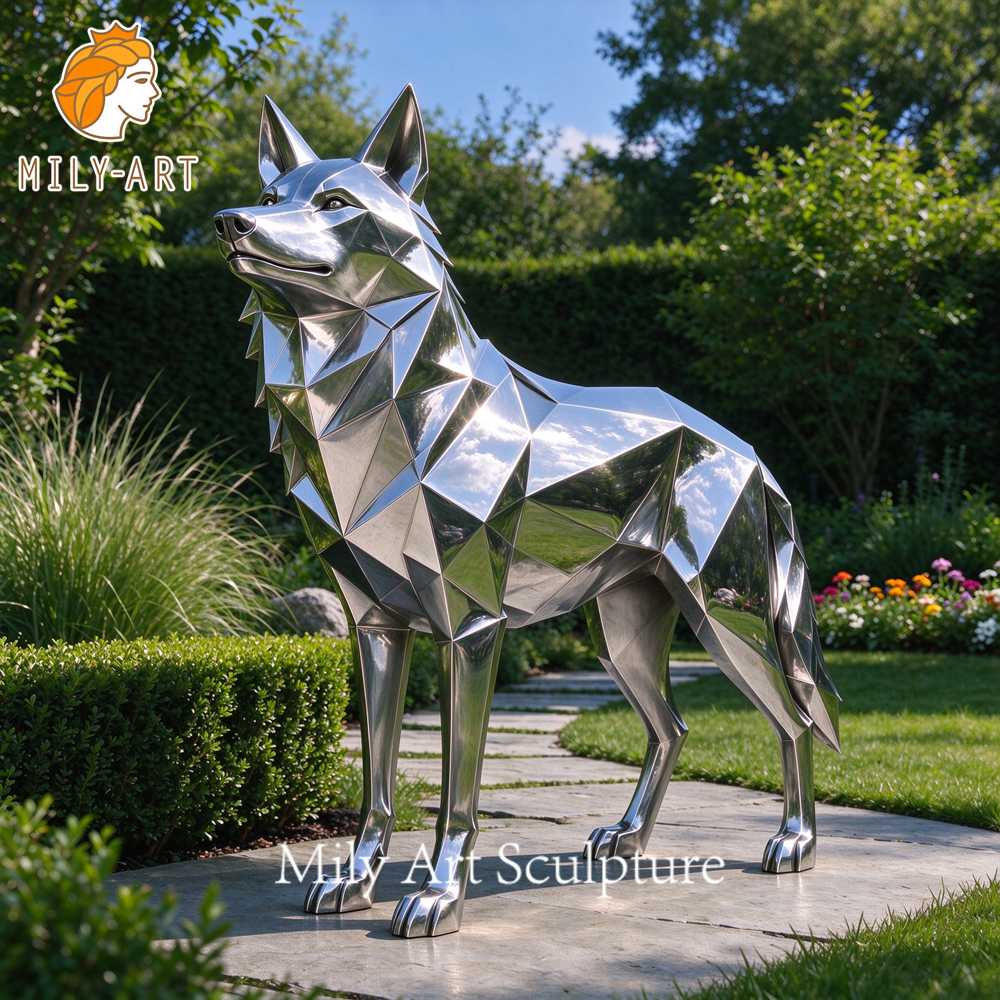
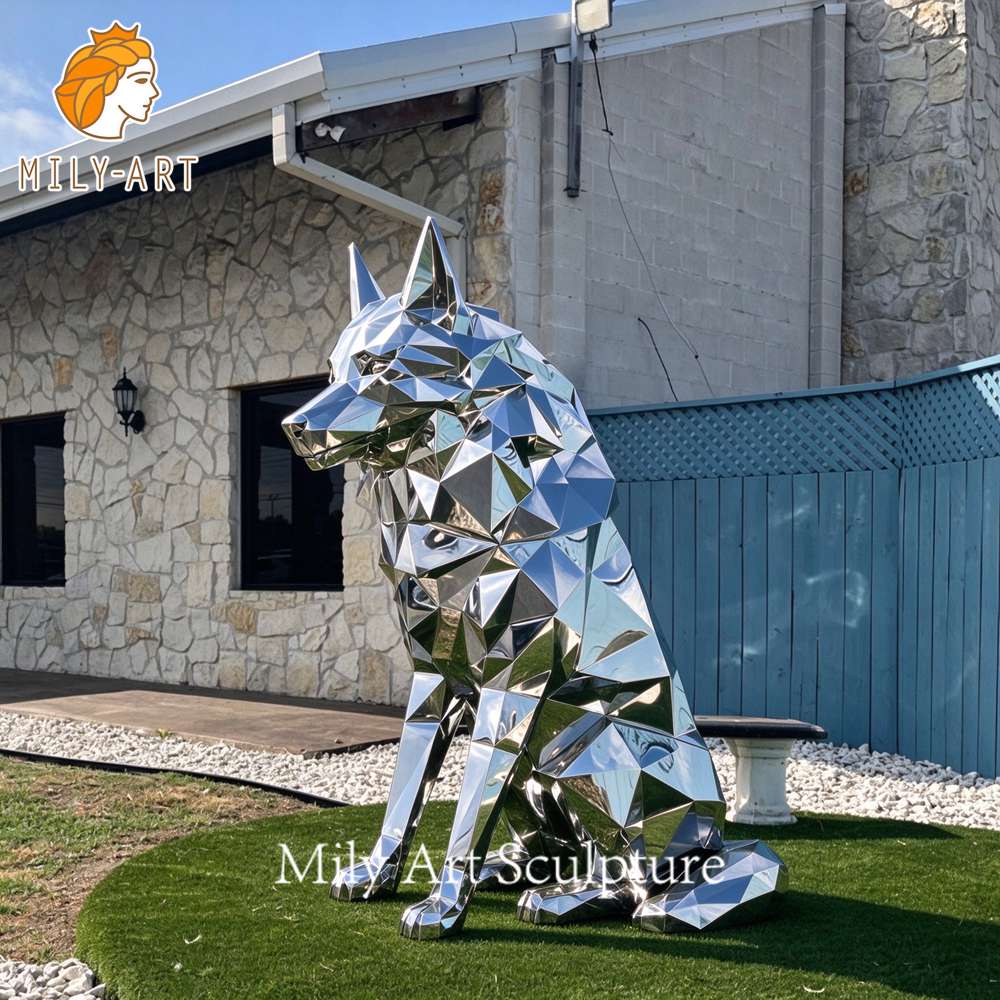
Low Poly Wolf
The wolf’s raised head and alert stance give the design a sense of motion, even though the sculpture doesn’t move. Sharp shoulder blades and a lifted muzzle translate especially well into flat panels.
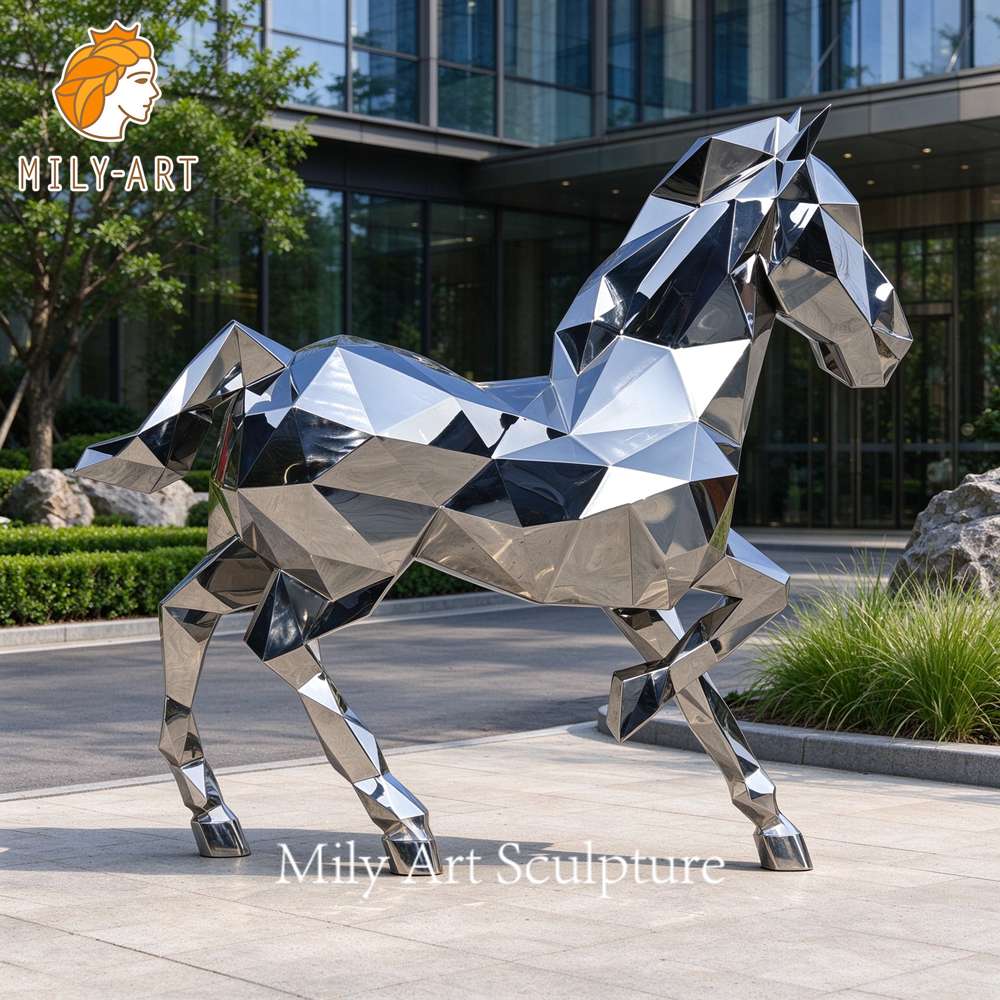
Low Poly Horse
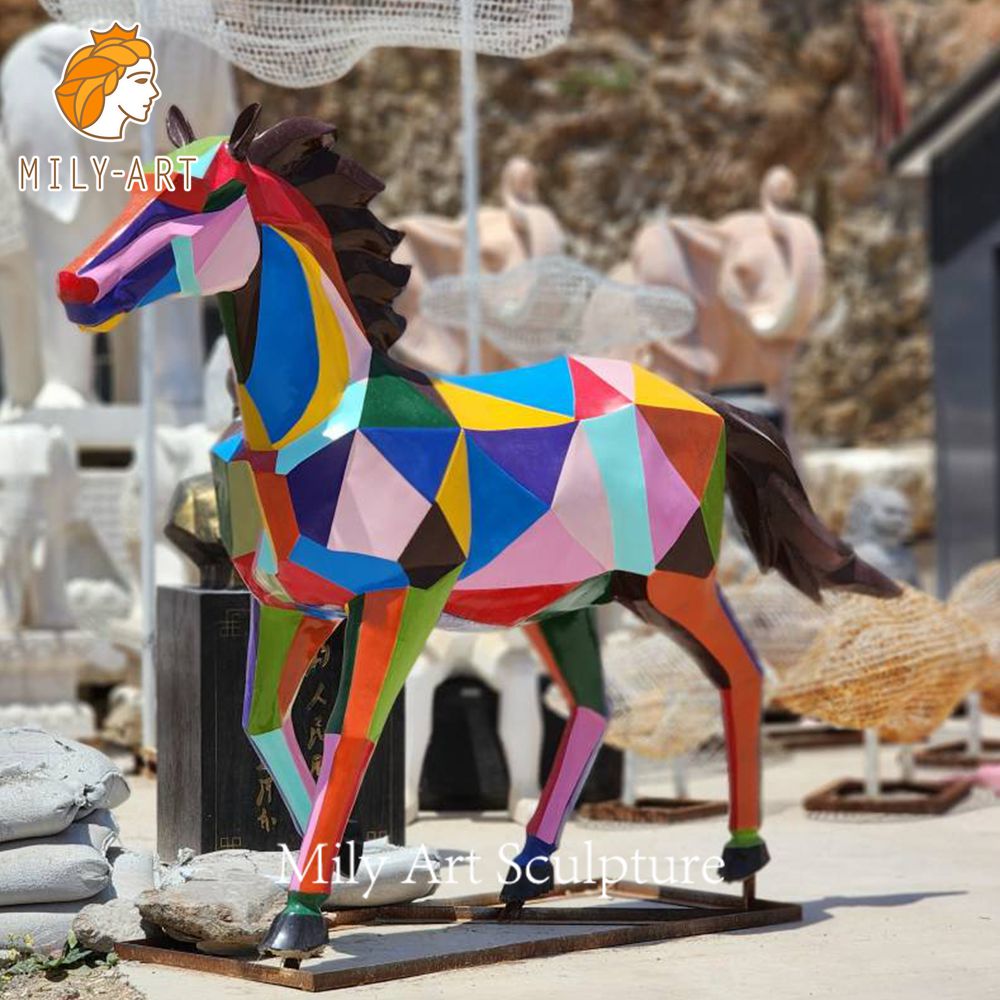
Horses have long, sweeping lines in their necks and legs. Low poly treatment keeps the elegance but adds a contemporary edge. This is a popular choice for corporate courtyards and hotel driveways, where clients want something impressive but not traditional.
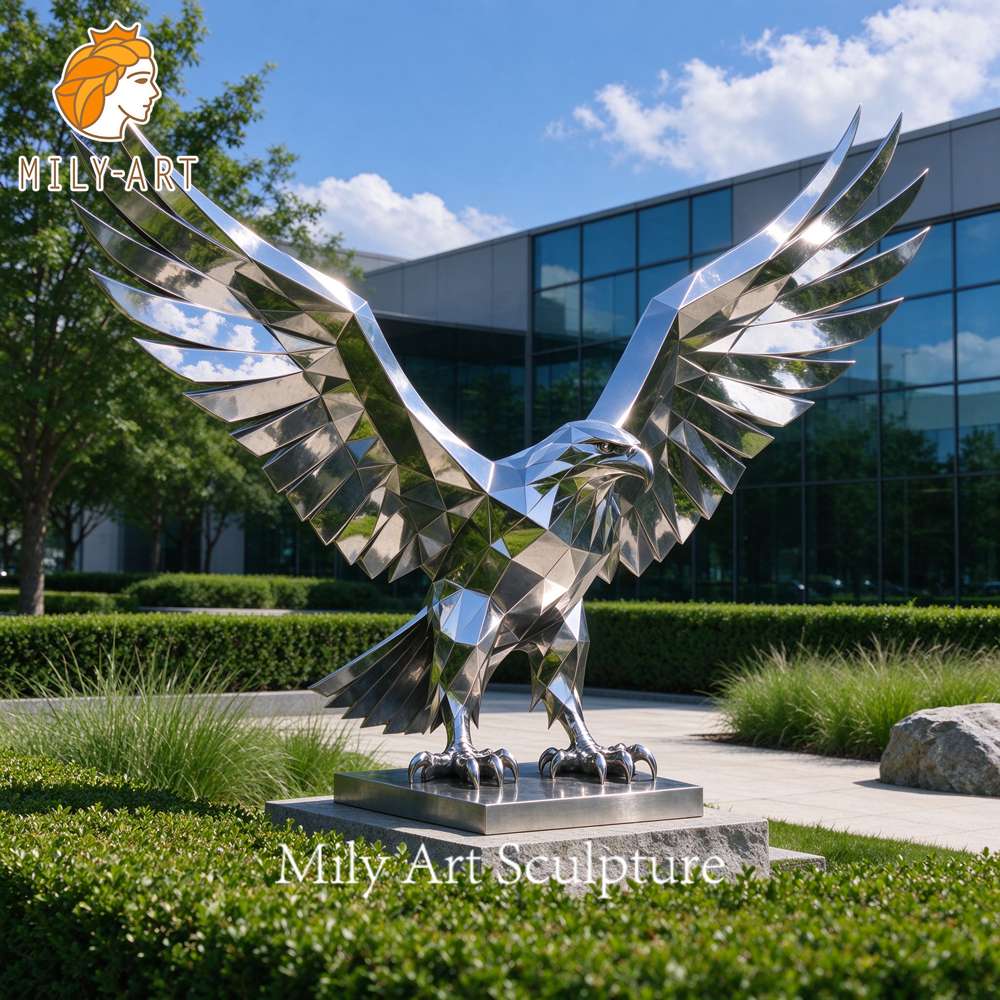
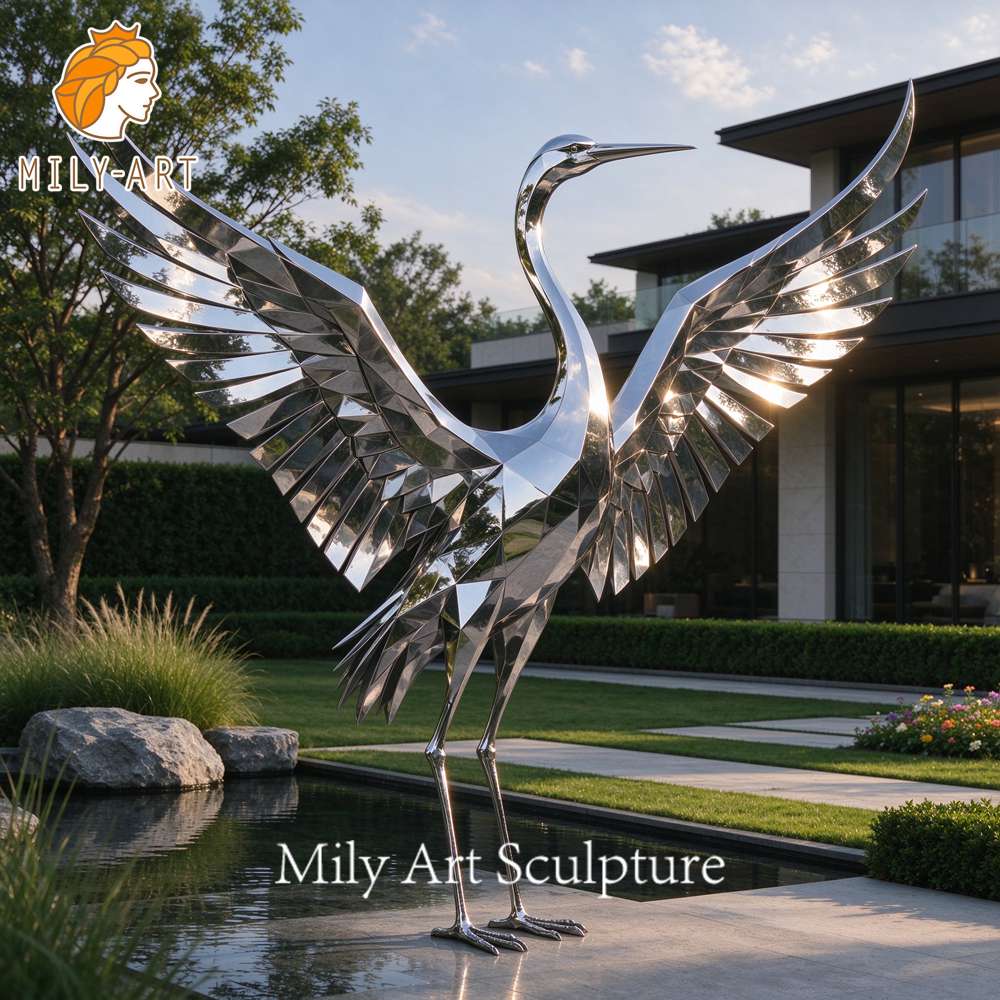
Low Poly Bird (Eagle or Crane)
Wings spread wide give a lot of surface area to work with. The facets on an outstretched wing catch light dramatically, especially when the piece is mounted where it gets direct sun for part of the day.
Where to Use Low Poly Metal Sculptures
I get asked constantly where these metal geometric sculptures actually fit. Here’s my honest comparison, based on the projects we’ve completed.
| Setting | Why It Works | Best Sculpture Choice |
| Hotel lobbies & entrances | Clean architecture pairs well with sharp geometric lines; it makes a statement without cluttering the space | Low poly horse or bird, medium-to-large scale |
| Gardens & landscaped grounds | Contrast between organic plants and geometric metal draws the eye | Low poly deer or wolf |
| Corporate courtyards | Signals innovation and forward thinking, reads as design-forward rather than traditional | Low poly horse or eagle |
| Public art installations | Multiple facets create different visual moments from every angle, popular for photos | Any animal, larger scale for visibility |
Frequently Asked Questions
What is the minimum size that works well for a low poly metal sculpture?
From my experience, 60–80 cm is the practical minimum for outdoor display. Below that, the individual facets become too small to read clearly, and the geometric effect is lost. For indoor display on a plinth, 40–50 cm can work if the viewing distance is short.
How many facets should a low poly sculpture have?
There is no single correct number. Fewer facets (60–100) produce a bolder, more abstract look. More facets (150–250) produce a more refined form that still reads as geometric. I recommend deciding based on viewing distance: more facets for close-up interior pieces, fewer for large outdoor sculptures viewed from a distance.
Can I customize the animal subject and size?
Yes. I work from a 3D model that is built to your specifications. Subject, size, facet density, finish, and base design are all adjustable. Most clients share a reference image or a site plan, and I develop the model from there.
How is a large low poly sculpture shipped internationally?
Sculptures are packed in custom wooden crates with foam padding and steel bracing. Export documentation covers country of origin, material certification, and packing list. Shipping options include FOB, CIF, and DAP depending on the buyer’s preference. A dedicated project manager handles the logistics from factory to delivery.
If you are planning a low poly metal sculpture project and want a practical assessment of subject, scale, finish, and placement, I am happy to review your brief and share my recommendations. Contact Mily Metal Sculpture with your site details and project scope, and I will respond with specific design guidance.

I’m Linda, and I’ve been living and breathing stainless steel sculptures for over a decade — which sounds more intense than it is, I promise.
As Sales Director at Mily Statue, I spend my days helping clients around the world turn their ideas into real, lasting works of art. From a small garden piece for a private home to a multi-story installation for a city plaza, I’ve seen projects of every scale and style — and I still get genuinely excited when a new brief lands in my inbox.
When I’m not talking sculptures, I’m probably exploring somewhere new, hunting for good coffee, or sharing something beautiful I stumbled across. Life’s too short not to notice the details.
Got a project in mind? Let’s talk.
Share this article

Written by
LindaI'm Linda, and I've been living and breathing stainless steel sculptures for over a decade — which sounds more intense than it is, I promise. As Sales Director at Mily Statue, I spend my days helping clients around the world turn their ideas into real, lasting works of art. From a small garden piece for a private home to a multi-story installation for a city plaza, I've seen projects of every scale and style — and I still get genuinely excited when a new brief lands in my inbox. When I'm not talking sculptures, I'm probably exploring somewhere new, hunting for good coffee, or sharing something beautiful I stumbled across. Life's too short not to notice the details. Got a project in mind? Let's talk.
Related Articles
How to Choose Stainless Steel Sculpture for Your Private Garden?
From my experience working with private garden sculpture projects, I have learned one important thing: choosing a garden...
Large Stainless Steel Sculpture Cost: Price by Size and Type
A large stainless steel sculpture typically costs between $4,500 and $20,000 or more, depending mainly on its size, design,...
Stainless Steel Sculpture Fabrication: How Are Sculptures Made?
Stainless steel sculptures can range from small decorative pieces to large public artworks. Although the finished surface may...