
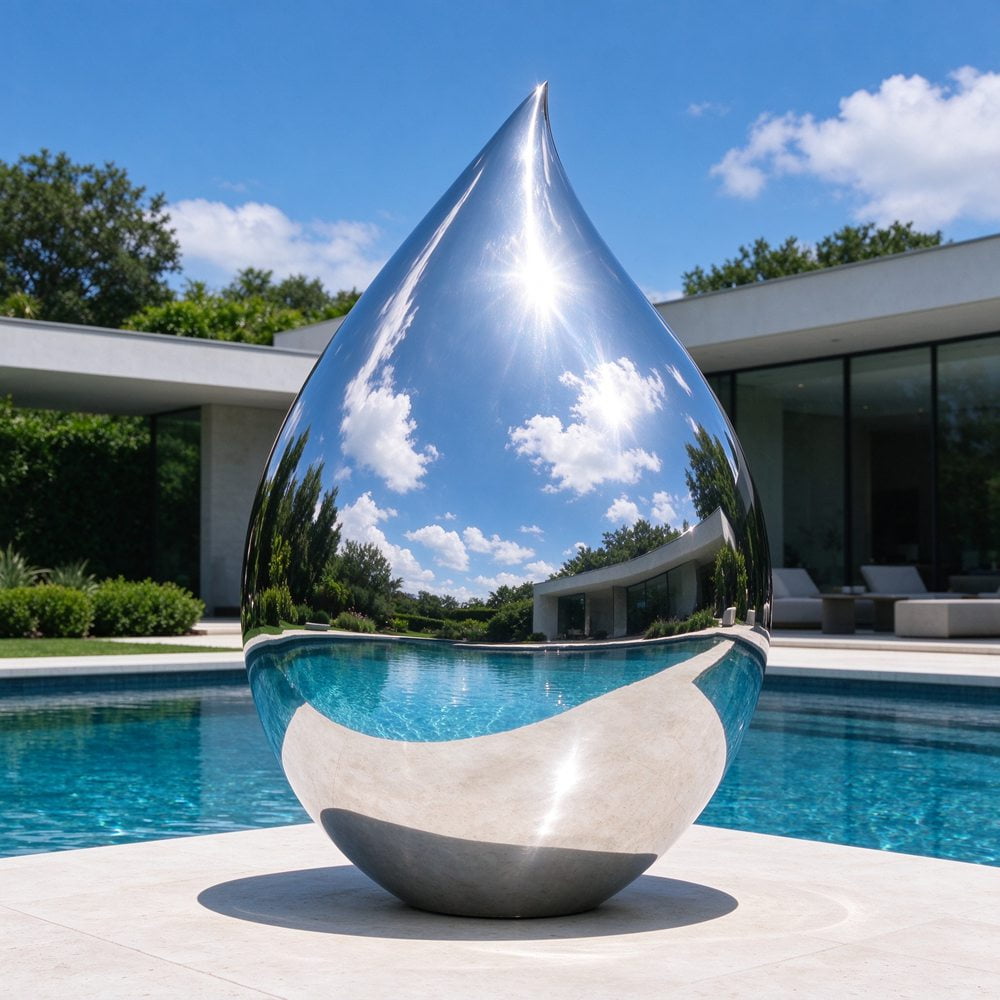
Which Poolside Sculptures Hold Up to Chlorine, Water and Sun?
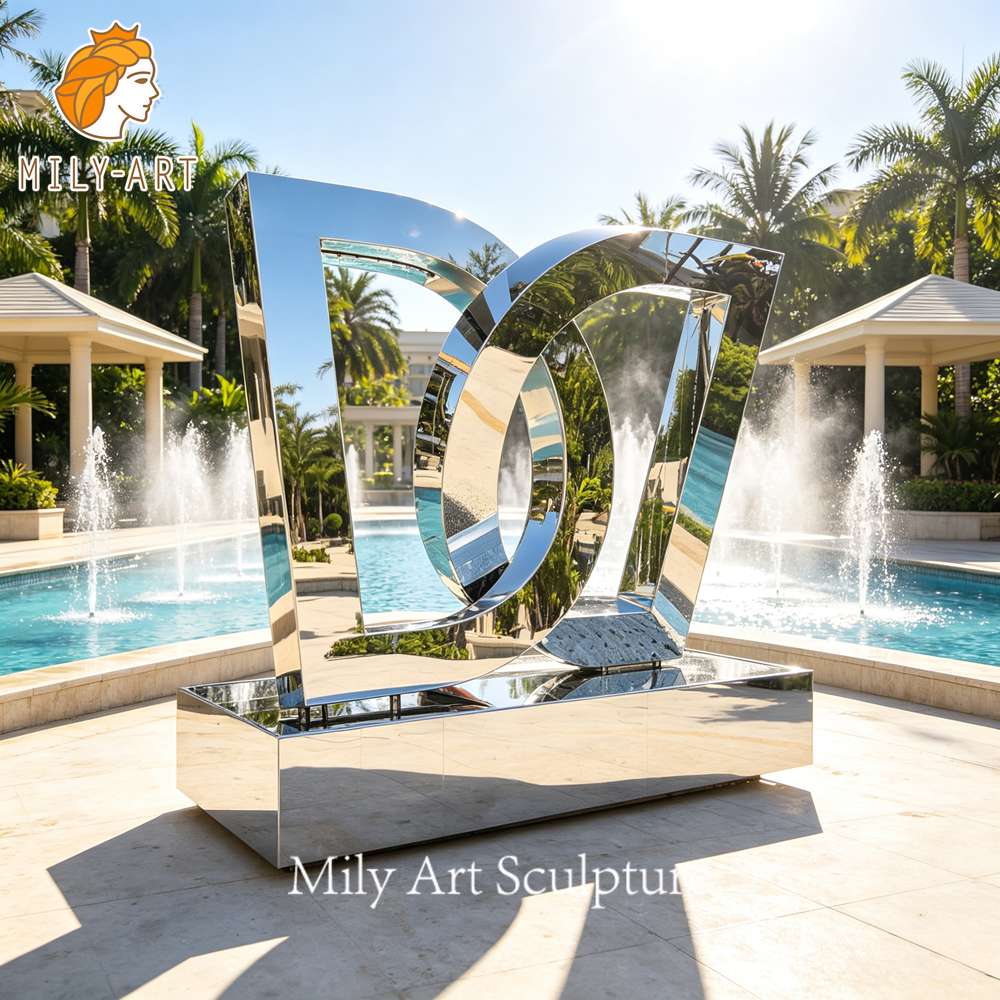
Stainless steel sculptures hold up best by the pool because they resist corrosion, offer a clean modern appearance, and are relatively easy to maintain.
For most poolside sculptures, 304 stainless steel can work well in ordinary outdoor conditions, while 316 stainless steel is often a better option for areas with higher chloride exposure or more demanding conditions.
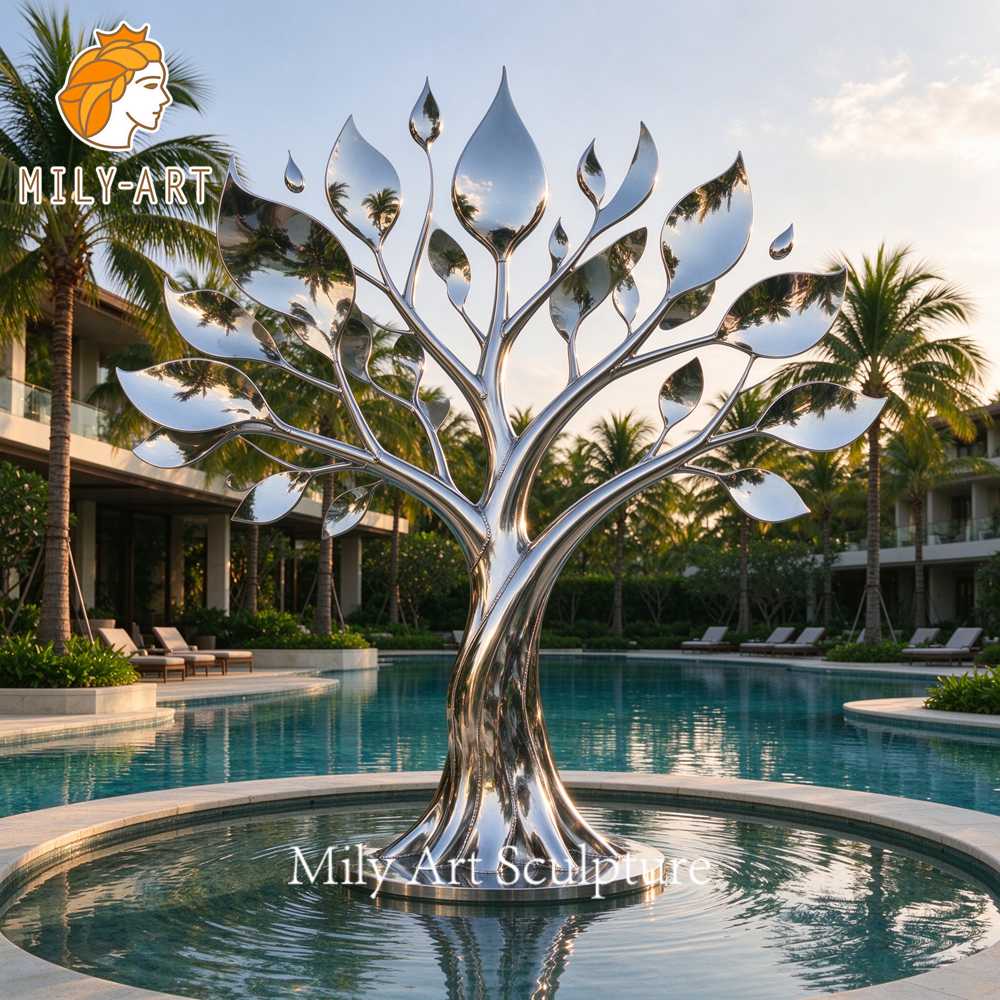
What Makes a Pool Area So Hard on Sculptures?
A pool looks calm, but it is a tough place for any outdoor piece. Three forces act on a sculpture every day.
| Stress | What it does | What fails first |
| Chlorine and salt | Attacks the surface of the material | Coatings, soft metals, sealants |
| Water and splash | Keeps the surface wet, then dry, again and again | Porous stone, wood, weak welds |
| Sun and heat | Heats the piece by day and cools it at night | Resin, paint, plastic parts |
Most materials handle one or two of these forces. Few handle all three. That is why material choice matters more at a pool than in a normal garden.
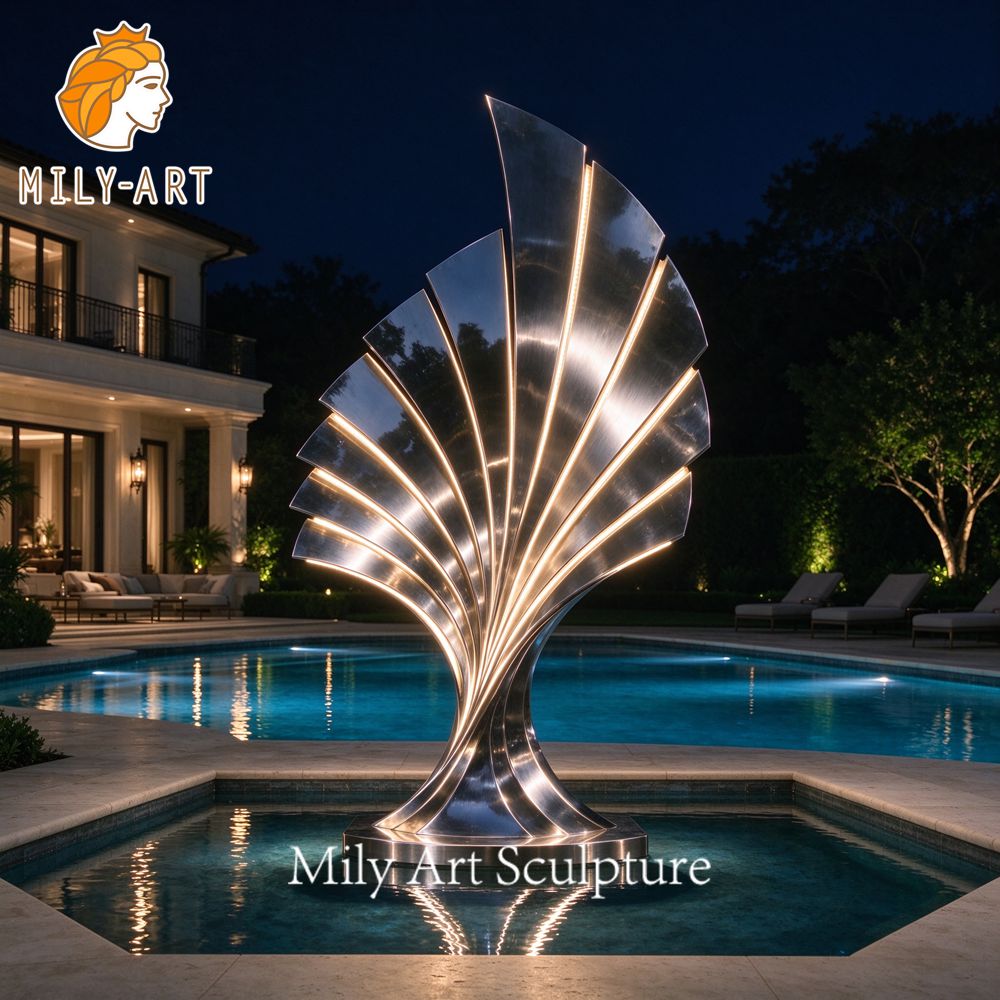
Poolside Sculpture Materials Compared
Here is a simple guide to the materials I see most often. The ratings are general. Real results depend on your water, your climate and the finish.
| Material | Chlorine | Water | Sun | Typical problem | Verdict |
| 316 stainless steel | Excellent | Excellent | Excellent | Light stains if never cleaned | Best choice |
| 304 stainless steel | Good | Excellent | Excellent | Spots near salt water or heavy splash | Good for fresh water |
| Aluminum | Fair | Good | Good | Pitting in salty air, coating wear | Fine for light use |
| Stone | Good | Fair | Good | Absorbs water, grows algae, can crack in frost | Heavy, needs sealing |
| Resin / fiberglass | Fair | Good | Poor | Fades and chalks under UV | Short-term use |
Stone looks beautiful, but it drinks water. Over time it turns green at the base and may crack in freezing weather. Resin is light and cheap, but the sun breaks down its surface. Aluminum resists water well, yet it can pit in salt-heavy air. Stainless steel is the only material in this table that scores well in every column.
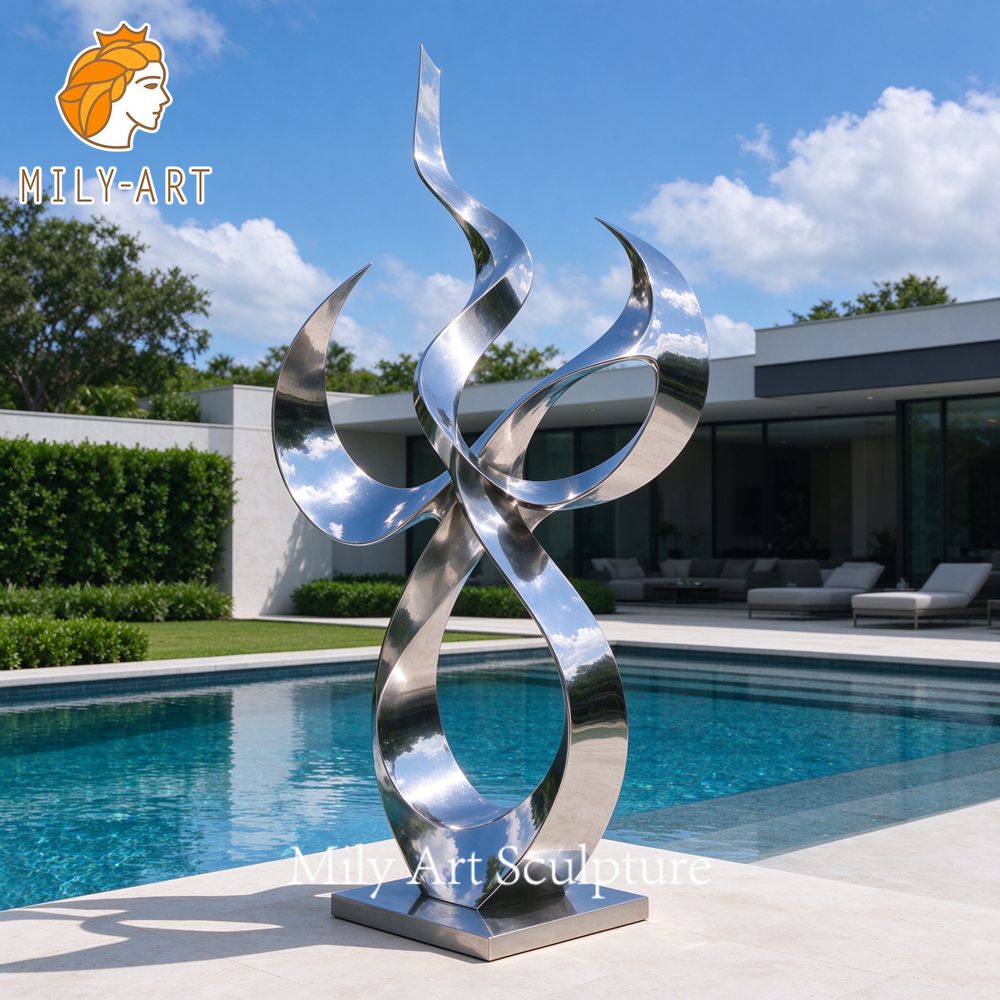
Why Stainless Steel Is a Good Choice for Poolside Sculptures?
316 vs 304 near the water
Both grades are stainless steel. The difference is Molybdenum. Grade 316 contains it, and that helps the metal resist chloride attack. Pool chemicals and salt water are full of chlorides.
I suggest 316 for saltwater pools, coastal homes and any spot that gets splashed. Grade 304 works well for freshwater pools where the sculpture stands a few meters back. When the budget allows, I choose 316 and stop worrying.
For a more detailed comparison, read our guide to 304 vs 316 stainless steel for outdoor sculptures.
Finishes that work by the pool
The finish changes how the sculpture looks and how it ages.
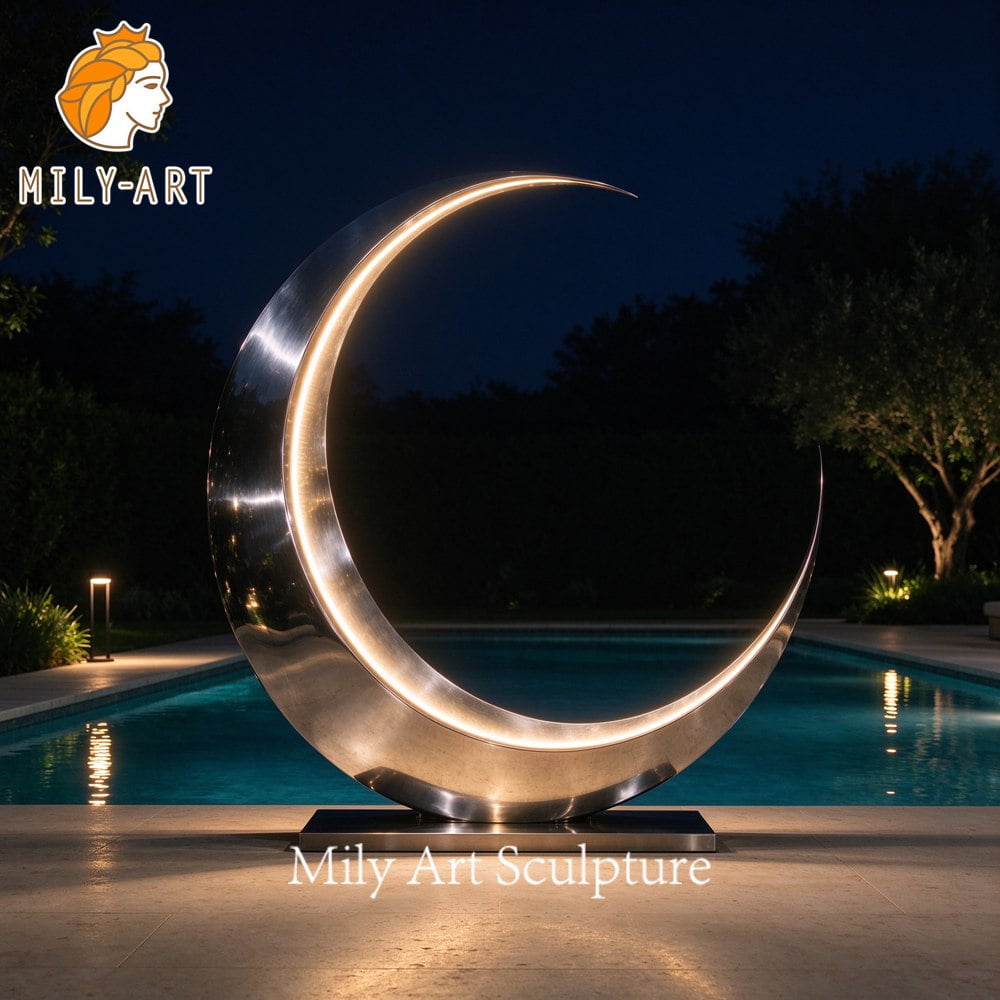
- Mirror polish: It reflects water and light and looks striking. It can cause glare in strong sun, so plan the angle.
- Brushed finish: It hides fingerprints and water spots. It gives a calm, modern look.
- Color coating: It adds bold color. Choose outdoor-grade coatings made for UV and moisture.
For most pool terraces, I like a brushed or soft satin finish. It stays clean-looking and avoids harsh glare.
Weight and wind
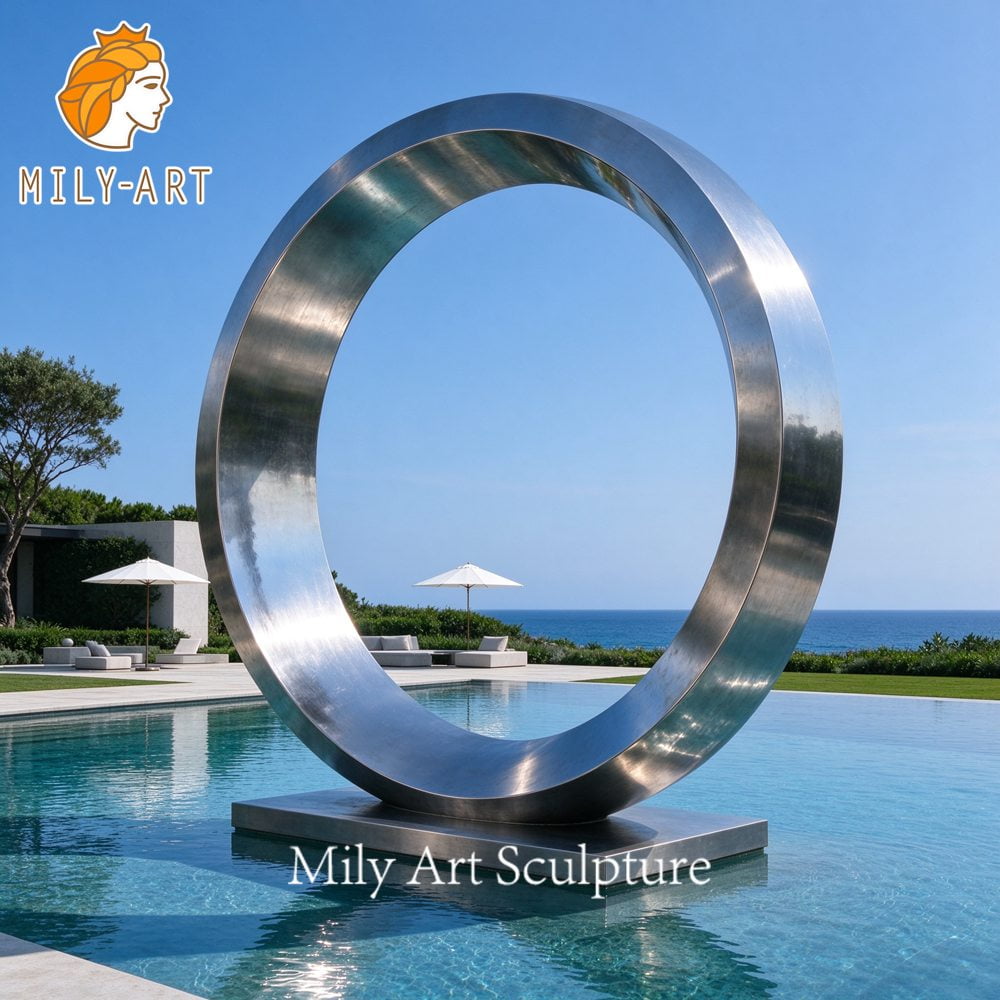
Pool decks are open spaces, and wind passes through easily. A tall, light sculpture can tip if it is not fixed well. Our stainless steel pieces use hollow welded structures. They keep the weight under control while the base plate holds the piece firmly. We design the fixing method with each client.
How to Place Poolside Sculptures?
Distance from the water decides which material and finish you need. I split the pool area into three zones.
| Zone | Distance from water | Best material | Notes |
| Splash zone | 0–1 m | 316 stainless steel | Constant water and chemicals. Use a solid, well-drained base. |
| Near-pool zone | 1–3 m | 316 or 304 stainless steel | Occasional splash. Brushed finish works well. |
| Garden zone | 3 m and beyond | Stainless steel, with other options possible | Less water contact. Still strong sun. |
Here are placements that work well:
- A sculpture on a plinth at the pool edge
- A tall piece among plants at the corner of the terrace
- A feature on the wall or lawn that you view across the water
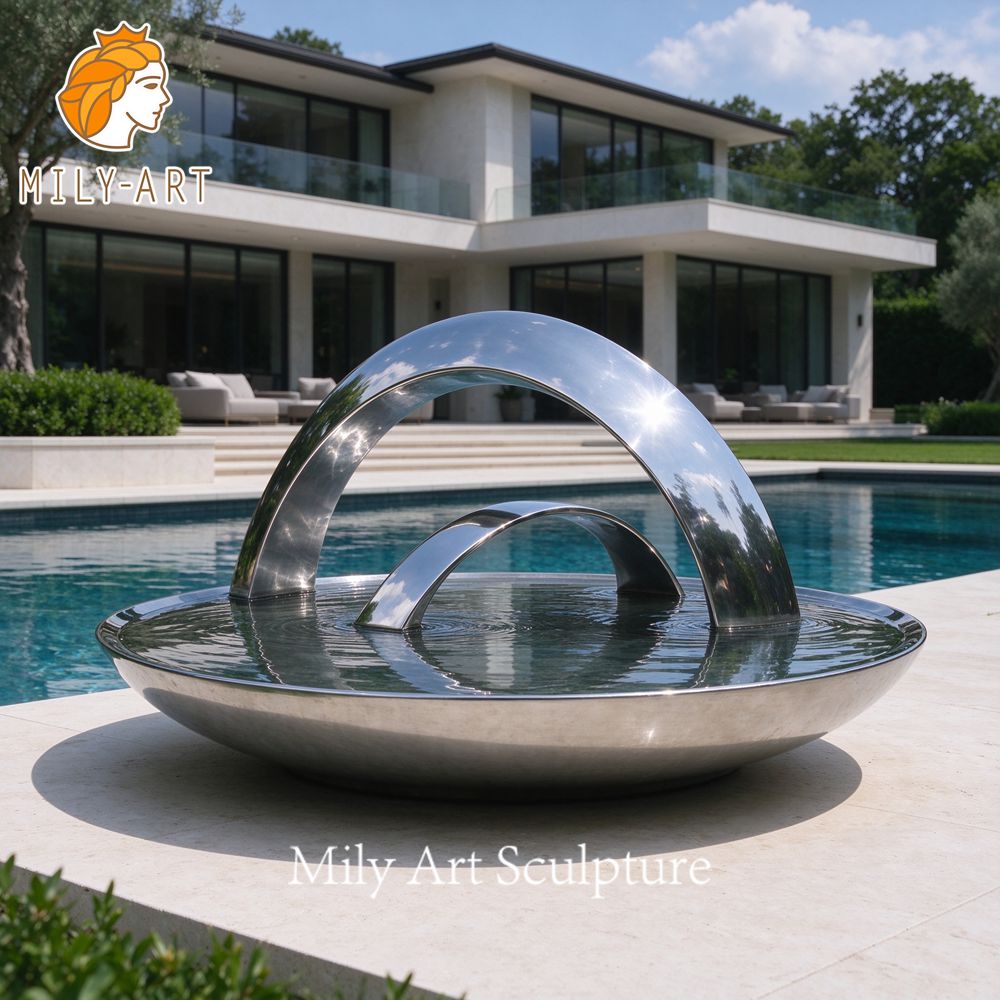
- A sculpture inside a water feature, where the pool and the piece frame each other
Always ask about the base. Water must drain away from the foot of the sculpture, not sit around it. For more real examples, see our waterfront sculpture projects.
Simple Care Tips for Stainless Steel by the Pool
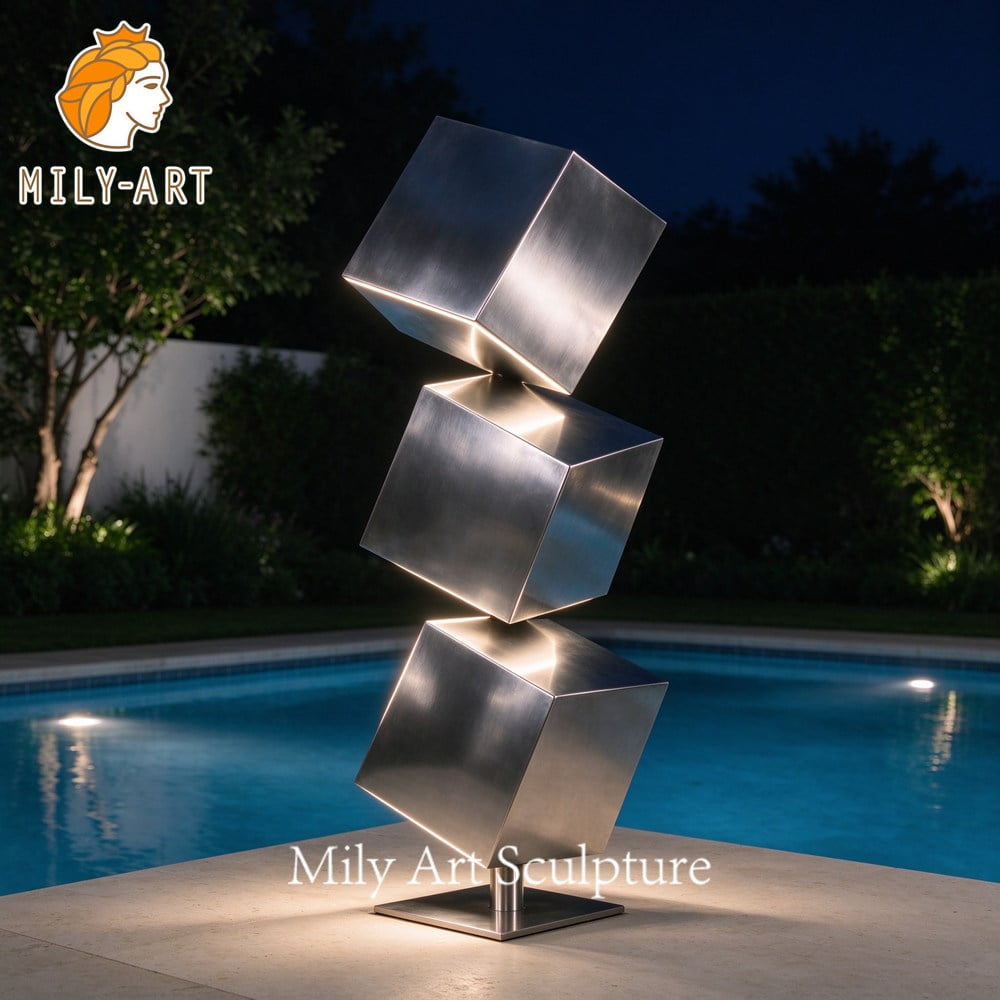
Stainless steel needs little care, but a little care goes a long way.
- Rinse the sculpture with clean water every few weeks. This removes chlorine residue and dust.
- Use mild soap and a soft cloth for marks. Wipe in the direction of the grain on brushed finishes.
- Dry the surface if you can. This prevents water spots.
- Avoid harsh abrasives and chlorine-based cleaners on the sculpture.
For the full routine, read how to clean a stainless steel sculpture.
Choosing Your Poolside Sculpture: Questions I Ask Clients
When a client contacts me, I start with five questions.
- Is the pool freshwater or saltwater?
- How close will the sculpture stand to the water?
- How big is the space, and how windy is it?
- What style do you like: abstract, animal, figure or geometric?
- What are your budget and your timeline?
The answers tell me the grade, the finish, and the size. Send me a photo of your pool area and rough measurements. I will suggest a few options and explain the choices.
FAQ
Can stainless steel sculptures stand next to a saltwater pool?
Yes, if you choose grade 316 and a good finish. Rinse it regularly to remove salt.
Will a stainless steel sculpture rust near a pool?
Good stainless steel resists rust well. Surface stains can appear if salt and chlorine stay on it for a long time. Regular rinsing prevents this.
Is 304 or 316 better for poolside sculptures?
Grade 316 is better, especially for saltwater pools or splash zones. Grade 304 can work for freshwater pools at a distance.
Can poolside sculptures stay outside all winter?
Stainless steel can. Make sure the base drains well, and check the fixings before the cold season.

I’m Linda, and I’ve been living and breathing stainless steel sculptures for over a decade — which sounds more intense than it is, I promise.
As Sales Director at Mily Statue, I spend my days helping clients around the world turn their ideas into real, lasting works of art. From a small garden piece for a private home to a multi-story installation for a city plaza, I’ve seen projects of every scale and style — and I still get genuinely excited when a new brief lands in my inbox.
When I’m not talking sculptures, I’m probably exploring somewhere new, hunting for good coffee, or sharing something beautiful I stumbled across. Life’s too short not to notice the details.
Got a project in mind? Let’s talk.
Share this article

Written by
LindaI'm Linda, and I've been living and breathing stainless steel sculptures for over a decade — which sounds more intense than it is, I promise. As Sales Director at Mily Statue, I spend my days helping clients around the world turn their ideas into real, lasting works of art. From a small garden piece for a private home to a multi-story installation for a city plaza, I've seen projects of every scale and style — and I still get genuinely excited when a new brief lands in my inbox. When I'm not talking sculptures, I'm probably exploring somewhere new, hunting for good coffee, or sharing something beautiful I stumbled across. Life's too short not to notice the details. Got a project in mind? Let's talk.
Related Articles

How to Choose Stainless Steel Sculpture for Your Private Garden?
From my experience working with private garden sculpture projects, I have learned one important thing: choosing a garden...
Why Stainless Steel Sculptures Rust And How to Prevent It
Yes, stainless steel can rust. It is known for rust resistance, not rust immunity. From my experience working...
Large Stainless Steel Sculpture Cost: Price by Size and Type
A large stainless steel sculpture typically costs between $4,500 and $20,000 or more, depending mainly on its size, design,...