
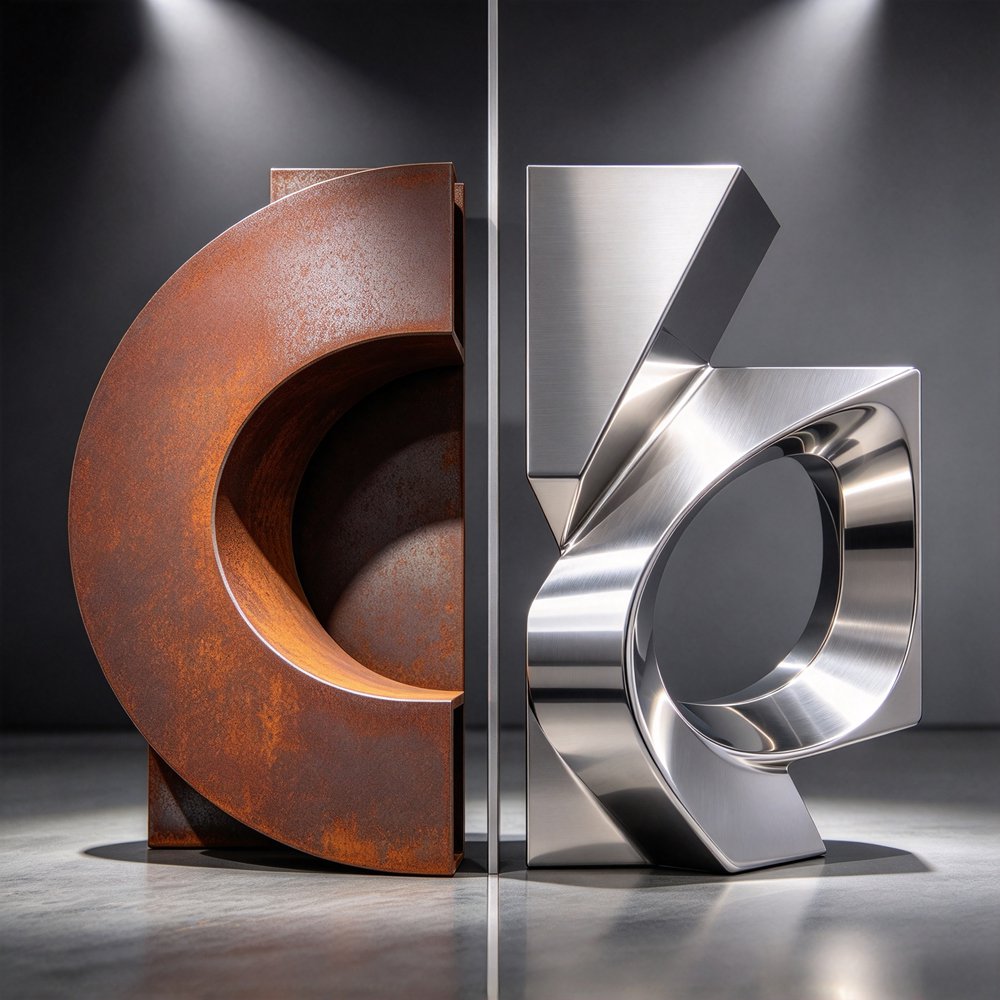
Corten Steel vs Stainless Steel Sculpture: How to Choose for Outdoor Spaces?
I’m Linda, sales director at Mily. Clients ask me one question again and again: should the outdoor sculpture be Corten steel or stainless steel?
Both metals handle weather well. But they look different, age differently, and suit different sites. This guide compares corten steel vs stainless steel in plain terms, so you can pick the right one for your garden, plaza, hotel or coastline.
A quick note before we start. Mily makes both Corten steel and stainless steel sculptures. I have no reason to push one over the other. A wrong material choice costs you more than any sculpture is worth, so I will give you a fair comparison.
- Choose Corten steel if you want a warm, rust-colored look that changes over time, and your site is inland with dark or unpaved surroundings.
- Choose stainless steel if you want a stable, clean finish, your site is near the sea or a pool, or the sculpture stands next to light stone or concrete.
What Is Corten Steel?
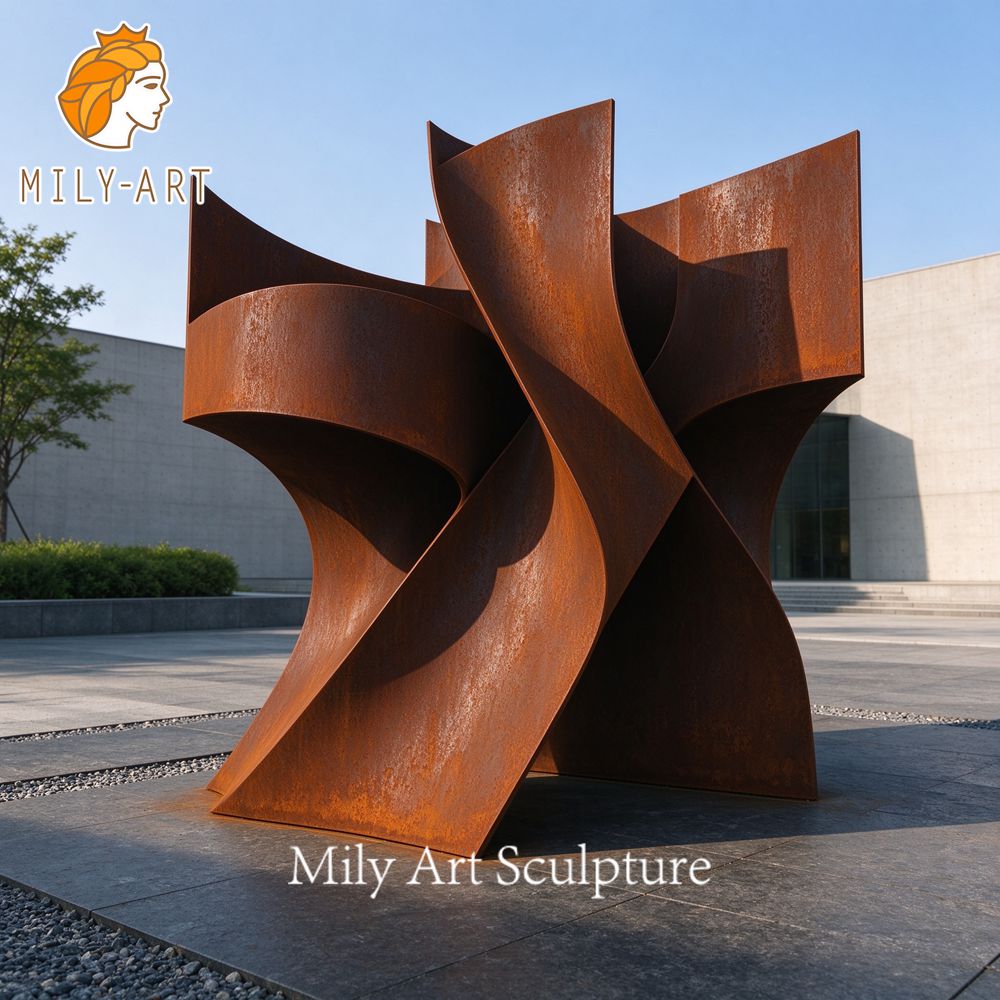
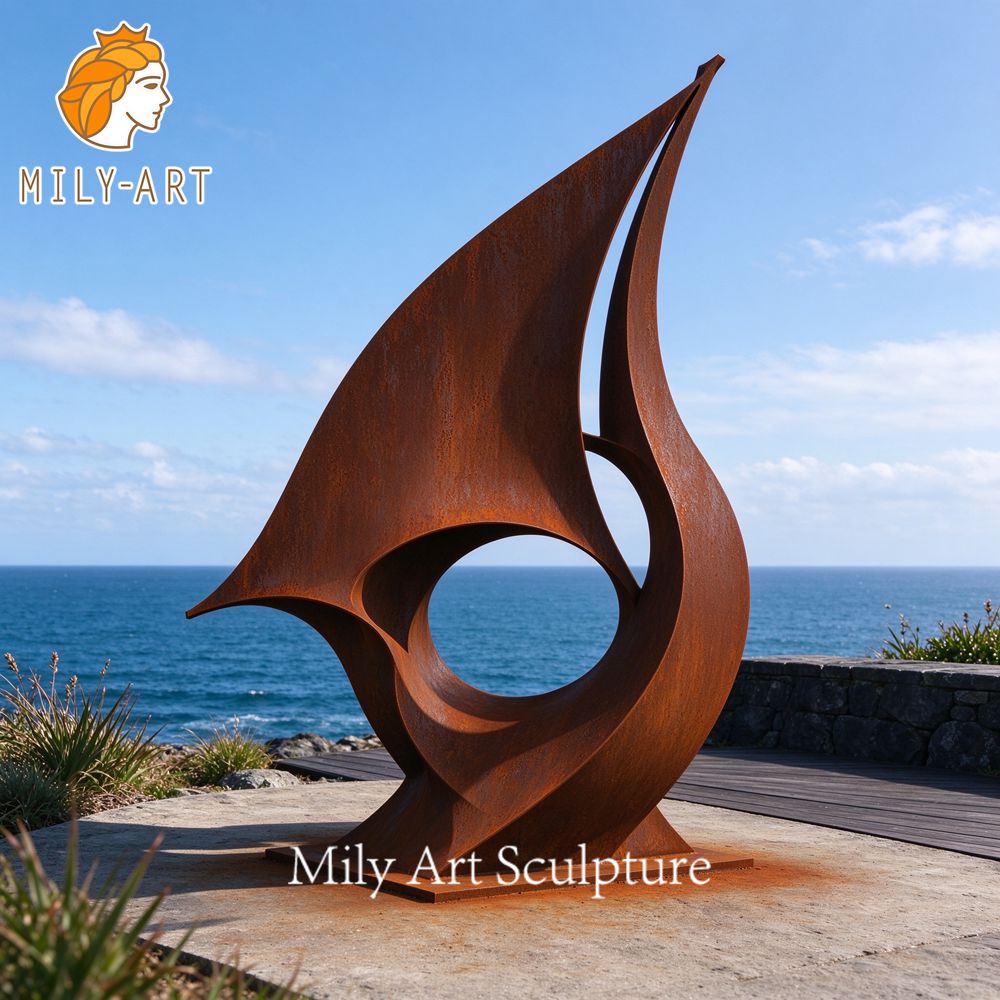
Corten steel is a weathering steel. Its surface rusts on purpose. After a few months outdoors, the rust forms a dense layer that slows further corrosion. The color moves from orange to deep brown over the first one to three years.
What Is Stainless Steel?
Stainless steel is an alloy that contains chromium. The chromium forms a thin, invisible film on the surface. This film protects the metal from rust. If the surface gets scratched, the film repairs itself in the presence of oxygen.
For outdoor sculpture, we mainly use two grades:
- 304 stainless steel for most inland sites.
- 316 stainless steel for coastal, poolside and humid sites. It contains molybdenum, which resists salt better.
Corten Steel vs Stainless Steel: Key Differences
| Factor | Corten Steel | Stainless Steel |
| Look | Orange to dark brown, matte, rough | Mirror, brushed or colored, smooth |
| Color change | Changes for 1–3 years, then settles | Stays stable |
| Rust runoff | Yes, especially in the first years | No |
| Coastal use | Often not suitable | 316 grade works well |
| Surface options | Natural patina | Polished, brushed, PVD color, paint |
| Upkeep | Needs time and a suitable site | Occasional washing |
| Best style | Rustic, industrial, natural landscape | Modern, architectural, commercial |
Appearance and Design: Rust Patina vs Modern Metallic Finish
When comparing corten steel vs stainless steel sculpture designs, consider the surrounding materials. Corten steel complements warm, earthy landscapes, while polished stainless steel often works well with glass, concrete, and modern architectural lines.
Corten Steel for Natural and Industrial Designs
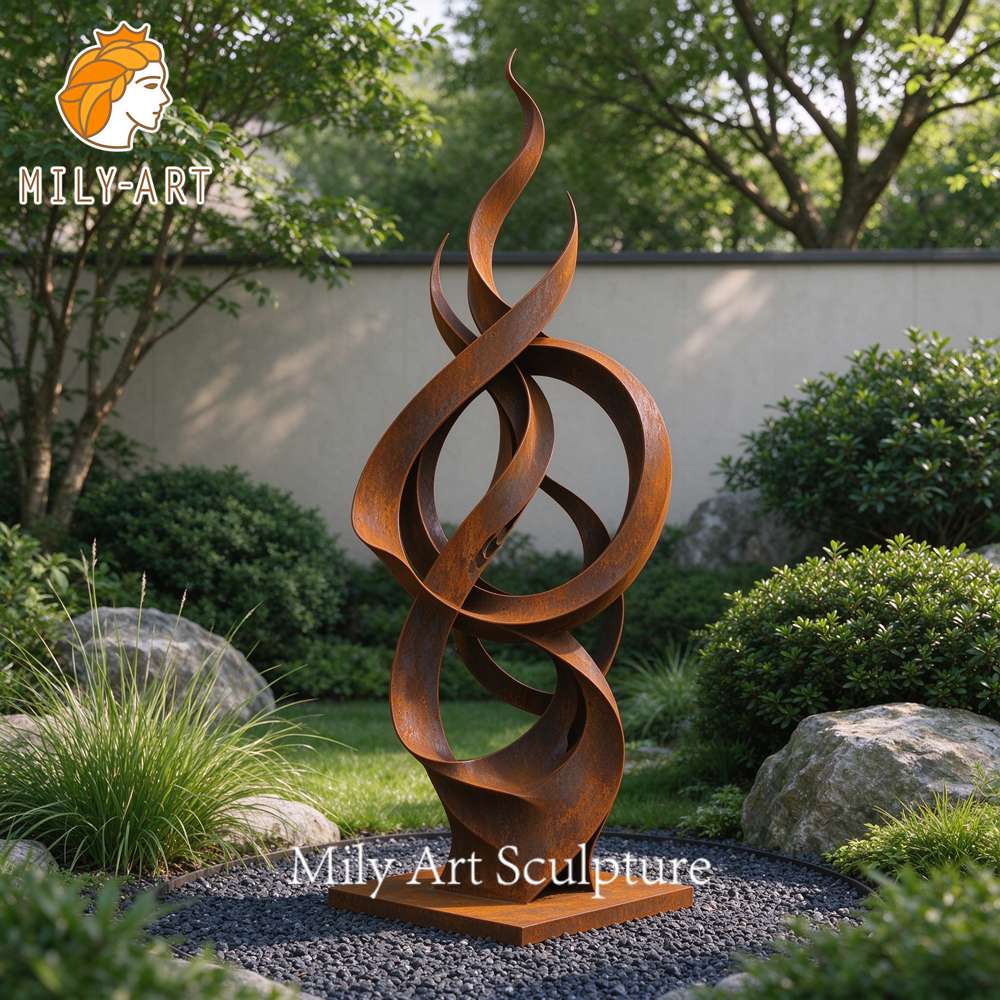
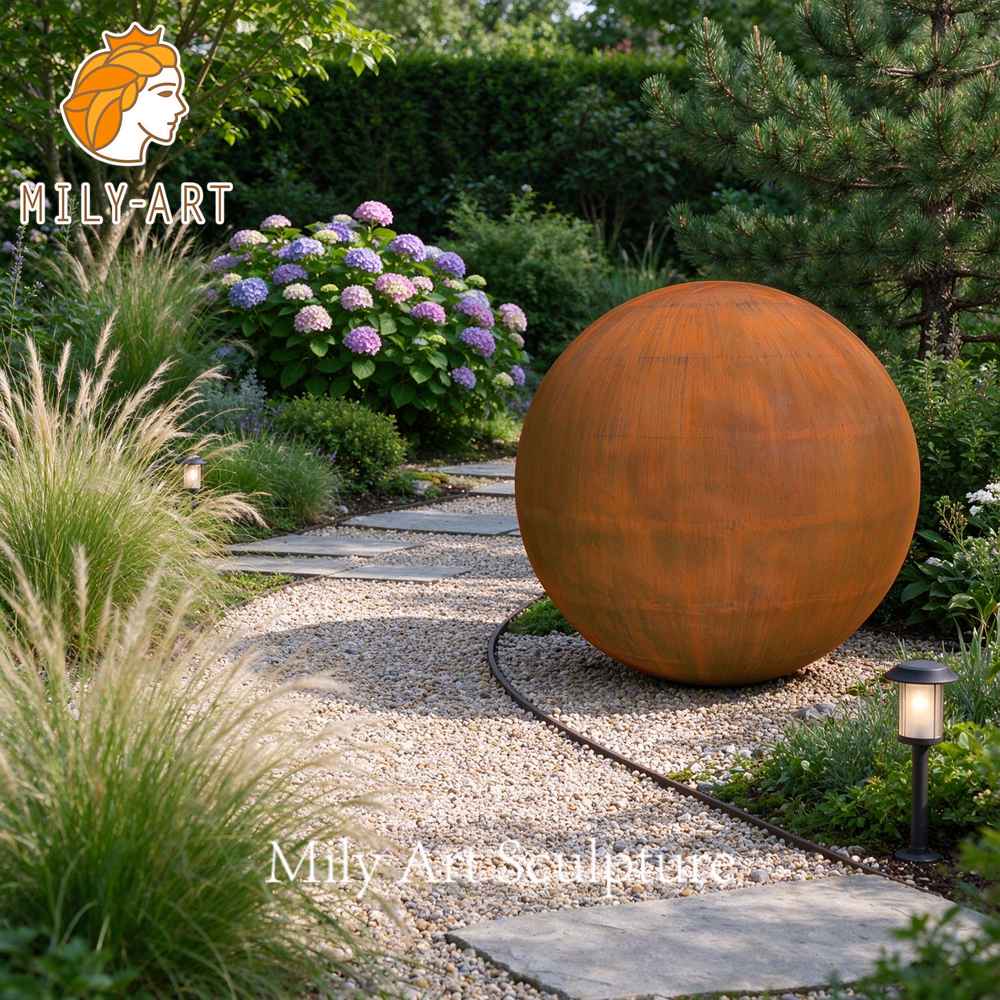
Corten steel sculptures develop warm shades of orange, red, and brown as the patina forms. These earthy tones work well with stone walls, gravel paths, timber structures, ornamental grasses, and mature trees.
Designers often choose this material for abstract sculptures, geometric forms, animal figures, and large landscape installations. Its changing surface can help a new sculpture blend into a natural setting over time.
Stainless Steel for Contemporary Outdoor Spaces
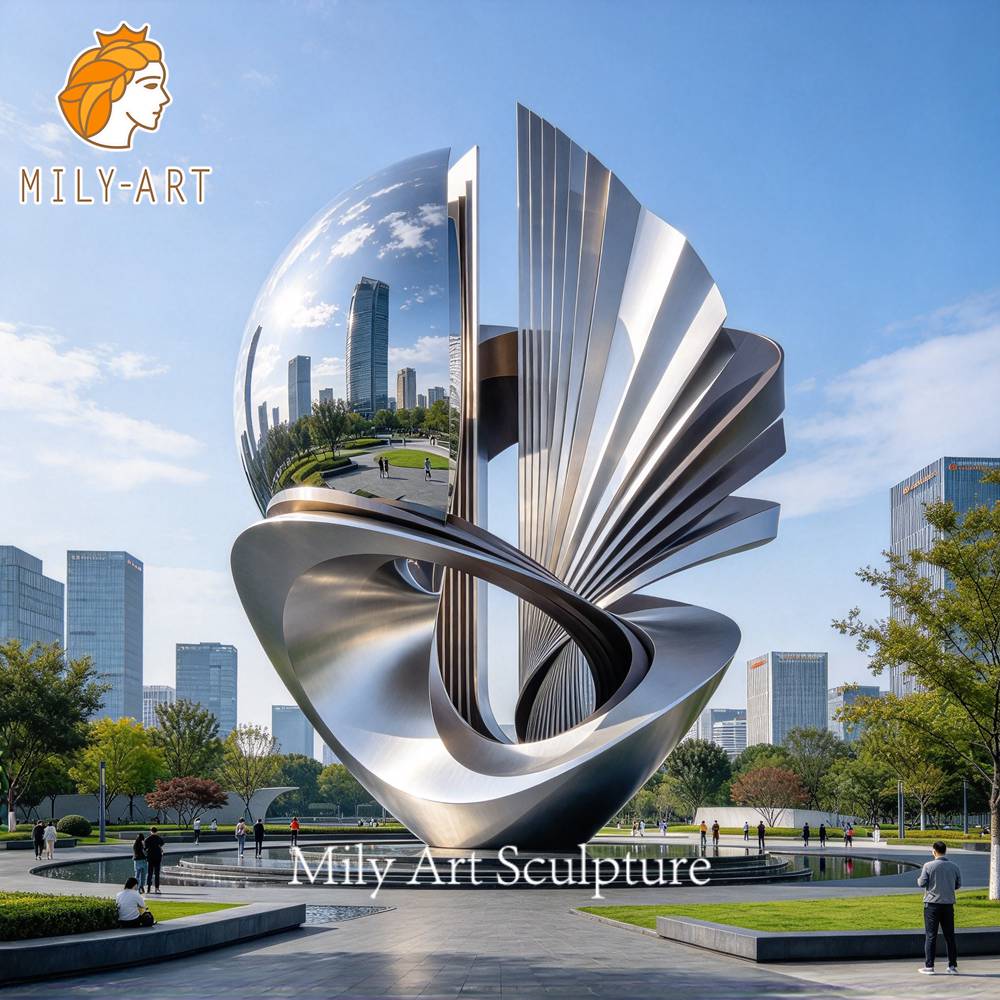
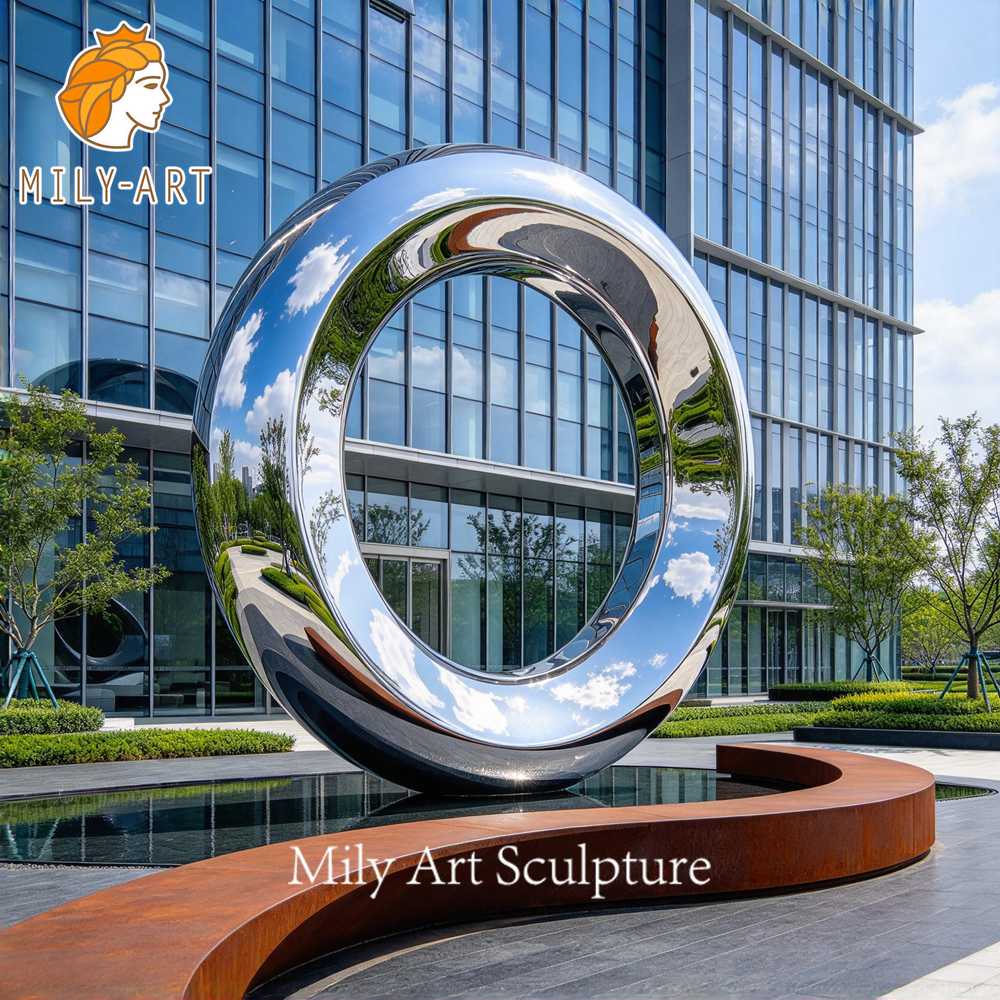
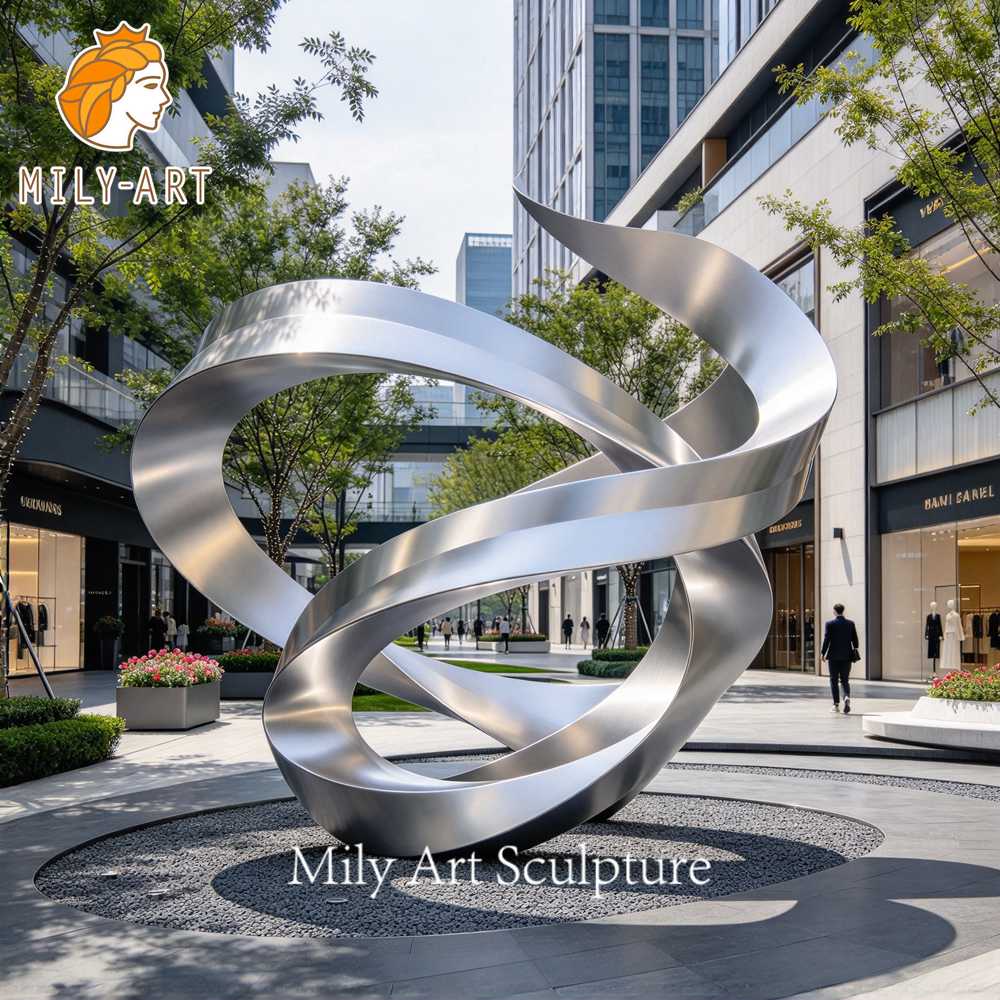
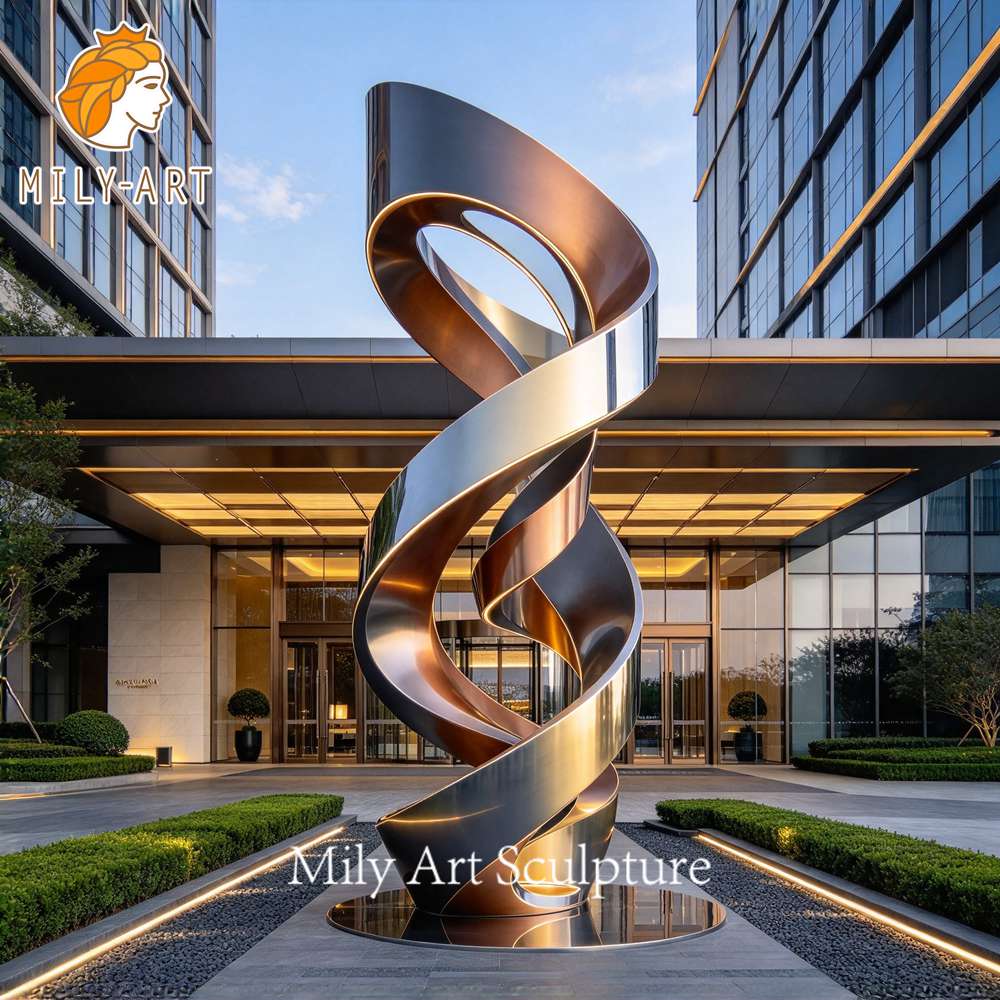
Stainless steel suits modern architecture, commercial landscapes, hotel entrances, and public plazas. Its reflective surface can capture the surrounding sky, buildings, plants, and moving light.
Mirror-polished stainless steel creates a bright, reflective effect. Brushed stainless steel offers a softer appearance with less intense reflection. Painted or coated finishes can introduce other colors when the design calls for a specific visual style. This flexibility makes stainless steel suitable for abstract loops, spheres, ribbons, geometric forms, and large-scale contemporary sculptures.
Durability in Different Climates
Climate matters more than most buyers expect. Corten needs cycles of wet and dry weather to build a stable layer. Stainless steel does not depend on that cycle.
| Environment | Corten Steel | Stainless Steel |
| Dry inland | Good | Good (304) |
| Humid or rainy | Fair, may stay wet and rust longer | Good (304 or 316) |
| Coastal, salt air | Poor to fair, layer may not stabilize | Good (316) |
| Poolside, chlorine | Poor | Good (316) |
| Cold, snowy | Good | Good |
Rust Stains and Upkeep
Maintenance is another important factor when choosing an outdoor metal sculpture. Neither material is completely maintenance-free, but their care requirements differ.
Rust Runoff
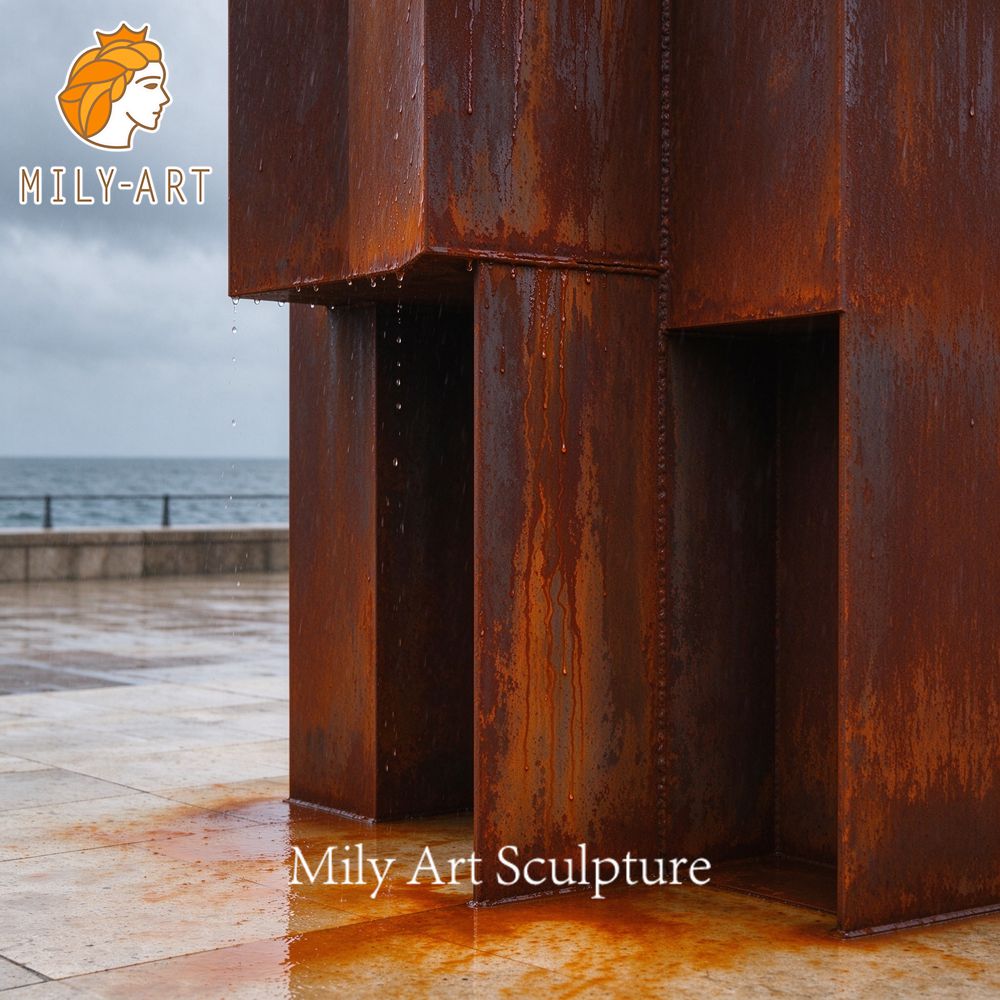
Corten sheds rust-colored water. Rain carries it onto the base and the ground below.
- Light stone, white concrete and pale pavers can stain orange.
- Stains often appear in the first months and can last for years.
- Water features make the problem worse.
Stainless steel does not shed rust water. If your sculpture stands on light paving, at a lobby entrance or beside a fountain, stainless steel is the safer choice.
Upkeep
| Corten Steel | Stainless Steel | |
| Cleaning | Needs little once the layer is stable | Rinse with clean water and mild soap a few times a year. Wash more often in dusty or coastal places |
| Site needs | The layer must form, and runoff must drain away safely | Few special needs |
| What to avoid | Placing it above light surfaces | Steel wool or iron brushes, which leave iron particles on the surface |
For detailed stainless steel maintenance tips, see our guide on how to clean stainless steel sculpture.
Cost and Long-Term Value of Outdoor Metal Sculptures
The cost of an outdoor metal sculpture depends on more than the raw material. Its size, thickness, shape, internal structure, surface treatment, and installation method all affect the final price. I will not quote numbers here, but the general pattern is this:
| Cost Factor | Corten Steel | Stainless Steel |
| Raw material | Usually lower | Usually higher |
| Surface finish | Simple | Polishing and coating add cost |
| Site preparation | May need drainage and base protection | Usually simple |
| Long-term cost | Depends on site | Low in most sites |
How to Choose: Quick Decision Guide
| Your Situation | Better Choice |
| Garden or park, dark soil, gravel or grass | Corten steel |
| Coastal site or salt air | Stainless steel (316) |
| Light stone, marble or white concrete nearby | Stainless steel |
| Hotel, mall or office entrance | Stainless steel |
| Natural, rustic or industrial theme | Corten steel |
| Mirror, color or high-gloss effect | Stainless steel |
| Poolside or water feature | Stainless steel (316) |
| You enjoy a look that keeps changing | Corten steel |
FAQ
Does Corten steel keep rusting forever?
In a good environment, the rust layer stabilizes and slows corrosion. In salty or constantly wet conditions, it may keep corroding.
Is stainless steel better for coastal sculptures?
Yes. 316 stainless steel resists salt much better than Corten steel or 304 stainless.
Can Corten steel stain concrete?
Yes. Rust runoff can leave orange marks on concrete, stone and paving, mainly in the first years.
Which lasts longer outdoors, Corten or stainless steel?
It depends on the site. Inland, both can last for decades. Near the sea or in humid places, stainless steel usually performs better.
Can stainless steel sculptures have a rusty or bronze look?
Stainless steel can be finished in warm tones, such as PVD bronze or gold colors. The color stays stable. It does not rust.
Final Thoughts
The corten steel vs stainless steel decision comes down to three questions. What look do you want? What climate does the site have? What surrounds the sculpture?
If you want a natural, changing surface in a dry inland garden, Corten fits well. If you want a clean, stable and flexible finish for a coastal, commercial or high-traffic space, stainless steel is the safer choice.
Planning an outdoor sculpture in Corten or stainless steel? Send me your site photos, size and style ideas. I will help you pick the material, finish and grade that fit your space. Explore our Corten steel sculptures and stainless steel sculptures, or ask about a custom design.

I’m Linda, and I’ve been living and breathing stainless steel sculptures for over a decade — which sounds more intense than it is, I promise.
As Sales Director at Mily Statue, I spend my days helping clients around the world turn their ideas into real, lasting works of art. From a small garden piece for a private home to a multi-story installation for a city plaza, I’ve seen projects of every scale and style — and I still get genuinely excited when a new brief lands in my inbox.
When I’m not talking sculptures, I’m probably exploring somewhere new, hunting for good coffee, or sharing something beautiful I stumbled across. Life’s too short not to notice the details.
Got a project in mind? Let’s talk.
Share this article

Written by
LindaI'm Linda, and I've been living and breathing stainless steel sculptures for over a decade — which sounds more intense than it is, I promise. As Sales Director at Mily Statue, I spend my days helping clients around the world turn their ideas into real, lasting works of art. From a small garden piece for a private home to a multi-story installation for a city plaza, I've seen projects of every scale and style — and I still get genuinely excited when a new brief lands in my inbox. When I'm not talking sculptures, I'm probably exploring somewhere new, hunting for good coffee, or sharing something beautiful I stumbled across. Life's too short not to notice the details. Got a project in mind? Let's talk.
Related Articles
How to clean stainless steel sculpture?
Stainless steel sculptures have become a defining feature of modern urban landscapes. Under sunlight, their polished surfaces catch...
Why Stainless Steel Sculptures Rust And How to Prevent It
Yes, stainless steel can rust. It is known for rust resistance, not rust immunity. From my experience working...
How to Choose a Reliable Stainless Steel Sculpture Manufacturer in 2026?
Stainless steel sculptures can last for decades, but only when a skilled team builds them properly. Many buyers...